Turn Your Shrubs Into Garden Art How Pros Shape Evergreens Like Magic
Pruning is the foundation of transforming shrubs into garden art. Professionals use two primary methods: thinning cuts and heading cuts. Thinning cuts involve removing entire branches to improve airflow and light penetration, promoting healthier growth. Heading cuts shorten branches to encourage new growth at specific points, allowing precise control over shape.
Thinning cuts target dead, diseased, or crossing branches to maintain structural integrity. This method is ideal for maintaining natural shapes while enhancing plant health. Heading cuts, by contrast, focus on redirecting growth. Cutting a branch just above a bud or side branch forces the plant to develop new shoots in that direction, enabling sculpted forms.
Visualizing the desired shape
Before pruning, professionals sketch or mentally map the desired form. For geometric shapes like spheres or cones, they use stakes to mark boundaries. Asymmetrical designs often rely on natural growth patterns, with selective pruning to emphasize unique features.
[smartquiz]
Timing and tools for effective shaping
Proper timing and equipment are critical for achieving professional results.
Optimal pruning seasons
For flowering shrubs, late winter or early spring pruning maximizes blooms while minimizing stress. Non-flowering evergreens can be shaped year-round, but spring and fall are optimal for maintaining structure.
Essential tools for precision
Hand shears: For clean cuts on thin stems, ideal for detailed shaping.
Loppers: Handle thicker branches up to 2 inches in diameter.
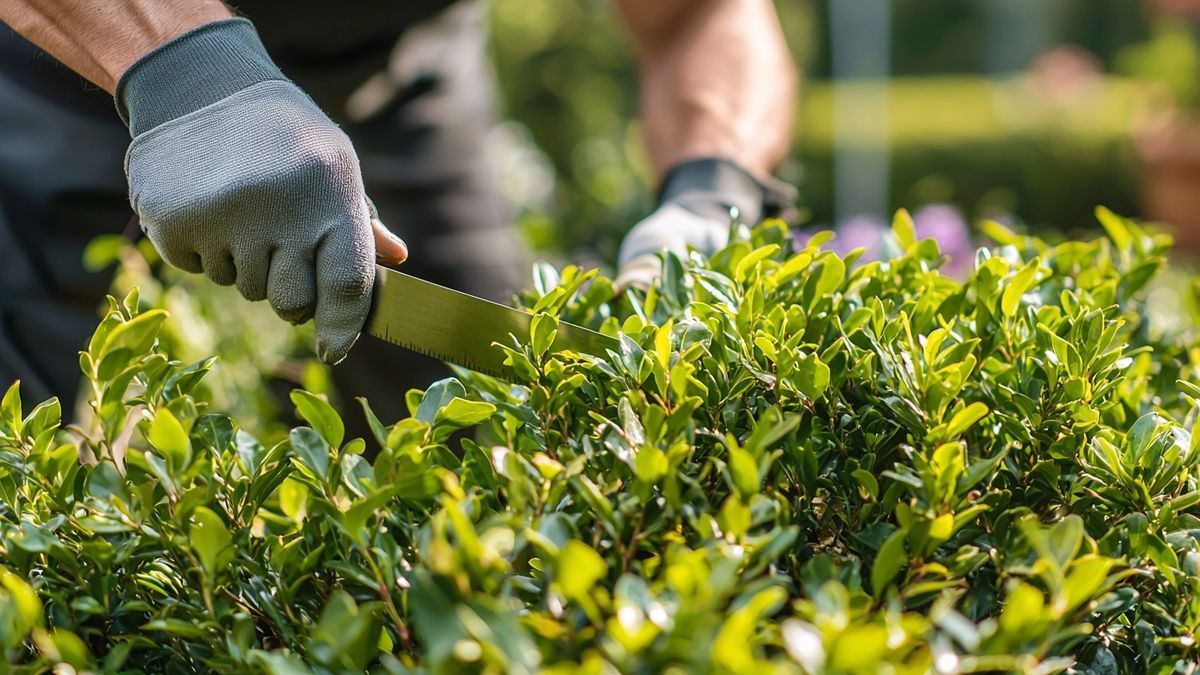
Pruning saws: Remove large branches without tearing bark.
Espalier trains shrubs against walls or frames, using horizontal wires to guide growth into flat patterns. Pleaching involves intertwining branches between adjacent plants to form living screens or hedges.
Topiary artistry
Topiary transforms shrubs into geometric or animal shapes through repeated pruning. Professionals start with young plants, gradually refining forms over years. Common designs include spheres, cones, and animal silhouettes.
Step-by-step shrub shaping guide
Mastering the process requires patience and practice. Here’s how professionals achieve polished results:
Step 1: Assess and prepare
Remove debris: Clear dead leaves and weeds around the base.
Inspect structure: Identify dominant branches and growth patterns.
Step 2: Shape the silhouette
Establish boundaries: Use stakes to define the desired outline.
Cut strategically:
Outer layer: Trim tips to create smooth edges.
Inner layer: Thin branches to allow light penetration.
Step 3: Refine details
Create texture: Leave some branches longer for visual interest.
Balance proportions: Ensure the base is wider than the top for stability.
Step 4: Maintain the form
Regular touch-ups: Prune every 4-6 weeks during growing seasons.
Fertilize: Apply balanced fertilizer post-pruning to boost recovery.
Common mistakes to avoid
Amateur mistakes often stem from improper technique:
Over-pruning
Removing too much foliage stresses plants and invites disease. Professionals never cut more than 25% of a shrub’s mass in one session.
Poor cutting angles
Flat cuts trap water, leading to rot. Angled cuts (45 degrees) prevent moisture accumulation.
Ignoring plant type
Evergreens like boxwood tolerate shaping better than flowering shrubs. Research species-specific needs before pruning.
Case studies: Professional transformations
Landscapers achieve dramatic results through systematic approaches:
Example 1: Ball-shaped topiary
A young boxwood is pruned monthly to maintain a spherical shape. Thinning cuts remove inner branches, while heading cuts control outer growth.
Example 2: Living wall
Multiple shrubs are pleached between horizontal wires, creating a dense screen. Regular trimming maintains uniform thickness.
Future trends in shrub artistry
Emerging techniques blend traditional methods with modern technology:
Laser-guided pruning
Some landscapers use laser tools to achieve millimeter precision in complex designs.
Sustainable practices
Organic fertilizers and rainwater irrigation are gaining popularity to support eco-friendly garden art.
Transforming shrubs into garden art requires skill, patience, and attention to detail. By mastering pruning techniques, selecting the right tools, and maintaining consistent care, anyone can create stunning living sculptures. Whether opting for simple hedges or intricate topiary, these methods elevate outdoor spaces into works of art.
Allan is a lifelong gardening enthusiast who still gets excited when the first seedlings pop up in spring. With a deep love for nature and a hands-in-the-soil approach, he shares practical tips, plant discoveries, and clever tricks picked up over years of digging, planting, and observing. Whether you’re a new gardener or have a shed full of tools, Allan writes like a neighbor who’s always happy to swap cuttings and stories over the fence.
You can find more about Allan’s work on Malt or connect with him on LinkedIn.
17 Replies to “Turn Your Shrubs Into Garden Art How Pros Shape Evergreens Like Magic”
This was kinda interesting. i never thought of shaping shrubs as art, but it does make the garden look more creative. i’m not sure i’d have the patience for it though.
How often should evergreen shrubs be pruned to maintain their shape and health?
Interesting read! i’m curious to see if my attempts can live up to the pros. might give it a go next weekend.
Sounds fun!
Always wanted my garden to feel like a fairytale. this guide makes shaping shrubs so accessible, can’t wait to start turning greenery into art! so excited!
Do you have any tips on avoiding mistakes when doing heading cuts myself? i’m new to this and could use some advice!
Interesting idea!
How often should you do thinning cuts to keep the shrubs healthy without overdoing it?
I once tried shaping my shrubs into spirals—looked more like a fancy pasta disaster and less like garden art! practice makes perfect, i guess 🌿
What tools do pros use for thinning and heading cuts on shrubs? looking to upgrade my gardening kit!
Sounds amazing!
I tried shaping my own evergreens once after watching some videos. it was fun but ended up looking more abstract than art! practice definitely makes perfect. 👍
How often should you use thinning cuts versus heading cuts to keep shrubs healthy and looking artistic?
This is awesome! i’ve always admired those sculpted gardens. can’t wait to transform my backyard shrubs into something special. thanks for the inspiration!
Wow, i never knew shrubs could become living art! it’s fascinating how a bit of creativity and technique can transform a garden. can’t wait to try this out at home! 🌿✨
I tried turning my shrubs into a spiral once but ended up with something more like an accidental mushroom. it’s harder than it looks! still proud of my funky garden art though!
How often should you prune evergreens to maintain their shape and health?



This was kinda interesting. i never thought of shaping shrubs as art, but it does make the garden look more creative. i’m not sure i’d have the patience for it though.
How often should evergreen shrubs be pruned to maintain their shape and health?
Interesting read! i’m curious to see if my attempts can live up to the pros. might give it a go next weekend.
Sounds fun!
Always wanted my garden to feel like a fairytale. this guide makes shaping shrubs so accessible, can’t wait to start turning greenery into art! so excited!
Do you have any tips on avoiding mistakes when doing heading cuts myself? i’m new to this and could use some advice!
Interesting idea!
How often should you do thinning cuts to keep the shrubs healthy without overdoing it?
I once tried shaping my shrubs into spirals—looked more like a fancy pasta disaster and less like garden art! practice makes perfect, i guess 🌿
What tools do pros use for thinning and heading cuts on shrubs? looking to upgrade my gardening kit!
Sounds amazing!
I tried shaping my own evergreens once after watching some videos. it was fun but ended up looking more abstract than art! practice definitely makes perfect. 👍
How often should you use thinning cuts versus heading cuts to keep shrubs healthy and looking artistic?
This is awesome! i’ve always admired those sculpted gardens. can’t wait to transform my backyard shrubs into something special. thanks for the inspiration!
Wow, i never knew shrubs could become living art! it’s fascinating how a bit of creativity and technique can transform a garden. can’t wait to try this out at home! 🌿✨
I tried turning my shrubs into a spiral once but ended up with something more like an accidental mushroom. it’s harder than it looks! still proud of my funky garden art though!
How often should you prune evergreens to maintain their shape and health?