10 Purple-flowering bushes to brighten your garden year-round
Purple-flowering bushes add a captivating splash of color to any garden landscape. These vibrant shrubs not only provide visual interest but also attract pollinators, making them a valuable addition to your outdoor space. From compact varieties perfect for small gardens to larger specimens that create stunning focal points, there’s a purple-flowering bush to suit every gardener’s needs.
Gardeners have a wide array of options when it comes to purple-flowering bushes. These versatile shrubs come in various sizes, shapes, and shades of purple, allowing for creative combinations in landscape design. Here are some popular varieties to consider :
Lilac (Syringa) : A classic choice, lilacs are beloved for their fragrant purple blooms and ease of care. Common varieties include :
Common Lilac (Syringa vulgaris)
Korean Lilac (Syringa meyeri)
Japanese Tree Lilac (Syringa reticulata)
Butterfly Bush (Buddleja) : True to its name, this shrub attracts butterflies with its long, conical flower clusters. Popular purple varieties include :
‘Black Knight’ – deep purple blooms
‘Nanho Purple’ – lavender-purple flowers
‘Purple Emperor’ – rich royal purple blossoms
Rhododendron : These evergreen shrubs offer stunning purple blooms in spring. Notable purple varieties are :
‘Purple Splendor’ – vibrant purple flowers with dark spots
‘Purpureum Elegans’ – light purple blooms
‘Roseum Elegans’ – rosy-lavender flowers
While purple flowers dominate these shrubs, gardeners looking for a broader color palette might also consider pink flowers to transform your garden into a colorful paradise. This combination can create a visually stunning and harmonious garden design.
Planting and care tips for purple-flowering bushes
To ensure your purple-flowering shrubs thrive and produce abundant blooms, follow these essential planting and care tips :
1. Soil preparation : Most purple-flowering bushes prefer well-draining, slightly acidic soil. Before planting, amend the soil with organic matter to improve drainage and nutrient content.
2. Sunlight requirements : While many purple-flowering shrubs love full sun, some varieties, like certain rhododendrons, prefer partial shade. Research the specific needs of your chosen shrub and plant accordingly.
3. Watering : Consistent moisture is crucial, especially during the establishment phase. Water deeply and regularly, but avoid waterlogging the soil.
4. Fertilization : Apply a balanced, slow-release fertilizer in early spring to promote healthy growth and abundant blooms.
5. Pruning : Proper pruning is essential for maintaining shape and encouraging flowering. The timing of pruning varies depending on the shrub species :
Shrub
Pruning Time
Pruning Method
Lilac
After flowering
Remove dead wood and shape
Butterfly Bush
Early spring
Cut back to 12-18 inches
Rhododendron
After flowering
Light pruning to maintain shape
For gardens with limited sunlight, consider incorporating shade-loving perennials alongside your purple-flowering bushes to create a diverse and thriving garden ecosystem.
Designing with purple-flowering bushes
Purple-flowering shrubs offer versatility in garden design, serving as striking focal points or complementary elements in various landscape styles. Here are some creative ways to incorporate these vibrant bushes into your garden :
1. Create a purple paradise : Design a dedicated purple garden by combining different shades and textures of purple-flowering bushes. Mix tall lilacs with medium-sized butterfly bushes and low-growing lavender for a captivating monochromatic display.
2. Contrast with complementary colors : Pair purple-flowering shrubs with plants featuring yellow or orange blooms to create a striking color contrast. For example, plant golden forsythia or yellow daylilies near purple rhododendrons.
3. Use as a backdrop : Large purple-flowering bushes like lilacs or rhododendrons make excellent backdrops for smaller perennials and annuals. Their dense foliage provides a lush green background when not in bloom.
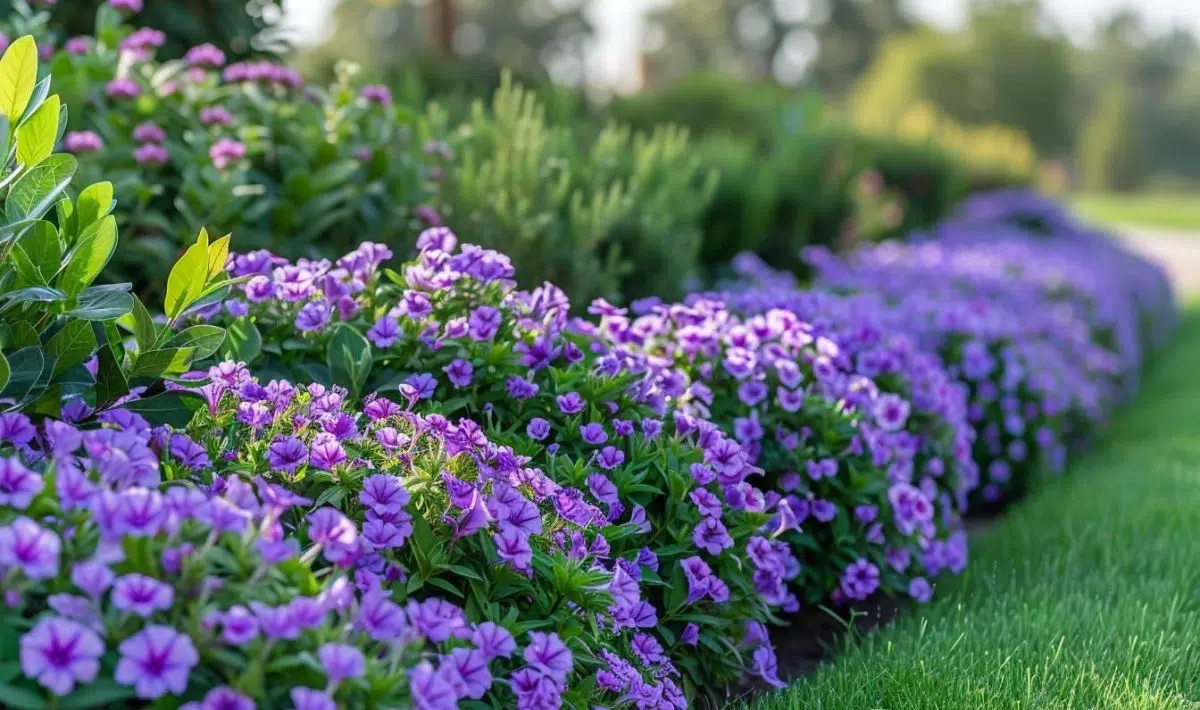
4. Line walkways or borders : Create an inviting entrance or define garden borders with a row of neatly trimmed purple-flowering shrubs. Dwarf varieties of butterfly bush or compact lilacs work well for this purpose.
5. Incorporate into wildlife gardens : Many purple-flowering bushes attract pollinators like butterflies and bees. Design a butterfly garden featuring butterfly bush, purple coneflower, and other nectar-rich plants to support local wildlife.
Tip : When designing with purple-flowering bushes, consider their blooming periods to ensure year-round interest in your garden. Combine early, mid, and late-season bloomers for extended color throughout the growing season.
Seasonal care and maintenance
Proper seasonal care ensures your purple-flowering bushes remain healthy and produce abundant blooms year after year. Follow these seasonal maintenance tips to keep your shrubs thriving :
Spring :
Remove winter protection and prune dead or damaged branches
Apply a balanced, slow-release fertilizer
Mulch around the base of the shrubs to retain moisture and suppress weeds
Monitor for early signs of pests or diseases
Summer :
Water deeply during dry spells, especially for newly planted shrubs
Deadhead spent blooms to encourage reblooming in some varieties
Prune summer-flowering shrubs like butterfly bush after their blooming period
Watch for and treat any pest infestations promptly
Fall :
Reduce watering as temperatures cool
Apply a layer of compost around the base of the shrubs
Plant new purple-flowering bushes to establish roots before winter
Avoid fertilizing to prevent stimulating new growth before frost
Winter :
Apply winter protection for tender varieties in cold climates
Prune deciduous shrubs while they’re dormant, if needed
Plan for spring additions and garden design changes
Monitor for winter damage from heavy snow or ice
By following these seasonal care guidelines, you’ll ensure your purple-flowering bushes remain vibrant and healthy throughout the year. Remember that specific care requirements may vary depending on the shrub species and your local climate, so always research the particular needs of your chosen varieties.
With their striking blooms and versatile nature, purple-flowering bushes are an excellent choice for gardeners looking to add a touch of regal beauty to their outdoor spaces. From the classic lilac to the butterfly-attracting Buddleja, these shrubs offer a wide range of options to suit any garden style or size. By selecting the right varieties, providing proper care, and incorporating them thoughtfully into your landscape design, you can create a stunning purple-hued oasis that will be the envy of the neighborhood.
Allan is a lifelong gardening enthusiast who still gets excited when the first seedlings pop up in spring. With a deep love for nature and a hands-in-the-soil approach, he shares practical tips, plant discoveries, and clever tricks picked up over years of digging, planting, and observing. Whether you’re a new gardener or have a shed full of tools, Allan writes like a neighbor who’s always happy to swap cuttings and stories over the fence.
You can find more about Allan’s work on Malt or connect with him on LinkedIn.