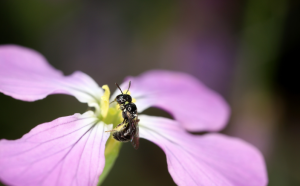
Large blue-black bees in gardens often belong to the Xylocopa genus, commonly known as carpenter bees. These solitary insects are recognized by their robust bodies and metallic coloration, typically ranging from deep blue to violet. Unlike social bees, they do not form colonies and are generally non-aggressive unless provoked.
Key physical characteristics
The violet carpenter bee (Xylocopa violacea) is a prime example of this group, featuring:
- A bulky, hairless abdomen in males, contrasting with females’ fuzzy bodies.
- Metallic blue or violet hues that give them a velvety appearance.
- Large size, with adults reaching 8–21 mm in length
Differentiating from similar species
While other bees like bumblebees (Bombus) or sweat bees (Ceratina) may share color traits, key distinctions include:
- Bumblebees: Fuzzy yellow hairs and social nesting behavior.
- Ceratina: Tiny, metallic-green bodies with minimal hair.
Assessing the situation
Encountering a large blue-black bee typically poses minimal risk, but understanding its behavior is crucial for safe interaction.
Evaluating threat levels
Carpenter bees are non-aggressive and rarely sting humans. Males lack stingers, while females only sting in defense. Their presence often indicates:
- Nesting activity: Females burrow into wood to create brood chambers.
- Pollination: They feed on nectar, aiding plant reproduction.
Monitoring behavior patterns
Observe the bee’s actions to determine intent:
- Hovering near wood: Likely nesting or inspecting potential sites.
- Flying erratically: May indicate territorial males defending nests.
Implementing safety precautions
While carpenter bees are generally harmless, precautions minimize risks during encounters.
Immediate actions
- Maintain distance: Avoid sudden movements that might provoke a female.
- Wear protective gear: Use gloves or long sleeves when working near suspected nests.
- Avoid swatting: This increases the likelihood of a defensive sting.
Long-term prevention strategies
To discourage nesting in critical structures:
- Seal wood surfaces: Use paint or sealant to make wood less accessible.
- Replace decayed wood: Remove rotting materials that attract females.
Understanding nesting behavior
Carpenter bees’ nesting habits are key to managing their presence effectively.
Nest construction process
Females excavate tunnel systems in wood, creating:
- Entrance holes: Round, smooth openings approximately 10 mm in diameter.
- Brood chambers: Vertical tunnels with individual cells for eggs.
Habitat preferences
They favor:
- Softwood: Untreated pine or cedar boards.
- Decayed wood: Rotting logs or tree branches.
- Sun-exposed areas: Warm surfaces for efficient nesting.
Managing existing nests
Deciding whether to intervene requires balancing ecological benefits against structural risks.
Pros and cons of removal
| Action | Advantages | Disadvantages |
|---|---|---|
| Leave nests | Preserves pollinators; minimal effort | Potential wood damage over time |
| Seal tunnels | Prevents re-nesting; protects wood | May trap larvae inside |
Effective removal methods
For active nests:
- Wait until winter: Most bees die or leave by fall, reducing risks.
- Use diatomaceous earth: Non-toxic powder applied to tunnel entrances.
- Replace wood: Install treated or hardwood alternatives.
Recognizing ecological importance
Carpenter bees play critical roles in ecosystems, making conservation worthwhile.
Pollination contributions
As solitary pollinators, they:
- Transfer pollen: Between flowers, aiding plant reproduction.
- Support wildflowers: Prefer native plants over cultivated crops.
Biodiversity impact
Their nests attract:
- Parasitic wasps: Predators that control carpenter bee populations.
- Woodpeckers: Birds that feed on larvae, creating additional nesting cavities.
Long-term prevention strategies
To minimize future encounters while preserving ecological value:
Habitat modification
- Plant native flowers: Attract pollinators to alternative food sources.
- Use untreated wood: Avoid chemical treatments that harm bees.
Monitoring techniques
- Install bee hotels: Redirect nesting to designated areas.
- Track seasonal activity: Most nests are active in spring and summer.
Encountering a large blue-black bee typically requires calm observation rather than panic. By understanding their solitary nature, nesting habits, and ecological role, gardeners can coexist with these beneficial insects while protecting property. Prioritize non-invasive management strategies to balance safety and environmental stewardship.

Allan is a lifelong gardening enthusiast who still gets excited when the first seedlings pop up in spring. With a deep love for nature and a hands-in-the-soil approach, he shares practical tips, plant discoveries, and clever tricks picked up over years of digging, planting, and observing. Whether you’re a new gardener or have a shed full of tools, Allan writes like a neighbor who’s always happy to swap cuttings and stories over the fence.
You can find more about Allan’s work on Malt or connect with him on LinkedIn.