

Flowering trees elevate any landscape, transforming ordinary yards into vibrant oases. Whether you seek compact varieties for small spaces, drought-tolerant options for arid climates, or classic choices with timeless appeal, these 15 trees promise to captivate neighbors and pollinators alike. Below, we break down the best options for every garden style and climate, ensuring your yard stands out with color, texture, and seasonal interest.
Eastern Redbud: A Street-Smart Choice
The Eastern Redbud (Cercis canadensis) blooms directly from its branches and trunk, creating a striking display of pink to red flowers in early spring. Its heart-shaped leaves add year-round interest, and its compact size (up to 20 feet) makes it ideal for urban gardens. Tolerant of diverse soils and full sun, it thrives in USDA zones 4–9.
Red Flowering Horse Chestnut: Early Season Showstopper
Reaching up to 30 feet, the Red Flowering Horse Chestnut (Aesculus × carnea) delivers bold red blooms in late spring, often preceding rose gardens. Its upright form and vibrant flowers make it a focal point, though its mature size may require pruning in tighter spaces.
Weigela: A Hummingbird Magnet
While technically a shrub, Weigela (Weigela florida) grows up to 5 feet tall and wide, offering tubular flowers that attract hummingbirds. Newer varieties rebloom in summer, providing extended color in full sun (zones 4–8).
Pink Japanese Snowbell: Cotton-Candy Scented Blooms
The Pink Japanese Snowbell (Styrax japonicus) produces blush-pink, bell-shaped flowers with a cotton-candy fragrance in late spring. At 8–10 feet tall, it suits small gardens and tolerates full sun (zones 5–8).
Drought-Tolerant Trees for Water-Conscious Landscapes
Cherokee Brave Dogwood: Drought-Resistant Beauty
The Cherokee Brave Dogwood (Cornus florida ‘Comco No. 1’) withstands dry conditions better than most dogwoods. Its rose-red blooms fade to white, followed by maroon foliage and red berries. Ideal for zones 5–9 with moderate shade.
Crape Myrtle: Heat-Loving Southern Charm
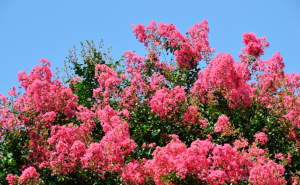
A staple in warm climates, Crape Myrtle (Lagerstroemia indica) bursts with pink, purple, or white blooms in summer. Its slender profile (up to 25 feet) and drought tolerance make it perfect for full sun in zones 6–10.
Desert Willow: Moonlit Blooms in Arid Climates
The Desert Willow (Chilopsis linearis) thrives in dry regions, producing fragrant trumpet-shaped flowers that bloom at dusk. Its slender branches and 15–30 foot height suit open spaces (zones 6–9).
Fast-Growing Flowering Trees for Quick Color
Wisteria Tree: Cascading Purple Drapes
The Wisteria Tree (Wisteria sinensis) grows rapidly, covering itself in fragrant purple clusters in spring. While invasive in some areas, its vigorous growth (up to 30 feet) adds drama to large gardens in zones 5–9.
Jacaranda: Lavender Canopy in Warm Zones
Jacaranda (Jacaranda mimosifolia) explodes with lavender blooms in late spring, creating a stunning canopy. It thrives in full sun and warm climates (zones 9–11), growing up to 50 feet tall.
Yoshino Cherry: Iconic Spring Spectacle
The Yoshino Cherry (Prunus x yedoensis) is famed for its snow-white or pink blossoms, blanketing Washington, D.C., each spring. Reaching 20–30 feet, it attracts birds and butterflies in zones 5–8.
Classic Choices with Timeless Appeal
Crabapple: Showy Blossoms and Fall Interest
Crabapple (Malus spp.) trees like the Show Time variety dazzle with fuchsia-red blooms and fiery fall foliage. Their compact size (up to 25 feet) and disease resistance make them ideal for full sun (zones 4–8).
Kwanzan Cherry: Double Pink Blooms
The Kwanzan Cherry (Prunus serrulata ‘Kwanzan’) boasts double pink flowers in late spring, creating a layered effect. Its upright form (15–25 feet) suits urban gardens in zones 5–9.
Magnolia: Evergreen Elegance with Spring Flowers
Magnolia (Magnolia spp.) varieties like the Southern Magnolia offer evergreen leaves and large, showy blooms in spring. They thrive in full sun to partial shade (zones 6–10) and grow up to 60 feet.
Unique Options for Distinctive Landscapes
Weeping Cherry: Pendulous Pink Branches
The Weeping Cherry (Prunus pendula) captivates with drooping branches laden with pink blossoms. Its size varies by cultivar (8–20 feet), making it adaptable to small or large spaces (zones 4–9).
Rose Trees: Fragrant Hybrid Varieties
Rose Trees (Rosa spp.) combine the beauty of roses with the structure of trees. Hybrid varieties like the Climbing Rose Tree offer fragrant blooms in summer, ideal for zones 5–9 with full sun.
Plum Trees: Early Spring Bloomers
Plum Trees (Prunus americana) burst with pink or white flowers in early spring, followed by edible fruit. Their compact size (up to 25 feet) and tolerance for diverse soils make them versatile for zones 4–9.
Conclusion
From the Eastern Redbud’s street-smart charm to the Desert Willow’s moonlit blooms, these 15 flowering trees cater to every garden size, climate, and aesthetic. Whether you prioritize compact growth, drought tolerance, or fast color, investing in these varieties ensures your yard becomes a neighborhood standout. Always check local hardiness zones and soil conditions to maximize success.

Allan is a lifelong gardening enthusiast who still gets excited when the first seedlings pop up in spring. With a deep love for nature and a hands-in-the-soil approach, he shares practical tips, plant discoveries, and clever tricks picked up over years of digging, planting, and observing. Whether you’re a new gardener or have a shed full of tools, Allan writes like a neighbor who’s always happy to swap cuttings and stories over the fence.
You can find more about Allan’s work on Malt or connect with him on LinkedIn.


