
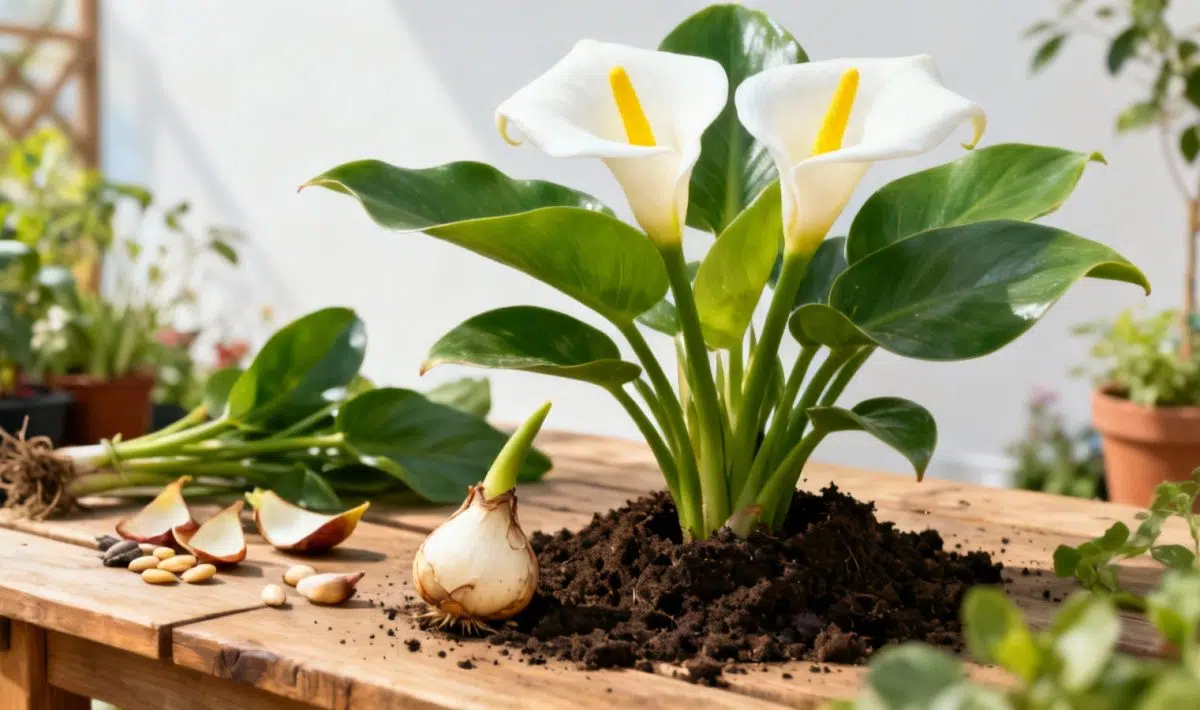
The elegant Calla lily (Zantedeschia aethiopica) brings a touch of sophistication to any garden or interior space with its distinctive white trumpet-shaped fleurs. Originally from the wetlands of South Africa, this stunning plante has captured hearts worldwide with its graceful form and relatively straightforward entretien requirements.
Whether you’re looking to add drama to your jardin borders or create a striking indoor display in a pot, understanding the specific needs of this beautiful arum will help you achieve spectacular results. Let me share everything you need to know about growing these remarkable plantes successfully.
Understanding your Calla lily characteristics
The Zantedeschia aethiopica stands out with its arrow-shaped feuilles that can reach 30-45 cm in height. These glossy green feuilles provide the perfect backdrop for the iconic white spathe fleurs that can grow up to 15 cm in diameter. The fleur stems typically reach 60-90 cm tall, creating an impressive vertical element in your jardin.
What many people call the “fleur” is actually a modified leaf called a spathe that surrounds the true tiny fleurs clustered on the central spike. This blanc spathe can last for several weeks, making it an excellent choice for both garden displays and cut flower arrangements.
During the growing season, this vivace plante forms thick rhizomes underground that store energy for the next year’s growth. These bulbe-like structures are key to successful propagation and help the plante survive dormant periods.
Creating ideal growing conditions
Your Calla lily thrives in consistently moist sol that drains well – think of the boggy conditions of its native habitat. The plante appreciates rich terre that stays damp but never waterlogged. Heavy clay soils should be amended with compost to improve drainage while retaining moisture.
For exposition, choose a location with morning soleil and afternoon ombre, especially in hot climates. In cooler regions, full soleil works well. The key is providing bright light without subjecting the plante to scorching afternoon heat that can stress the feuillage.
Temperature plays a crucial role in cultivation success. These arums prefer daytime températures between 18-24°C and will begin dormancy when nighttime températures consistently drop below 10°C. In regions with harsh hiver conditions, growing in containers allows you to provide proper abri.
Soil preparation essentials
Prepare your plantation site by working compost or well-rotted manure into the sol to a depth of 30 cm. The ideal pH ranges from 6.0 to 7.0, slightly acidic to neutral. If your sol tends to dry out quickly, consider adding moisture-retaining materials like peat moss or coconut coir.
For pot cultivation, use a high-quality potting mix combined with compost. Ensure your containers have adequate drainage holes while using saucers to maintain consistent moisture levels. Many gardeners find that caring for hardy fuchsia plants requires similar attention to soil moisture and drainage.
Planting and establishment techniques
Plant your Calla lily rhizomes in printemps after the danger of frost has passed. The profondeur should be approximately 10 cm deep with the growing points facing upward. Space multiple bulbes about 30-45 cm apart to allow for proper air circulation and growth expansion.
When planting in pots, choose containers at least 30 cm wide and deep. Place one rhizome per pot for best results, or space multiple smaller bulbes at least 15 cm apart in larger containers. The printemps plantation timing allows the plante to establish strong root systems before the active growing season.
Water thoroughly after planting and maintain consistent moisture throughout the establishment period. New pousses should appear within 2-4 weeks under optimal conditions. Be patient, as these plantes can take time to settle into their new environment.
Seasonal care requirements
During the active growing season, maintain consistent arrosage to keep the sol evenly moist. Check the moisture level regularly by inserting your finger 2-3 cm into the terre. Water deeply when the top layer begins to feel dry, typically every 2-3 days in warm weather.
Apply a balanced engrais monthly during the growing season to support vigorous growth and floraison. A liquid fertilizer with equal parts nitrogen, phosphorus, and potassium works well. Reduce feeding as the plante enters dormancy in late autumn.
Propagation methods for expanding your collection
The most reliable method for multiplying your Calla lilies involves dividing the rhizomes during the dormant period. Carefully dig up the souche in late automne or early printemps when the feuillage has died back naturally.
Gently separate the small offset rhizomes from the main souche using a sharp, sterile knife. Each division should have at least one growing point and a portion of the root system. Allow cut surfaces to dry for 24 hours before replanting to prevent rot.
Growing from seed is possible but requires patience, as it can take 2-3 years to achieve flowering size. Collect seeds from mature plants and sow them in a warm, humid environment. However, divisions produce flowering plantes much more quickly and maintain the parent plant’s characteristics.
Just as with tips for caring for Philodendron ‘Birkin’, successful propagation requires attention to humidity levels and gentle handling of delicate root systems during the process.
Managing seasonal dormancy
As températures cool in automne, your Calla lily will naturally enter dormancy. The feuillage will yellow and die back, signaling the plante’s preparation for its resting period. This is completely normal and essential for the plante’s health cycle.
In mild climates, you can leave the rhizomes in the ground with a thick paillage of mulch for protection. However, in areas where températures drop below -5°C, dig up the rhizomes and store them indoors over hiver.
Clean off excess soil and store the rhizomes in slightly damp peat moss or sawdust at temperatures around 10-15°C. Check them periodically for signs of rot or excessive drying. Replant them in printemps when danger of frost has passed.
Indoor cultivation tips
Growing Callas as houseplants requires attention to humidity and light levels. Place them near bright, indirect sunlight and maintain room températures between 18-22°C. Use humidity trays or group with other plantes to increase ambient moisture levels.
Indoor plantes may not enter full dormancy like their outdoor counterparts. Instead, they might experience a period of slower growth during hiver months. Reduce watering and stop fertilizing during this period, but don’t allow the sol to become completely dry.
Similar to Monstera obliqua care and propagation tips, indoor Calla lilies benefit from regular misting and consistent environmental conditions to thrive year-round.
Troubleshooting common challenges
Root rot represents the most serious threat to Calla lily health, typically caused by overwatering or poor drainage. If you notice yellowing feuilles and soft, mushy rhizomes, immediately reduce watering and improve drainage. Severely affected plantes may need to be lifted and replanted in fresh, well-draining sol.
Aphids and spider mites can occasionally trouble these plantes, especially when grown intérieur. Regular inspection of the feuillage helps catch problems early. Rinse minor infestations away with water, or use insecticidal soap for more persistent issues.
If your plante produces plenty of feuillage but few fleurs, it may be receiving too much nitrogen fertilizer or insufficient light. Adjust your feeding routine to include more phosphorus and ensure adequate light exposure for optimal floraison.
Much like when you learn about southern magnolia care, understanding the plant’s natural cycles and environmental preferences prevents most cultivation problems before they start.
Frequently asked questions
When should I plant Calla lily bulbes?
Plant rhizomes in late printemps after soil températures consistently reach 15°C and frost danger has passed. This timing allows optimal establishment before the growing season.
How often should I water my Calla lily?
Maintain consistent moisture by watering when the top 2-3 cm of sol feels dry. This typically means watering every 2-3 days during warm weather, less frequently in cooler conditions.
Can I grow Callas in full shade?
While these plantes tolerate light ombre, they perform best with at least 4-6 hours of bright light daily. Deep shade typically results in poor floraison and weak growth.
Why isn’t my Calla lily flowering?
Common causes include insufficient light, over-fertilization with nitrogen, overcrowding, or the plante being too young. Ensure proper growing conditions and patience – some newly planted rhizomes may skip flowering their first year while establishing strong root systems, much like care and propagation of oleander plants requires time for establishment.
With proper attention to their moisture needs, light requirements, and seasonal cycles, your Calla lilies will reward you with years of elegant blooms and lustrous feuillage. These versatile plantes make excellent additions to both garden beds and container gardens, bringing their distinctive beauty wherever you choose to grow them.

Allan is a lifelong gardening enthusiast who still gets excited when the first seedlings pop up in spring. With a deep love for nature and a hands-in-the-soil approach, he shares practical tips, plant discoveries, and clever tricks picked up over years of digging, planting, and observing. Whether you’re a new gardener or have a shed full of tools, Allan writes like a neighbor who’s always happy to swap cuttings and stories over the fence.
You can find more about Allan’s work on Malt or connect with him on LinkedIn.


