
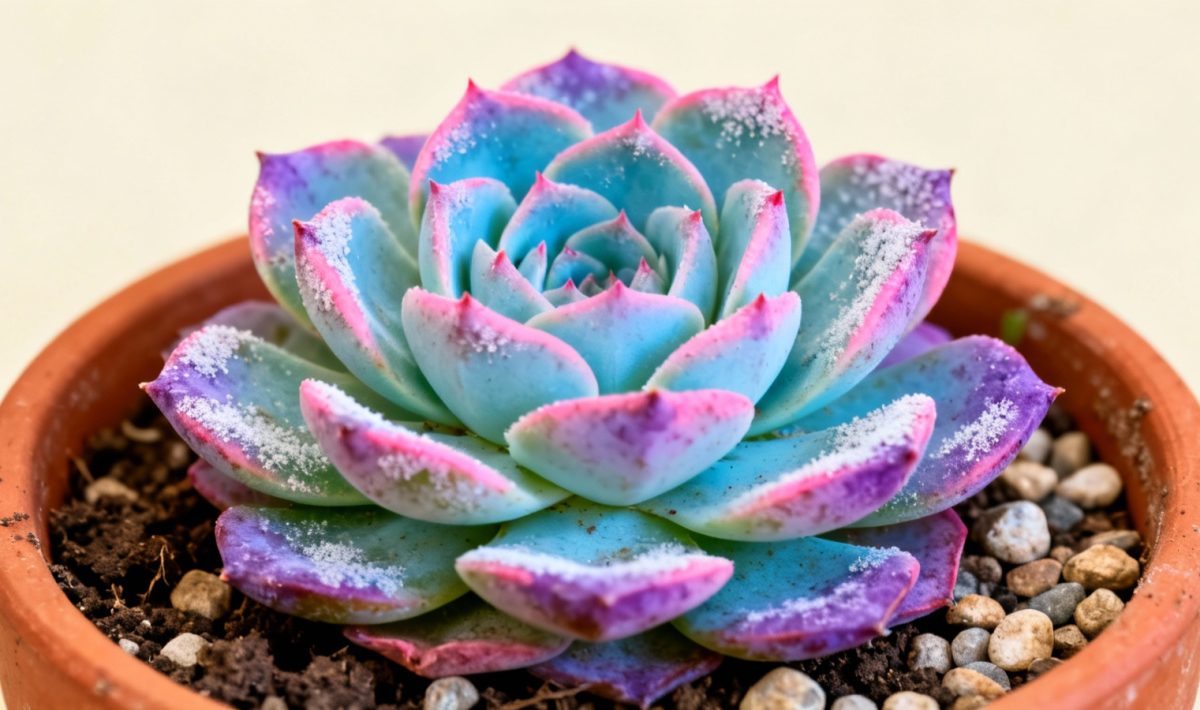
Introduction to Echeveria ‘Perle von Nurnberg’
If you’re looking for a stunning succulent that combines elegance with easy care, the Echeveria ‘Perle von Nurnberg’ should be at the top of your list. This gorgeous hybrid, created from crossing Echeveria gibbiflora ‘Metallica’ and Echeveria elegans ‘Potosina’, showcases one of nature’s most beautiful color combinations. Its blue-grey leaves with pink-purple edges create an iridescent display that changes throughout the seasons.
Originally developed in Germany, this remarkable plante has become a favorite among gardeners worldwide. The echeveria forms compact rosettes that typically reach 10-15 cm in height and can spread up to 20 cm in diameter. What makes the ‘Perle von Nurnberg’ particularly special is its ability to develop deeper purple hues when exposed to bright light and cooler temperatures.
This succulent belongs to the Crassulaceae family and shares characteristics with other popular succulentes like sedum and kalanchoe. However, its unique coloration and relatively fast croissance make it stand out in any collection.
Distinctive characteristics of this stunning succulent
The most striking feature of this echeveria is undoubtedly its feuilles. Each leaf displays a beautiful gradient from pearl grey at the base to soft pink or lavender at the tips. When grown in optimal conditions with plenty of soleil, the colors intensify dramatically, creating almost purple edges that seem to glow.
The plante produces charming bell-shaped fleurs during late spring and early summer. These blooms appear in shades ranging from coral-pink to orange-red, creating a lovely contrast against the cool-toned feuilles. The fleurs emerge on tall stems that can reach up to 30 cm above the main rosette.
What’s particularly appealing about this variété is its compact size and neat growth habit. Unlike some sprawling succulents, the ‘Perle von Nurnberg’ maintains its rosette shape beautifully, making it perfect for container gardens, rock gardens, or indoor displays.
Growing conditions for optimal health
Creating the right environment for your echeveria is crucial for bringing out those stunning colors and maintaining healthy croissance. This succulent thrives in bright, indirect light when grown indérieur, but can handle full morning sun with some afternoon protection when planted outside.
Temperature plays a significant role in color development. The ‘Perle von Nurnberg’ actually prefers cooler conditions than many other succulentes, which is why it develops its best coloration during autumn and winter months. It can tolerate temperatures down to -4°C to -6°C, though it’s best to provide protection during harsh hiver conditions.
Much like when applying caring for hardy fuchsia plants, this echeveria benefits from morning sun and afternoon shade in hot climates. This balance helps prevent leaf burn while maintaining the vibrant colors that make this plante so desirable.
Soil and planting requirements
The foundation of successful echeveria culture starts with the right sol. These plants absolutely require well-draining soil that prevents water from sitting around the racines. A commercial cactus mix works well, but you can easily create your own by mixing regular potting terre with coarse sand, perlite, or small pierre.
The ideal sol mixture should contain about 50% organic matter (potting terre) and 50% drainage materials. This combination ensures your plante gets the nutrients it needs while preventing the root rot that can quickly kill succulentes. Adding a top dressing of decorative pierre not only looks attractive but also helps prevent moisture from sitting against the lower feuilles.
When choosing containers, always select pots with drainage holes. Terracotta pots work exceptionally well because they allow excess eau to evaporate through the sides, creating an even drier environment that echeveria love.
Watering and seasonal care
Understanding how to properly arroser your echeveria is perhaps the most critical aspect of care. These plants have adapted to survive periods of sécheresse, so they prefer a thorough soaking followed by complete drying out. During the growing season (spring and summer), water deeply when the sol feels completely dry several inches down.
The “soak and dry” méthode works best for all succulentes. When you do arroser, add eau slowly until it runs out the drainage holes, ensuring the entire root system gets hydrated. Then wait – sometimes up to two weeks – before the next arrosage. This cycle mimics the natural rainfall patterns these plants evolved with.
During hiver months, reduce watering significantly. The plante enters a semi-dormant state and uses much less eau. Overwatering during this period is one of the quickest ways to lose your echeveria to rot.
Propagation techniques for expanding your collection
One of the most rewarding aspects of growing the ‘Perle von Nurnberg’ is how easily it propagates. You have several options for creating nouvelles plants, each with its own advantages and success rates.
Leaf propagation is probably the most fascinating method. Gently twist off healthy feuilles from the mother plante, ensuring you get the entire leaf including the small node at the base. Let these feuilles dry for a few days until the cut end calluses over, then place them on top of slightly moist cactus sol.
Within a few weeks, you’ll start seeing tiny racines and eventually small rosettes emerging from the base of each leaf. This process requires patience, but it’s incredibly satisfying to watch nouvelles plants develop from what seems like nothing.
Similar to techniques used in care and propagation of oleander, timing your propagation efforts during active growth periods yields the best results. Spring and early summer are ideal times for starting boutures.
Division and offset propagation
As your echeveria matures, it will often produce small offsets or “babies” around the base of the main rosette. These can be carefully separated when they’re about one-third the size of the parent plante. Use a clean, sharp knife to cut through the connecting tissue, then allow both the parent and offset to dry for a day before replanting.
This méthode of propagation is faster than leaf propagation and often results in stronger plants that establish more quickly. The new plants will be exact clones of the parent, maintaining all the beautiful color characteristics of the original ‘Perle von Nurnberg’.
When handling offsets, be extra gentle with the delicate racines. Plant them in the same well-draining sol mixture you use for mature plants, but keep the arrosage even more conservative until you see signs of new croissance.
Common challenges and solutions
Even though echeveria are generally easy to grow, they can face certain challenges. Stretching or “etiolation” occurs when the plante doesn’t receive enough light. The rosette becomes loose and elongated, losing its compact, attractive form. The solution is simply to move your succulent to a brighter location.
Pest issues are relatively rare but can include aphids and mealybugs. These soft-bodied insects are attracted to the succulent feuilles and can be controlled with insecticidal soap or by dabbing individual bugs with rubbing alcohol on a cotton swab.
Root rot remains the biggest threat to echeveria health. Signs include soft, mushy feuilles starting from the bottom of the plante, often accompanied by a foul smell. Prevention through proper sol and arrosage practices is much easier than treatment. If rot does occur, you may be able to save the plante by cutting away all affected tissue and repropagating healthy portions.
Seasonal color changes and what to expect
Don’t be alarmed if your echeveria changes color throughout the années. This is completely normal and actually one of the most delightful aspects of growing these plants. During summer heat, the colors may fade to more muted tones, while cooler autumn and hiver temperatures bring out the intense rose and purple hues that make this variété so famous.
Stress from bright light, cool temperatures, and reduced arrosage actually enhances the coloration. This is why many growers deliberately “stress” their succulentes by providing these conditions. However, there’s a fine line between beneficial stress and harmful conditions, so monitor your plante carefully.
Just as with tips for caring for Philodendron Birkin, consistent environmental conditions help maintain the best appearance and health of your echeveria throughout the changing seasons.
Design ideas and companion planting
The ‘Perle von Nurnberg’ works beautifully in various garden and container arrangements. Its compact size makes it perfect for creating stunning succulent compositions when combined with other drought-tolerant plants. Consider pairing it with silver-leafed plants or other succulentes with complementary colors.
In jardins, this echeveria creates excellent groundcover in rock gardens or can serve as an accent plante in xerophytic landscapes. Its pearl and rose colors complement both warm and cool color schemes, making it versatile for different design themes.
For indoor cultivation, try grouping several different variétés of echeveria together. The ‘Perle von Nurnberg’ serves as an excellent focal point with its distinctive coloration, while smaller species can fill in around it. This creates visual interest and makes care easier since all plants have similar requirements.
Pet safety considerations
Good news for pet owners – echeveria are generally considered safe for both chats and chiens. However, it’s still wise to discourage pets from chewing on any houseplants, as individual animals may have sensitivities or the soil additives could cause digestive upset.
If you have particularly curious pets, consider placing your succulentes on higher shelves or in hanging planters where they’re less accessible. This also often provides better light conditions for the plants while keeping them safe from playful paws.
When designing pet-friendly spaces, you might also consider Monstera obliqua care and propagation techniques for other houseplants, though always research the specific safety of any plante before introducing it to homes with pets.
Advanced care techniques
For those wanting to take their echeveria culture to the next level, consider the controlled stress techniques used by experienced growers. Gradually reducing eau and increasing light exposure during autumn can intensify the purple coloration significantly.
Temperature fluctuations also play a role in color development. Allowing nighttime temperatures to drop 10-15 degrees below daytime temperatures mimics natural desert conditions and can enhance both color and overall plante health.
Some growers experiment with specialized fertilizers low in nitrogen but higher in phosphorus and potassium. This promotes compact growth and can enhance flowering, though echeveria generally don’t require much fertilization to thrive.
Much like the principles used in growing Southern magnolia beautifully, patience and consistent care yield the best long-term results with echeveria cultivation.
Troubleshooting growth issues
If your echeveria isn’t developing the expected colors, the most likely culprits are insufficient light or too much eau. These plants need bright light to develop their signature hues, and excess moisture can cause them to focus on rapid croissance rather than color production.
Slow croissance isn’t necessarily a problem with succulentes – they’re naturally slow-growing plants. However, if growth has completely stopped for several months during the growing season, check the racines for signs of rot or consider whether the plante has become potbound.
Sometimes echeveria will produce aerial racines along the stem. This usually indicates the plante is searching for more moisture or nutrients, or that the stem has become woody with age. This is normal for older plants and doesn’t typically require intervention.
Understanding cultivation principles similar to those used in how to grow Capsicum annuum can help you recognize when environmental adjustments are needed for optimal plante health and development.
Conclusion
The Echeveria ‘Perle von Nurnberg’ truly deserves its reputation as one of the most beautiful succulentes available to home gardeners. Its stunning color combinations, relatively easy care requirements, and excellent propagation abilities make it an ideal choice for both beginners and experienced growers.
Remember that success with this echeveria comes down to understanding its basic needs: well-draining sol, bright light, careful arrosage, and patience with its natural seasonal rhythms. Whether you’re growing it indérieur as a houseplant or incorporating it into your jardin design, this remarkable succulent will reward your care with years of beauty.
The journey of growing echeveria teaches us to appreciate the subtle changes that occur throughout the années – the shifting colors, the emergence of nouvelles growth, and the satisfaction of successful propagation. Start with one ‘Perle von Nurnberg’, master its care, and you’ll soon find yourself with a collection of these captivating plants that bring joy and tranquility to any space.

Allan is a lifelong gardening enthusiast who still gets excited when the first seedlings pop up in spring. With a deep love for nature and a hands-in-the-soil approach, he shares practical tips, plant discoveries, and clever tricks picked up over years of digging, planting, and observing. Whether you’re a new gardener or have a shed full of tools, Allan writes like a neighbor who’s always happy to swap cuttings and stories over the fence.
You can find more about Allan’s work on Malt or connect with him on LinkedIn.


