
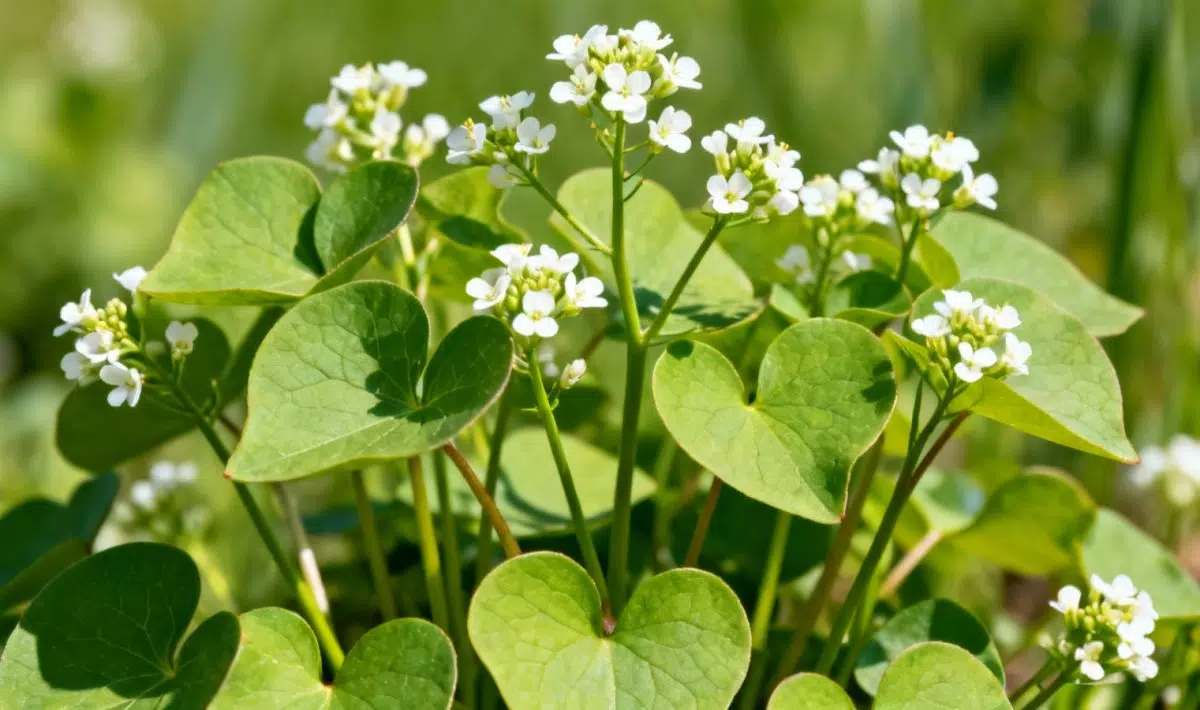
Garlic mustard, scientifically known as Alliaria petiolata, stands out as one of the most fascinating herbs you’ll encounter in temperate gardens. This biennial plant from the Brassicaceae family has captured the attention of gardeners worldwide with its distinctive garlic scent and remarkable adaptability. Originally native to Eurasia, this versatile herb has established itself across North America, where it thrives in various environments from woodland edges to garden borders.
Understanding garlic mustard characteristics
The most striking feature of Alliaria petiolata is undoubtedly its aromatic leaves, which release a pronounced garlic fragrance when crushed. During its first year, the plant forms an attractive rosette of kidney-shaped, dark green leaves measuring 2 to 12 centimeters in diameter. These basal leaves display distinctive serrated edges and develop a robust root system that helps the plant survive harsh winter conditions.
In its second year, garlic mustard transforms dramatically. The plant shoots up triangular stems that can reach heights between 30 and 120 centimeters, producing alternate leaves that become progressively smaller toward the top. The flowers appear as delicate white clusters from April through June, each bloom featuring four petals measuring 4 to 8 millimeters in length.
Following the flowering period, the plant produces distinctive seed pods called siliques. These elongated fruits, measuring 2 to 7 centimeters long, contain numerous small black seeds. A single mature plant can produce an impressive 130 to 300 graines, ensuring robust natural propagation. These cylindrical graines measure approximately 3 millimeters in length and maintain their viability for several years under proper storage conditions.
Optimal growing conditions for garlic mustard
Creating the perfect environnement for your garlic mustard begins with understanding its soil preferences. This adaptable herb thrives in rich, humus-laden soil with excellent drainage capabilities. The plant shows remarkable tolerance for various soil types, though it performs exceptionally well in slightly alkaline to neutral conditions with a pH ranging from 6.0 to 7.5.
Light requirements for Alliaria petiolata lean toward partial shade, though the plant adapts surprisingly well to full shade conditions. In fact, this shade tolerance makes garlic mustard an excellent choice for woodland gardens or areas beneath tree canopies where other herbs might struggle. The plant’s natural habitat preferences mirror these conditions, as it commonly grows along forest edges and in partially shaded woodland clearings.
Temperature-wise, garlic mustard demonstrates impressive cold hardiness. The plant easily survives freezing temperatures and actually benefits from winter’s cold period, which helps trigger proper flowering in its second année. This cold stratification requirement makes it perfectly suited for temperate climates where winter temperatures regularly drop below freezing.
Soil preparation and planting techniques
Preparing your planting area involves enriching the sol with organic matter such as well-aged compost or leaf mold. Work the amendments into the top 15 to 20 centimeters of soil, ensuring good incorporation without compacting the growing medium. The goal is creating a loose, fertile foundation that allows both water penetration and adequate drainage.
When establishing garlic mustard from graines, timing becomes crucial for success. Sow fresh seeds in late summer or early fall, allowing natural winter stratification to occur. Scatter the graines lightly across prepared soil and cover with a thin layer of compost or fine soil, no more than 5 millimeters deep. The small size of garlic mustard graines requires minimal soil covering for optimal germination rates.
Cultivation and maintenance practices
Once established, garlic mustard requires minimal intervention, making it an ideal low-maintenance addition to herb gardens. However, understanding proper care techniques ensures optimal plant health and productivity. Regular monitoring during the first growing saison helps identify any potential issues before they become problematic.
Watering requirements remain modest for established plants, as garlic mustard possesses excellent drought tolerance once its root system develops. During particularly dry spells, provide supplemental irrigation to maintain consistent soil moisture without creating waterlogged conditions. The plant’s natural habitat preferences suggest it thrives with moderate moisture levels rather than extremes in either direction.
Fertilization needs are minimal for this hardy herb. In fact, overly rich conditions can lead to excessive leafy croissance at the expense of flavor concentration. A light application of balanced organic fertilizer in early spring provides adequate nutrition for the entire growing saison. Many experienced gardeners find that garlic mustard performs exceptionally well without any additional feeding beyond initial soil preparation.
Harvesting and utilization
The timing of harvest significantly impacts the flavor and utility of your garlic mustard crop. Young feuilles from first-year rosettes offer the most tender texture and mildest flavor, perfect for fresh culinary applications. Harvest these tender feuilles from late fall through early spring, before the plant begins its second-year flowering cycle.
Second-year feuilles become increasingly bitter as the plant matures and prepares for flowering. However, the emerging flower buds and young fleurs themselves provide excellent culinary options with their mild, mustard-like flavor. Both the buds and early fleurs work wonderfully in salads or as garnishes for various dishes.
For those interested in similar low-maintenance herbs with distinctive growing characteristics, exploring care and propagation of Japanese pieris can provide valuable insights into managing perennial plants with specific environmental preferences.
Propagation methods and seed collection
Understanding propagation techniques ensures a continuous supply of fresh garlic mustard for your garden and kitchen needs. The most reliable method involves collecting mature graines from second-year plants during late summer. Watch for the siliques to turn brown and begin opening naturally, indicating optimal seed maturity.
Harvest timing requires attention to detail, as garlic mustard graines can scatter quickly once pods split open. Collect the entire flowering stalks when approximately three-quarters of the siliques appear ready to open. Place harvested stalks in paper bags and allow them to complete drying in a warm, well-ventilated area.
Once thoroughly dried, gently shake the stalks within the bags to release the graines. Clean the collected graines by removing chaff and damaged seeds, retaining only plump, healthy specimens for storage or immediate sowing. Fresh graines typically exhibit germination rates exceeding 80 percent when properly handled and stored.
Storage and viability considerations
Proper storage techniques significantly extend the viability of collected garlic mustard graines. Place cleaned, completely dry graines in sealed containers with a small amount of silica gel or dry rice to maintain low humidity levels. Store these containers in a cool, dark location where temperatures remain consistently below 10 degrees Celsius.
Under optimal storage conditions, garlic mustard graines maintain viability for three to five years, though germination rates gradually decline over time. Test older graines before extensive sowing by conducting small-scale germination trials using the paper towel method. This approach helps determine current viability rates and adjust sowing densities accordingly.
For gardeners interested in expanding their knowledge of plant propagation techniques, learning about tips for caring for Dieffenbachia seguine can provide valuable insights into managing plants with different propagation requirements.
Managing growth and preventing unwanted spread
While garlic mustard’s vigorous growth habit contributes to its success as a reliable herb crop, gardeners must implement appropriate management strategies to prevent unwanted colonization of garden areas. The plant’s prolific seed production capabilities mean that uncontrolled populations can quickly establish themselves beyond intended growing areas.
Deadheading spent fleurs before seed development provides an effective control method while extending the harvest période for tender young feuilles. This practice redirects the plant’s energy from seed production back into foliar growth, often resulting in a second flush of tender feuilles suitable for culinary use.
Regular monitoring and selective removal of unwanted seedlings helps maintain desired population levels within garden borders. Young plants uproot easily during moist soil conditions, making spring and fall ideal times for population management activities. The distinctive garlic scent makes identification straightforward, even for beginning gardeners.
Established gardeners often appreciate learning about other adaptable plants that require similar management approaches. Exploring growing and caring for common persimmons can provide additional perspectives on managing vigorous-growing plants in cultivated landscapes.
Companion planting and garden integration
Successfully integrating garlic mustard into existing garden designs requires understanding its growth habits and environmental preferences. The plant’s shade tolerance makes it an excellent understory companion for taller herbs and vegetables that provide filtered light conditions. Consider pairing it with other shade-tolerant edibles like wild ginger, ramps, or woodland strawberries.
The plant’s biennial nature creates opportunities for succession planting strategies that ensure continuous harvests. Stagger sowings across multiple areas or timeframes to maintain a steady supply of tender first-year rosettes alongside mature second-year plants for seed collection and flower harvests.
Garlic mustard’s natural pest-deterrent properties, attributed to its sulfur compounds, can benefit neighboring plants. Many gardeners report reduced pest pressure on nearby vegetables when garlic mustard grows in close proximity. This companion effect mirrors the beneficial relationships found in traditional cottage garden designs where aromatic herbs provide natural pest management.
For those interested in exploring other aromatic plants that offer similar companion benefits, learning about caring for golden pothos plants can provide insights into managing plants with distinctive aromatic properties, though in an indoor setting.
Seasonal care calendar
Developing a seasonal care routine ensures optimal performance from your garlic mustard plants throughout their two-year lifecycle. Spring activities focus on monitoring germination of fall-sown graines and harvesting tender feuilles from overwintered rosettes. This saison also provides ideal conditions for transplanting volunteer seedlings to desired locations.
Summer management emphasizes flower and early seed pod harvesting from second-year plants. Regular watering during extended dry periods helps maintain plant vigor, while selective deadheading controls unwanted seed dispersal. Mid to late summer marks the optimal time for collecting mature graines for future propagation.
Fall represents the primary sowing période for new garlic mustard crops. Prepare planting areas, sow fresh graines, and begin harvesting tender feuilles from current-year rosettes. This saison also provides excellent opportunities for dividing and relocating established plants before winter dormancy.
Winter care remains minimal, as garlic mustard’s hardy nature requires little intervention during dormancy. However, gardeners can continue harvesting from accessible rosettes during mild winter periods, extending the fresh harvest saison well into the cold months.
For additional insights into managing aromatic herbs with specific growing requirements, exploring cultivating and propagating catnip offers valuable perspectives on working with plants that share similar aromatic characteristics and growing preferences.
Conclusion
Garlic mustard stands as an exceptional choice for gardeners seeking a reliable, low-maintenance herb with distinctive culinary and aromatic qualities. Its remarkable adaptability to various growing conditions, combined with minimal care requirements, makes it accessible to both beginning and experienced gardeners. The plant’s biennial lifecycle provides opportunities for strategic planning and succession planting, ensuring continuous harvests of fresh feuilles, fleurs, and graines.
Understanding proper cultivation techniques, from initial soil preparation through harvest and seed collection, empowers gardeners to successfully integrate this versatile plante into their growing spaces. With appropriate management strategies, garlic mustard can provide years of culinary enjoyment while requiring minimal time and resource investment, making it a valuable addition to any herb garden or edible landscape design.

Allan is a lifelong gardening enthusiast who still gets excited when the first seedlings pop up in spring. With a deep love for nature and a hands-in-the-soil approach, he shares practical tips, plant discoveries, and clever tricks picked up over years of digging, planting, and observing. Whether you’re a new gardener or have a shed full of tools, Allan writes like a neighbor who’s always happy to swap cuttings and stories over the fence.
You can find more about Allan’s work on Malt or connect with him on LinkedIn.


