
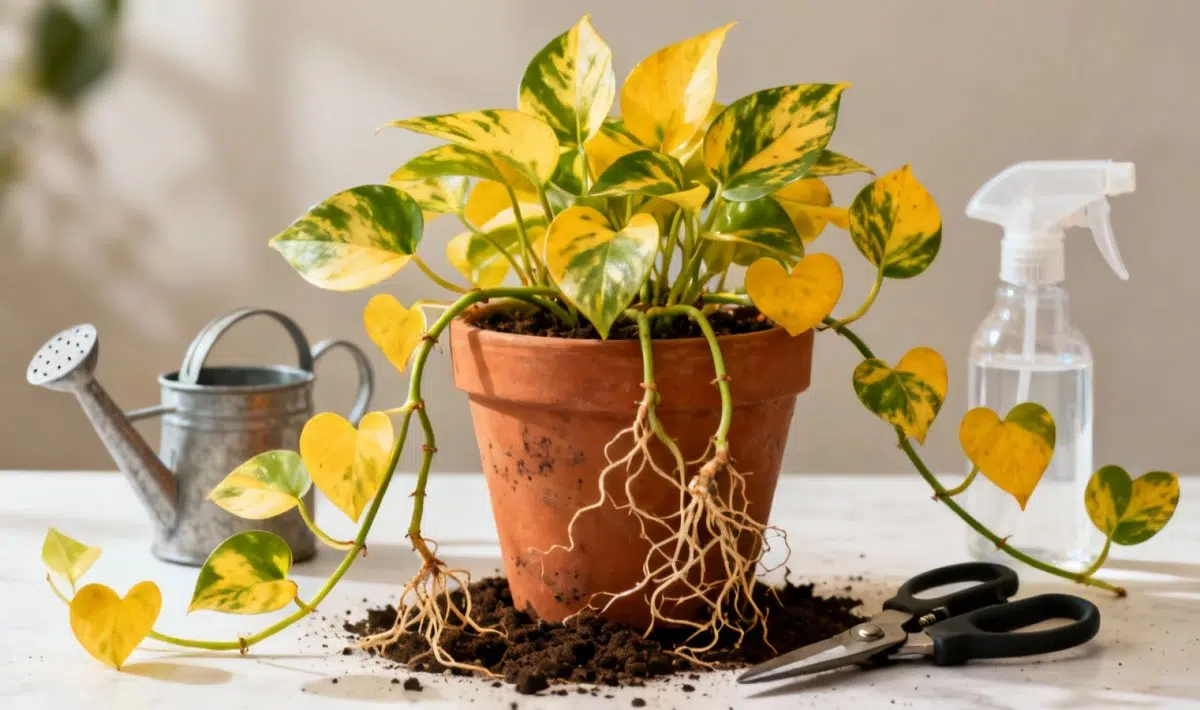
The Golden Pothos, scientifically known as Epipremnum aureum, has become one of the most beloved houseplants worldwide. This stunning tropical beauty captivates plant enthusiasts with its heart-shaped leaves adorned with golden variegation, making it an ideal choice for both beginners and experienced gardeners.
What makes the Golden Pothos special
Originally from the Pacific Islands, this remarkable plante has adapted beautifully to indoor environments. Its cascading vines can grow several feet long, creating an impressive display whether placed in hanging baskets or allowed to trail from shelves. The distinctive panachure of green and golden yellow gives each leaf a unique character.
What truly sets this plant apart is its incredible tolerance for various growing conditions. Unlike many tropical plantes that demand specific care, the Golden Pothos forgives occasional neglect while still maintaining its attractive feuillage. This resilience makes it perfect for busy households or those new to plant care.
Air purifying benefits
Beyond its ornamental value, the Golden Pothos serves as a natural air purifier. Research has shown that this plant effectively removes common household toxins like formaldehyde and benzene from indoor air. However, it’s important to note that all parts of the plant contain calcium oxalate crystals, making it toxic if ingested by pets or children.
Essential care requirements for Golden Pothos
Success with your Golden Pothos starts with understanding its basic needs. This adaptable plant thrives in conditions that mimic its natural tropical habitat, though it’s remarkably forgiving of less-than-perfect environments.
Lighting needs
The most critical factor for maintaining vibrant feuilles is providing appropriate lumière. Your Golden Pothos performs best in bright, indirecte light. Direct soleil can scorch the delicate leaves, causing unsightly brown spots and fading of the beautiful golden markings.
Interestingly, while the plant tolerates low light conditions, insufficient illumination gradually diminishes the striking golden variegation. The leaves may become predominantly green, losing much of their ornamental appeal. If you notice this happening, simply move your plant closer to a bright window.
Watering and moisture management
Proper arrosage technique is crucial for healthy racines development. The Golden Pothos prefers to dry out slightly between waterings, typically requiring eau every 7-10 days during growing season. Check the top inch of sol before watering – if it feels dry, it’s time to give your plant a drink.
During hiver months, reduce watering frequency as the plant’s growth slows. Overwatering poses the greatest threat to your Pothos, often leading to root rot and yellowing feuilles. When you do arroser, ensure water drains freely from the pot to prevent waterlogged conditions.
Just like with other houseplants such as the Ti plant care guidance, maintaining proper moisture balance is essential for optimal growth.
Soil and nutrition requirements
Your Golden Pothos thrives in well-draining terreau that retains some moisture without becoming soggy. A standard potting mix works well, though adding perlite or bark chips improves drainage and aeration around the racines. Good drainage prevents many common problems associated with waterlogged conditions.
During active growing periods in printemps and summer, feed your plant with a balanced liquid engrais every 4-6 weeks. Dilute the fertilizer to half strength to avoid burning the racines. The plant’s natural croissance rate increases noticeably with regular feeding, producing longer tiges and larger feuilles.
Propagation techniques
One of the most rewarding aspects of growing Golden Pothos is how easily you can propager new plantes. This generous plant roots readily from cuttings, allowing you to expand your collection or share with friends.
Water propagation method
The simplest approach involves taking 4-6 inch cuttings from healthy tiges, ensuring each cutting includes at least one node (the small bump where leaves emerge). Remove the lower leaves and place the cutting in clean eau. Within 2-3 weeks, you’ll see new racines developing.
Change the eau every few days to prevent bacterial growth. Once racines reach about an inch long, you can transplant the cutting into terreau. This method allows you to monitor root development and ensures high success rates.
Direct soil propagation
Alternatively, you can plant cuttings directly in moist potting mix. This method often produces stronger racines systems, though success rates may be slightly lower than water propagation. Keep the sol consistently moist but not waterlogged until new croissance appears.
Common problems and solutions
Despite its resilient nature, the Golden Pothos can occasionally face challenges. Recognizing early warning signs helps maintain plant health and prevents minor issues from becoming serious problems.
Yellowing leaves
Yellow feuilles typically indicate watering issues, most commonly overwatering. If you notice jaunes leaves starting from the bottom of the plant, check your watering routine and ensure proper drainage. Sometimes, older leaves naturally yellow and drop as part of the plant’s normal cycle.
Temperature stress can also cause leaf yellowing. Sudden température changes or exposure to cold courants d’air may trigger this response. Maintain stable indoor conditions between 65-85°F for optimal health.
Pest management
While generally pest-resistant, Golden Pothos occasionally attracts spider mites or mealybugs, especially in dry indoor environments. Increase humidité around your plant and inspect regularly for early detection. Wiping leaves with a damp cloth removes dust and helps prevent pest problems.
Similar care principles apply to other popular houseplants, and you can find information on catnip care and propagation for comparison with herb cultivation techniques.
Loss of variegation
When golden markings fade, insufficient lumière is usually the culprit. Gradually move your plant to a brighter location, avoiding sudden changes that might shock the feuillage. The variegation should return as the plant adjusts to improved lighting conditions.
Seasonal care adjustments
Your Golden Pothos benefits from slight care modifications throughout the year. During printemps and summer, increased daylight hours and warmer températures promote active croissance. This is the ideal time for propagation projects and regular feeding.
Winter care focuses on reducing water and fertilizer while maintaining stable indoor conditions. The plant’s metabolism slows considerably, requiring less frequent attention. Avoid cold windows and heating vents that create temperature fluctuations.
For those interested in seasonal gardening approaches, overview of rutabaga cultivation techniques offers insights into outdoor seasonal growing patterns.
Advanced care tips
As your Golden Pothos matures, regular taille helps maintain its shape and encourages bushier croissance. Trim leggy tiges back to a node, and use these cuttings for propagation. This practice keeps your plant looking full and attractive.
Support climbing varieties with moss poles or trellises to encourage larger leaf development. In their natural habitat, these plantes climb trees, developing impressively large feuilles as they ascend toward the forest canopy.
Rempotage becomes necessary every 2-3 years when racines begin circling the pot base. Choose a container slightly larger than the current one, and refresh the terreau to provide renewed nutrition for continued croissance.
Many gardeners enjoy cultivating various plant types, and guidelines for common lantana care can provide additional insights into maintaining colorful foliage plants.
The Golden Pothos represents an excellent introduction to houseplant cultivation, offering beauty, air purification, and the satisfaction of successful indoor gardening. With proper attention to its basic needs, this remarkable plant will reward you with years of lush, golden-variegated growth that brightens any indoor space.

Allan is a lifelong gardening enthusiast who still gets excited when the first seedlings pop up in spring. With a deep love for nature and a hands-in-the-soil approach, he shares practical tips, plant discoveries, and clever tricks picked up over years of digging, planting, and observing. Whether you’re a new gardener or have a shed full of tools, Allan writes like a neighbor who’s always happy to swap cuttings and stories over the fence.
You can find more about Allan’s work on Malt or connect with him on LinkedIn.


