
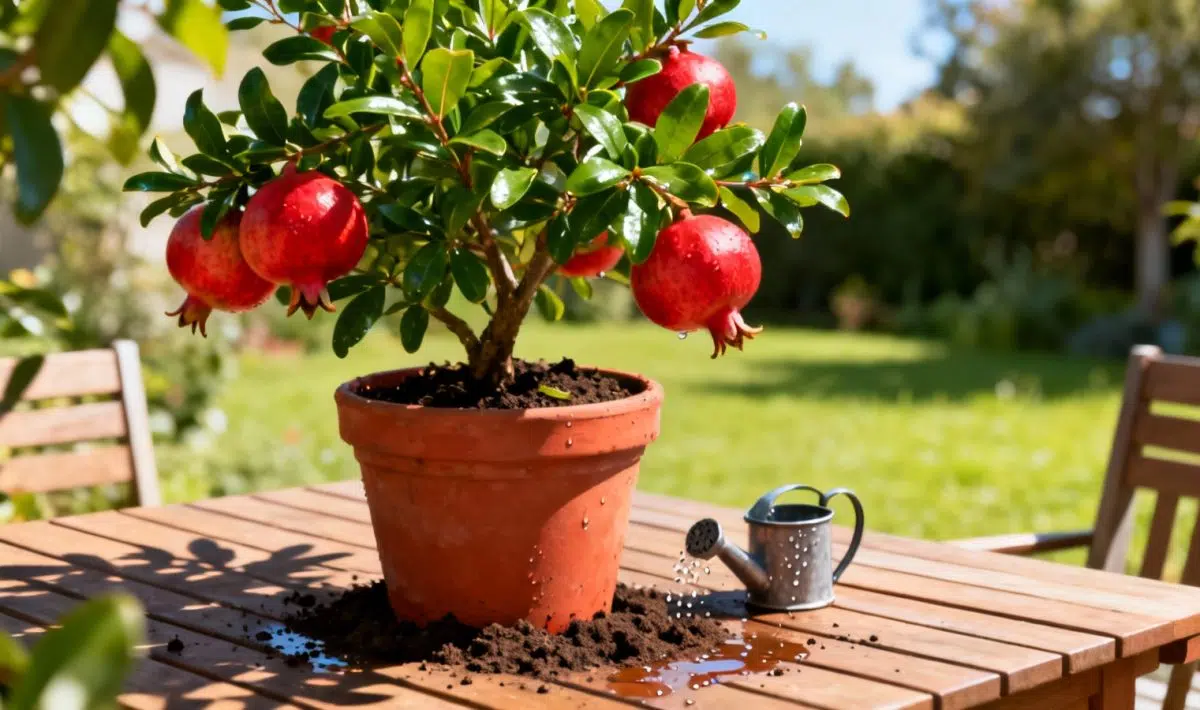
Watering your pomegranate tree correctly can make the difference between a thriving plant that produces abundant, sweet fruit and one that struggles with poor growth. This fascinating fruit tree, scientifically called Punica granatum, has specific water needs that change throughout the year and depend on various factors like age, size, and environmental conditions.
Understanding pomegranate water requirements
Pomegranate trees are remarkably adaptable plants, but they perform best with consistent, moderate watering. Unlike many exotic fruit trees, pomegranates can tolerate drought conditions once established, but regular watering ensures optimal fruit production and plant health. The key is finding the right balance – these trees need enough moisture for healthy growth but not so much that their roots become waterlogged.
Young pomegranate trees require more frequent watering than mature specimens. During the first year after planting, you should water your pomegranate tree 2-3 times per week, providing about 1-2 inches of water each time. This frequent watering helps establish a strong root system and supports vigorous growth.
How often should you water your pomegranate throughout the seasons
Seasonal watering adjustments are crucial for pomegranate care. During spring and summer, when the tree is actively growing and producing fruit, increase watering frequency to twice weekly. The warm weather and increased light exposure create higher water demands, especially when the tree is developing its characteristic seeds and sweet fruit.
Fall requires a gradual reduction in watering frequency as the tree prepares for dormancy. Water once weekly during autumn, allowing the soil to dry slightly between waterings. This helps the tree transition into its winter rest period naturally.
Winter watering should be minimal for outdoor pomegranates in mild climates. Water only when the soil becomes very dry, typically every 2-3 weeks. Indoor pomegranates may need more frequent watering due to heated environments.
Proper watering techniques for optimal results
The method you use to water your pomegranate is just as important as frequency. Deep, slow watering encourages roots to grow deeper into the soil, creating a more drought-resistant plant. Apply water slowly at the base of the tree, allowing it to soak into the root zone rather than running off the surface.
Creating a watering basin around young trees helps direct water to the root zone efficiently. Form a shallow depression around the tree’s drip line, about 2-3 feet from the trunk. This technique ensures water reaches the feeder roots where it’s needed most.
Similar to how you might carefully manage water your scarlet-star for best growth, pomegranates benefit from consistent moisture levels rather than alternating between very wet and very dry conditions.
Signs your pomegranate needs water
Learning to read your pomegranate’s water needs prevents both under-watering and over-watering problems. Wilting leaves during the hottest part of the day indicate water stress, especially if the leaves don’t recover in the evening. However, slight afternoon wilting on very hot days is normal and doesn’t necessarily mean the tree needs immediate watering.
Check soil moisture by inserting your finger 2-3 inches into the soil near the tree’s base. If the soil feels dry at this depth, it’s time to water. For container-grown pomegranates, lift the pot – a significantly lighter weight indicates dry soil.
Fruit development provides another clue about water needs. If developing pomegranates appear shriveled or if the tree drops immature fruit, insufficient water may be the cause. Just as watering cabbage for optimal health requires attention to plant signals, pomegranates communicate their needs through their appearance.
Avoiding common watering mistakes
Over-watering causes more problems for pomegranates than under-watering. Soggy soil leads to root rot, fungal diseases, and poor fruit quality. Always ensure your planting site has excellent drainage, and never allow water to pool around the tree’s base.
Inconsistent watering creates stress that can cause fruit splitting, especially as pomegranates near maturity. Maintain steady soil moisture throughout the growing season rather than allowing dramatic wet-dry cycles.
Watering the foliage instead of the soil wastes water and can promote fungal diseases. Focus water delivery at soil level, keeping leaves dry whenever possible. This approach is particularly important during humid weather when fungal problems are more likely to develop.
Special considerations for container-grown pomegranates
Potted pomegranates require more frequent watering than ground-planted trees because containers dry out faster. During summer, you may need to water every other day or even daily in very hot, dry conditions. Choose containers with drainage holes to prevent waterlogging.
The size of your container affects watering frequency – smaller pots dry out much faster than larger ones. A pomegranate in a 20-gallon container will need less frequent watering than one in a 5-gallon pot. Monitor soil moisture carefully, especially during the first growing season.
Much like the careful attention required for water Brazilian jasmine for vibrant blooms, container pomegranates need consistent moisture management to produce their best fruit.
Environmental factors affecting water needs
Temperature, humidity, and wind all influence how quickly your pomegranate tree uses water. High temperatures and low humidity increase water loss through transpiration, requiring more frequent watering. Similarly, windy conditions can dry soil and stress plants more quickly than calm weather.
Soil type significantly affects watering frequency. Sandy soils drain quickly and require more frequent watering, while clay soils hold moisture longer but may become waterlogged if over-watered. Amend heavy clay soils with organic matter to improve drainage and water infiltration.
Tree age and size also determine water needs. Mature pomegranates with extensive root systems can access deeper soil moisture and typically need less frequent watering than young trees. However, larger trees with more foliage may require greater total water volume when you do water them.
Supporting healthy growth with proper care
Combining proper watering with other care practices maximizes your pomegranate’s health and productivity. Mulching around the tree base helps retain soil moisture, reducing watering frequency while suppressing weeds that compete for water resources.
Fertilizing pomegranates appropriately supports their water uptake efficiency. Well-nourished trees make better use of available water and show greater drought tolerance. Apply a balanced fertilizer in early spring as new growth begins.
Understanding these principles helps whether you’re growing pomegranates or managing optimal watering for black walnut trees – each plant has unique needs that require attention to detail.
With consistent, appropriate watering practices, your pomegranate tree will reward you with vigorous growth, beautiful flowers, and delicious, antioxidant-rich fruit. Remember that establishing good watering habits from planting time sets the foundation for years of successful pomegranate cultivation in your garden.

Allan is a lifelong gardening enthusiast who still gets excited when the first seedlings pop up in spring. With a deep love for nature and a hands-in-the-soil approach, he shares practical tips, plant discoveries, and clever tricks picked up over years of digging, planting, and observing. Whether you’re a new gardener or have a shed full of tools, Allan writes like a neighbor who’s always happy to swap cuttings and stories over the fence.
You can find more about Allan’s work on Malt or connect with him on LinkedIn.


