Sweet alyssum is one of those delightful annual flowers that provides gardeners with both beauty and simplicity. These charming little plants create cascading carpets of tiny blooms, but knowing exactly how often should you water your sweet alyssum can make the difference between thriving plants and struggling seedlings. With their naturally drought-tolerant nature once established, sweet alyssum requires a thoughtful approach to watering that changes throughout their growing cycle.
Understanding sweet alyssum water requirements
Sweet alyssum (Lobularia maritima) has evolved as a Mediterranean native, which means it’s naturally adapted to periods of dry conditions. This annual flower actually performs better with moderate watering than with constant moisture. The key lies in understanding that these plants hate waterlogged soil more than they dislike occasional dryness.
For optimal growing conditions, sweet alyssum prefers well-draining soil that allows excess water to escape quickly. Heavy clay soils that retain moisture can lead to root rot and poor plant performance. Similarly, plants grown from seed need consistent moisture during germination, but mature plants require much less frequent watering.
Several factors influence how often you’ll need to water your sweet alyssum. Temperature, humidity, soil type, and container versus ground planting all play crucial roles in determining the perfect watering schedule.
Watering frequency by growth stage
Seedling and establishment phase
During the first 4-6 weeks after planting seeds or transplanting seedlings, sweet alyssum requires more consistent moisture. Water every 2-3 days, ensuring the soil stays slightly damp but never soggy. This critical period establishes the root system that will support the plant throughout its growing season.
Check the soil moisture by inserting your finger about an inch deep. If it feels dry at this level, it’s time to water. Morning watering works best during this phase, as it allows plants to absorb moisture before the day’s heat begins.
Young plants are particularly sensitive to both overwatering and drought stress. Watch for signs like wilting leaves or yellowing foliage, which can indicate watering issues. Proper establishment now will reward you with stronger, more resilient plants later.
Mature plant watering schedule
Once your sweet alyssum plants are established and forming their characteristic low-growing mats, reduce watering frequency significantly. Mature plants typically need water only once or twice per week, depending on weather conditions and soil drainage.
These hardy annuals actually prefer to dry out slightly between waterings. Allow the top inch of soil to become dry before providing the next drink. This approach encourages deeper root growth and prevents the fungal issues that can plague constantly moist environments.
During particularly hot or windy periods, you may need to increase watering frequency slightly. However, resist the urge to water daily unless you’re dealing with extreme drought conditions or container plantings.
Seasonal watering adjustments
Spring brings rapid growth for sweet alyssum, requiring more frequent watering as plants establish and temperatures fluctuate. As recommended by experienced gardeners, maintaining consistent moisture during this period supports healthy development without encouraging weak, spindly growth.
Summer watering becomes more challenging as heat increases evaporation rates. However, sweet alyssum’s drought tolerance shines during this season. Water deeply but less frequently, encouraging roots to grow downward in search of moisture rather than staying shallow.
Fall often provides natural rainfall that reduces or eliminates the need for supplemental watering. Many varieties of sweet alyssum will self-seed during autumn if allowed to dry out naturally at the season’s end.
Container versus ground planting differences
Plants grown in containers or hanging baskets require more frequent watering than those planted directly in garden soil. Container soil dries out much faster, potentially requiring daily watering during hot weather. For containerized sweet alyssum, understanding the watering schedule for sweet alyssum blooms becomes even more critical for success.
Ground-planted sweet alyssum benefits from natural soil moisture retention and deeper root exploration. These plants can often survive on rainfall alone once established, making them perfect for low-maintenance garden areas.
When growing sweet alyssum in mixed containers with other plants, consider the water requirements of companion plants. Some gardeners find success pairing sweet alyssum with other drought-tolerant annuals that share similar watering needs.
Signs of proper watering
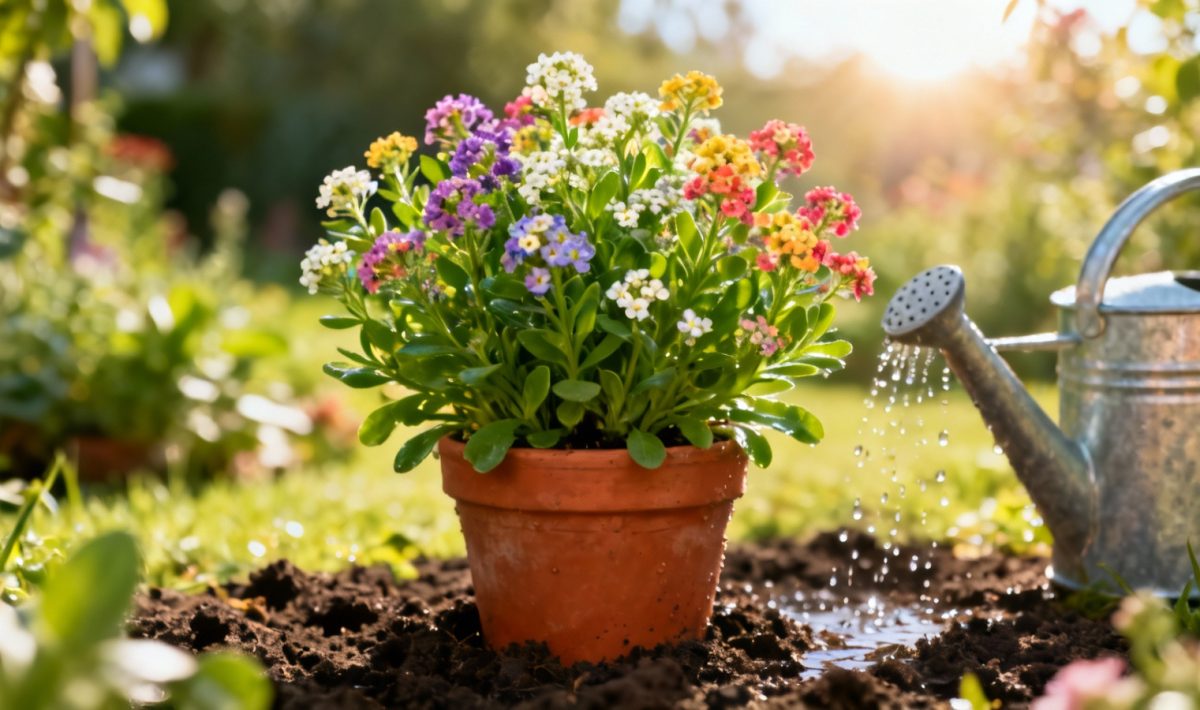
Healthy sweet alyssum displays several visual cues that indicate proper watering practices. Look for compact, bushy growth with abundant small flowers in white, purple, or pink varieties. The foliage should appear vibrant green without yellowing or brown edges.
Overwatered sweet alyssum often develops yellowing leaves, particularly from the bottom up. The plants may appear leggy or produce fewer flowers. In severe cases, root rot can develop, causing plants to collapse despite appearing well-watered.
Underwatered plants typically show wilting during the hottest part of the day, though they may recover somewhat in cooler evening temperatures. Prolonged drought stress can cause premature flowering cessation and seed production.
Best watering practices and techniques
The timing of watering makes a significant difference in plant health and water efficiency. Early morning watering allows plants to absorb moisture before daily heat increases evaporation rates. This timing also reduces the risk of fungal diseases that thrive in warm, moist evening conditions.
Water at soil level rather than sprinkling from above to keep foliage dry and reduce disease pressure. A soaker hose or drip irrigation system works excellently for sweet alyssum, providing steady moisture directly to the root zone.
Deep, thorough watering once or twice weekly proves more beneficial than frequent light sprinklings. This approach encourages deeper root development and improves drought tolerance. Much like caring for other garden plants, understanding water requirements for sweet mock-orange or learning about proper watering for norfolk island pine demonstrates how different species have unique moisture needs.
Troubleshooting common watering problems
If your sweet alyssum stops flowering or becomes leggy, evaluate your watering routine. Too much water often causes these issues, especially in rich soils or humid climates. Reduce watering frequency and improve soil drainage if possible.
Plants that appear stunted or develop brown, crispy leaf edges may be receiving too little water or suffering from salt buildup in containers. Flush container soil occasionally with clear water to remove accumulated fertilizer salts.
During heat waves, even drought-tolerant plants like sweet alyssum may need extra attention. However, avoid the temptation to overcompensate with excessive watering. Instead, provide some afternoon shade or mulch around plants to reduce soil temperature and moisture loss.
Advanced watering strategies
Experienced gardeners often use mulch around sweet alyssum to conserve soil moisture and regulate soil temperature. A light layer of organic mulch helps retain moisture while preventing the soggy conditions these plants dislike.
Consider the specific microclimate in your garden when developing a watering schedule. Areas with good air circulation dry out faster than sheltered spots, while southern exposures typically require more frequent watering than northern locations.
For gardeners managing multiple plant types, learning how different species respond to watering helps create efficient care routines. Understanding optimal watering for oleander plants alongside sweet alyssum care can help you develop a comprehensive garden watering strategy.
Sweet alyssum’s adaptability and relatively simple water requirements make it an excellent choice for both beginning and experienced gardeners. By providing appropriate moisture during establishment and then allowing plants to demonstrate their natural drought tolerance, you’ll enjoy months of fragrant blooms with minimal fuss. Remember that successful watering comes from observing your plants and adjusting to their specific needs rather than following rigid schedules.

Allan is a lifelong gardening enthusiast who still gets excited when the first seedlings pop up in spring. With a deep love for nature and a hands-in-the-soil approach, he shares practical tips, plant discoveries, and clever tricks picked up over years of digging, planting, and observing. Whether you’re a new gardener or have a shed full of tools, Allan writes like a neighbor who’s always happy to swap cuttings and stories over the fence.
You can find more about Allan’s work on Malt or connect with him on LinkedIn.