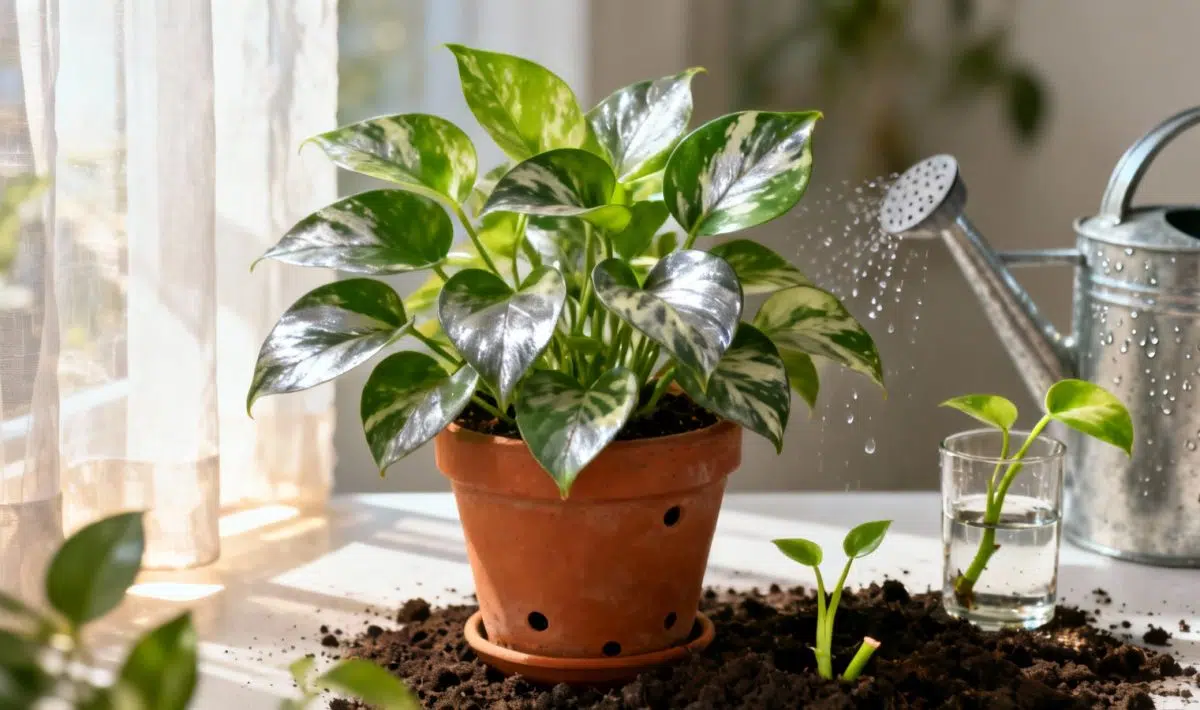
Satin pothos care: light, watering, propagation and growing tips
The Satin Pothos, scientifically known as Scindapsus pictus, is truly one of those plants that makes indoor gardening feel effortless. With its stunning silvery markings on heart-shaped leaves and incredibly forgiving nature, this beautiful vine has won the hearts of plant lovers everywhere. Whether you’re just starting your plant journey or you’re a seasoned green thumb, this gorgeous trailing beauty offers something special for everyone.
Originally from Southeast Asia, this charming climber brings a touch of the tropics right into your home. The most striking feature has to be those distinctive silver patches scattered across the deep green foliage. The leaves have this lovely satin-like texture that catches the light beautifully, making it a real showstopper wherever you place it.
Unlike some high-maintenance plants, the Satin Pothos is remarkably adaptable. It happily trails from shelves, climbs up moss poles, or simply sprawls across surfaces with minimal fuss. The plant can grow several feet long indoors, creating stunning cascades of variegated foliage that bring life to any corner of your maison.
Perfect lighting conditions for your plant
Getting the lighting right is absolutely crucial for maintaining those gorgeous silver markings. Your Satin Pothos thrives in bright, indirecte light but can tolerate lower light conditions quite well. Think of it as that friend who’s happy anywhere but really shines in the right spot.
Avoid placing your plant in direct soleil, as this can scorch those beautiful leaves and fade the distinctive panachure. A spot near a north or east-facing window works wonderfully. If you notice the silver markings becoming less pronounced, it’s usually a sign your plant needs a bit more luminosité.
For those darker corners where you’d love to add some greenery, the Satin Pothos will still survive, though growth might slow down a bit. Just like with care tips for Nerium oleander, understanding your plant’s light preferences is key to long-term success.
Watering techniques that work
Here’s where the Satin Pothos really shows its easygoing personality. This plant prefers to dry out slightly between waterings, making it perfect for busy plant parents or those still learning the ropes. Stick your finger about an inch into the terreau – if it feels dry, it’s time for a drink.
During the growing season (spring and summer), you’ll typically need to water every 7-10 days. In hiver, when growth slows down, you can stretch this to every 2-3 weeks. Always water thoroughly until you see water draining from the bottom holes.
Watch out for yellowing feuilles, which often signal overwatering. Brown, crispy edges usually mean your plant is thirsty. The key is finding that sweet spot where the sol stays lightly moist but never soggy.
Choosing the right pot and soil
Your pot choice can make or break your plant’s health. Always choose a container with drainage holes – this is non-negotiable for healthy racines. Terra cotta pots work beautifully as they allow excess moisture to evaporate, though plastic pots are fine too if you’re careful with watering.
For terreau, a well-draining potting mix is idéal. You can use regular houseplant soil mixed with some perlite or bark chips to improve drainage. The goal is creating a mix that holds moisture without becoming waterlogged.
Propagation made simple
One of the most rewarding aspects of owning a Satin Pothos is how easily it propagates. Taking boutures is straightforward and incredibly satisfying. Look for stems with at least one node (those little bumps where racines will form) and cut just below it.
You can root these cuttings in water or directly in moist terreau. Water propagation lets you watch the racines develop, which is pretty exciting. Once the racines are about an inch long, you can transplant into soil. Similar to techniques used for growing Cucumis sativus successfully, timing and proper conditions matter for best results.
The whole process usually takes 2-4 weeks, depending on conditions. Keep your cuttings in warm, bright indirect light and maintain consistent moisture levels.
Feeding and fertilizing
During the active growing season, your Satin Pothos will appreciate monthly feeding with a balanced liquid engrais. Dilute it to half strength to avoid burning the racines. In hiver, you can skip fertilizing entirely as the plant’s croissance naturally slows down.
Over-fertilizing can actually reduce those beautiful silver markings, so less is definitely more here. If you notice salt buildup on the sol surface, flush the pot thoroughly with plain water.
Common problems and solutions
Even though Satin Pothos is generally trouble-free, a few issues can pop up. Yellow feuilles usually indicate overwatering, while brown tips suggest low humidité or fluoride in tap water. Try using filtered or rainwater if your tap water is heavily treated.
Pest-wise, you might occasionally deal with spider mites or mealybugs. Regular inspection and wiping down the feuilles with a damp cloth helps prevent most problems. If pests do appear, insecticidal soap usually takes care of them quickly.
Just as plant enthusiasts learn when caring for Philodendron ‘Birkin’, recognizing early warning signs helps maintain plant health. Loss of variegation often means insufficient light, while leggy growth suggests the same issue.
Creating ideal growing conditions
Temperature-wise, keep your plant comfortable between 65-85°F (18-29°C). Avoid placing it near heating vents, air conditioners, or drafty windows. These plantes appreciate stable conditions rather than temperature swings.
Humidité levels around 40-50% work well, though the plant tolerates average household humidity just fine. If you want to boost humidité, group plants together or use a pebble tray rather than misting, which can sometimes lead to fungal issues.
Unlike more finicky varieties such as tips for Monstera obliqua care require, Scindapsus pictus adapts well to various indoor environments. This makes it an excellent choix for débutants and experienced plant parents alike.
Styling and display ideas
The versatility of Satin Pothos makes it perfect for various display options. Trail it from hanging baskets, train it up a moss pole, or let it cascade from high shelves. The silver-speckled feuillage creates beautiful contrast against dark walls or furniture.
Consider pairing it with plants that have different textures and growth habits. While some gardeners focus on growing Southern magnolia properly outdoors, indoor spaces benefit from the soft, trailing nature of this lovely vine.
Regular pruning keeps the plant bushy and full. Simply pinch back leggy stems to encourage more compact croissance. Those pruned pieces make perfect cuttings for propagation or sharing with friends.
With its combination of stunning beauty, easy care requirements, and generous nature, the Satin Pothos truly deserves a spot in every plant lover’s collection. Once you experience how rewarding it is to grow this gorgeous vine, you’ll understand why it’s become such a beloved houseplant worldwide.
Allan is a lifelong gardening enthusiast who still gets excited when the first seedlings pop up in spring. With a deep love for nature and a hands-in-the-soil approach, he shares practical tips, plant discoveries, and clever tricks picked up over years of digging, planting, and observing. Whether you’re a new gardener or have a shed full of tools, Allan writes like a neighbor who’s always happy to swap cuttings and stories over the fence.
You can find more about Allan’s work on Malt or connect with him on LinkedIn.