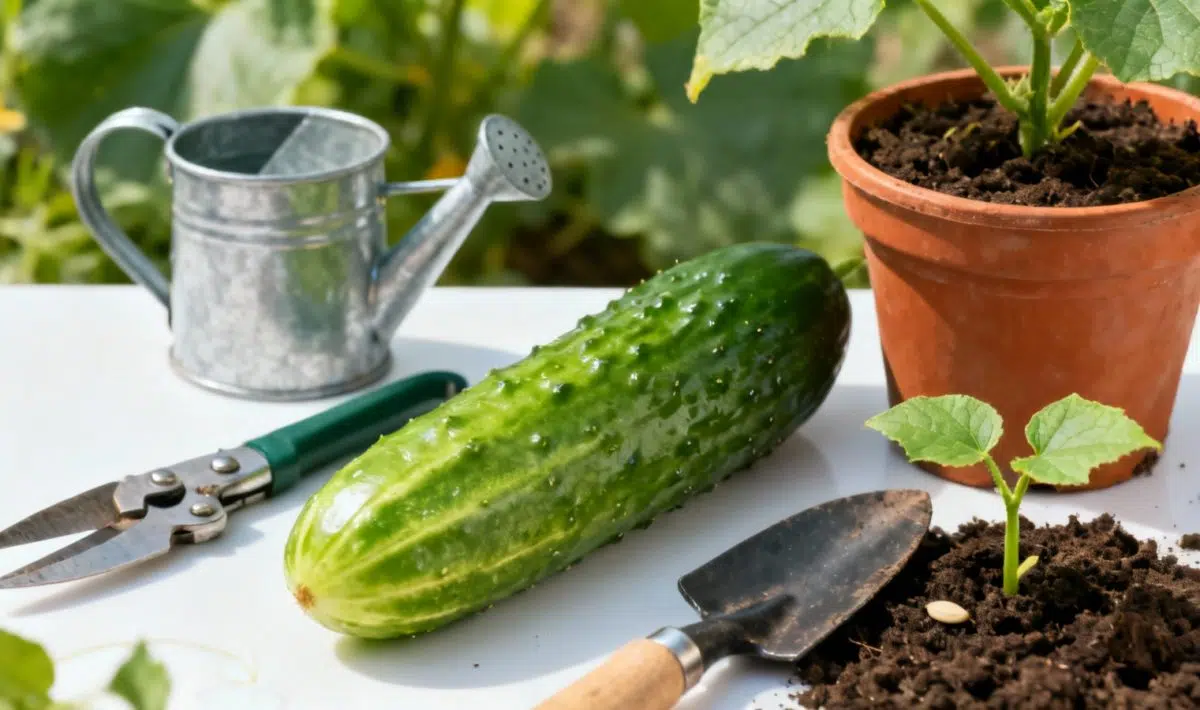
Cucumber – Cucumis sativus: care, characteristics, culture, propagation
Growing your own cucumbers is one of life’s simple pleasures that never gets old. These refreshing vegetables, scientifically known as Cucumis sativus, have been delighting gardeners and food lovers for centuries. Whether you’re planning to add crisp slices to your summer salads or pickle them into crunchy cornichons, understanding how to properly care for cucumber plants will transform your gardening experience.
The cucumber belongs to the Cucurbitaceae family, making it a cousin to melons, squashes, and gourds. This annual climbing plant originates from northern India and can reach impressive heights of 2 to 3 meters when properly supported. What makes cucumbers particularly appealing is their versatility – they’re equally at home in greenhouse environments and outdoor garden beds.
Cucumber plants are remarkable climbers with distinctive features that make them easy to identify. Their large, heart-shaped leaves create dense foliage that provides excellent coverage for trellises or garden structures. The bright yellow flowers appear in clusters, with both male and female blooms on the same plant, ensuring good fruit production when pollinators visit your garden.
The fruits themselves vary considerably depending on the variety you choose. Some cucumbers develop smooth, dark green skin perfect for fresh eating, while others grow with spiny surfaces that make excellent pickles. Most cucumber fruits contain about 95% water, making them incredibly refreshing and low in calories. Just like care tips for oleander plants require attention to specific growing conditions, cucumbers thrive when their basic needs are understood and met.
The plant’s root system spreads relatively shallow but wide, making it important to avoid deep cultivation near established plants. Young cucumber plants are particularly sensitive to root disturbance, so gentle handling during transplanting ensures better establishment and healthier growth throughout the season.
Popular cucumber varieties for home gardens
Choosing the right cucumber variety depends on your intended use and growing space. Slicing cucumbers like ‘Marketmore’ and ‘Straight Eight’ produce long, smooth fruits perfect for fresh consumption. These varieties typically reach 6-8 inches in length and maintain excellent flavor when harvested regularly.
Pickling varieties such as ‘Boston Pickling’ and ‘National Pickling’ develop shorter, more compact fruits with bumpy skin texture. These cucumbers are specifically bred for their firm flesh and ability to maintain crispness during the pickling process. Many gardeners find success growing both types to enjoy fresh cucumbers all summer while preserving extras for winter enjoyment.
Creating ideal growing conditions for cucumbers
Successful cucumber cultivation starts with understanding their environmental preferences. These warm-season vegetables require consistent temperatures between 65-75°F for optimal growth. Unlike cold-hardy plants such as growing hardy fuchsia plants well, cucumbers are extremely sensitive to frost and should only be planted after all danger of cold weather has passed.
Soil preparation makes a significant difference in cucumber production. These plants thrive in rich, well-draining soil with plenty of organic matter. Adding compost or aged manure before planting provides the nutrients needed for vigorous growth. The ideal soil pH ranges from 6.0 to 7.0, slightly acidic to neutral, which allows for optimal nutrient uptake.
Consistent moisture is crucial throughout the growing season. Cucumber plants have high water requirements due to their large leaves and rapid growth rate. However, avoid overwatering, which can lead to root rot and fungal diseases. A layer of organic mulch around plants helps retain soil moisture while suppressing weeds that compete for nutrients.
Planting and propagation techniques
Starting cucumber seeds is straightforward and rewarding. You can begin seeds indoors 2-3 weeks before the last expected frost date, or direct seed in the garden once soil temperatures consistently reach 60°F. Seeds germinate quickly in warm soil, often sprouting within 3-7 days under ideal conditions.
When transplanting seedlings, handle them carefully to avoid disturbing the delicate root system. Space plants 12-18 inches apart in rows, or plant in hills with 2-3 plants per group. Adequate spacing ensures good air circulation, which helps prevent common fungal diseases that affect cucumber foliage.
For continuous harvest, consider succession planting every 2-3 weeks through midsummer. This approach ensures fresh cucumbers throughout the growing season rather than having all fruits ripen simultaneously. Much like growing philodendron Birkin successfully requires consistent care practices, maintaining regular planting schedules maximizes your cucumber harvest.
Essential care and maintenance practices
Regular feeding supports the rapid growth and heavy fruit production characteristic of healthy cucumber plants. Apply a balanced fertilizer every 3-4 weeks, or use compost tea for a gentler organic approach. Side-dress plants with compost mid-season to maintain soil fertility and encourage continued production.
Training cucumber vines onto supports not only saves space but also improves air circulation and makes harvesting easier. Sturdy trellises, cages, or fence panels work well for supporting these vigorous climbers. Gently tie young vines to supports using soft materials that won’t damage the stems as they grow thicker.
Pruning isn’t essential for cucumbers, but removing lower leaves that touch the soil can prevent disease problems. Also, pinching off the growing tips once vines reach the top of their supports encourages lateral branching and can extend the productive period of your plants.
Preventing common problems
Cucumber plants face several potential challenges, but most are preventable with proper care. Powdery mildew, a common fungal disease, appears as white, powdery spots on leaves. Ensure adequate spacing, avoid overhead watering, and remove affected leaves promptly to prevent spread.
Cucumber beetles are perhaps the most serious pest threat, as they can transmit bacterial wilt disease. Row covers during early growth protect young plants, but remove them when flowers appear to allow pollination. Yellow sticky traps help monitor and reduce beetle populations throughout the season.
Bitter cucumbers often result from environmental stress, particularly inconsistent watering or extreme temperatures. Maintaining even soil moisture and providing shade during intense heat helps prevent this problem. Similar to how information on southern magnolia care emphasizes environmental stability, cucumber quality depends on consistent growing conditions.
Harvesting and storage techniques
Knowing when to harvest cucumbers ensures the best flavor and texture. Most slicing varieties are ready when they reach 6-8 inches long and have developed their characteristic dark green color. Pick fruits regularly, even daily during peak production, to encourage continued flowering and fruit set.
For pickles, harvest when cucumbers are 2-4 inches long, depending on your preferred pickle size. Smaller fruits tend to have fewer seeds and firmer texture after processing. Early morning harvesting, when plants are fully hydrated, often yields the crispest fruits.
Fresh cucumbers store best in the refrigerator and maintain quality for about one week. Avoid storing them near ethylene-producing fruits like tomatoes or bananas, which can cause yellowing and faster deterioration. For long-term preservation, pickling or freezing cucumber slices in salt brine extends their usability well beyond the growing season.
Culinary applications and varieties
The versatility of cucumbers extends far beyond simple salad additions. Their high water content and mild flavor make them excellent for refreshing summer soups, smoothies, and infused waters. Varieties with thin skins rarely need peeling, while thicker-skinned types benefit from partial peeling to improve texture.
Different cultivars offer unique characteristics for specific uses. English cucumbers, typically grown in greenhouses, have virtually seedless flesh and thin, edible skin. Armenian cucumbers, despite their name, are actually melons with a cucumber-like flavor and unusual ribbed appearance that adds visual interest to dishes.
Just as how to care for Monstera obliqua requires understanding specific plant needs, selecting appropriate cucumber varieties for your intended uses ensures the most satisfying results from your gardening efforts.
Growing cucumbers successfully combines understanding their basic requirements with consistent care throughout the season. From proper soil preparation and timely planting to regular harvesting and pest management, each step contributes to a bountiful harvest. Whether you’re growing crisp slicing varieties for fresh eating or compact pickling types for preservation, the satisfaction of homegrown cucumbers makes the effort thoroughly worthwhile. With attention to their needs for warmth, moisture, and nutrients, your cucumber plants will reward you with abundant, flavorful fruits all season long.
Allan is a lifelong gardening enthusiast who still gets excited when the first seedlings pop up in spring. With a deep love for nature and a hands-in-the-soil approach, he shares practical tips, plant discoveries, and clever tricks picked up over years of digging, planting, and observing. Whether you’re a new gardener or have a shed full of tools, Allan writes like a neighbor who’s always happy to swap cuttings and stories over the fence.
You can find more about Allan’s work on Malt or connect with him on LinkedIn.