
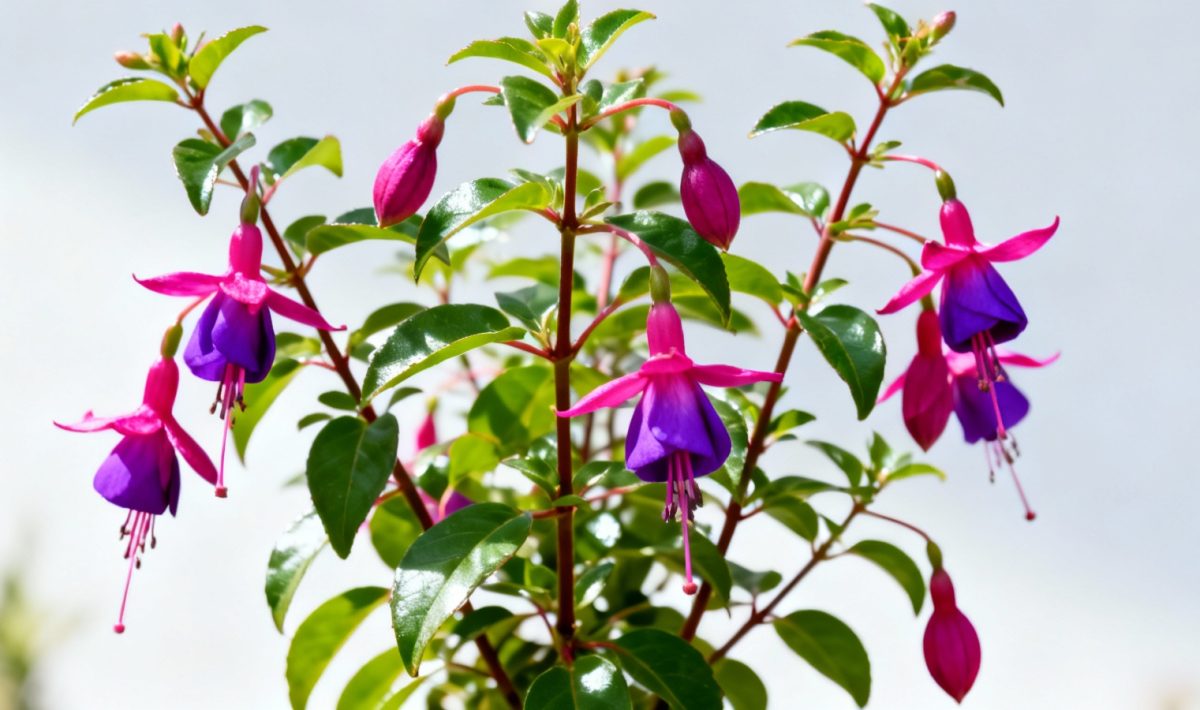
The hardy fuchsia, scientifically known as Fuchsia magellanica, stands out as one of the most resilient flowering shrubs you can grow in temperate gardens. Unlike its tender cousins, this remarkable plant thrives outdoors year-round, offering gardeners months of graceful pendant blooms from summer through autumn.
This South American native has earned its reputation as the toughest member of the fuchsia family. While other fuchsias require winter protection or greenhouse care, Fuchsia magellanica can withstand temperatures down to -15°C in well-drained soil conditions. The secret lies in its robust root system and adaptable nature, making it perfect for both novice and experienced gardeners.
Characteristics of hardy fuchsia
The hardy fuchsia presents itself as a graceful shrub with distinctive drooping flowers that dance in the slightest breeze. These bell-shaped blooms typically feature vibrant red sepals and purple petals, though varieties offer different color combinations including pink, white, and deep crimson. The flowers appear continuously from mid-summer until the first frost, providing months of garden color.
The plant develops into a bushy shrub reaching heights of 1.5 to 2 meters when fully established. Its small, oval leaves are arranged alternately along slender stems, creating an elegant backdrop for the abundant flowers. In colder regions, the feuillage becomes caduc, dropping in winter, while in milder climates it remains semi-persistant throughout the year.
Several varieties of hardy fuchsias are available to suit different garden styles. Some produce doubles flowers with extra layers of ruffled pétales, while others maintain the classic simple form. Cold-hardy cultivars like ‘Riccartonii’ and ‘Mrs Popple’ are particularly popular for their exceptional rusticité and prolific floraison.
Growing conditions and soil requirements
Hardy fuchsias prefer rich, well-draining sol with a slightly acide to neutral pH between 6.0 and 7.0. The terre should retain moisture without becoming waterlogged, as soggy conditions can lead to root problems. Adding organic matter such as compost or well-rotted manure improves both drainage and fertility.
These plantes thrive in partial shade to dappled sunlight. While they can tolerate morning soleil, protection from intense afternoon heat is essential for optimal performance. An ideal location receives 4-6 hours of gentle morning light followed by afternoon ombre. This exposure pattern helps prevent flower fading and reduces water stress during hot summer months.
Wind protection is crucial for hardy fuchsias, as their delicate tiges can break easily in strong gusts. Plant them near walls, fences, or larger shrubs that provide natural shelter. However, ensure good air circulation to prevent fungal diseases that can affect both feuilles and flowers.
Planting and establishment
The best time for plantation of hardy fuchsias is late printemps after the last frost has passed. This timing allows the plant to establish strong racines before winter arrives. Choose a spot that meets the light and soil requirements while considering the mature size of your chosen variety.
Dig a planting hole twice as wide as the root ball and just as deep. Mix the excavated terre with compost or well-rotted organic matter to improve soil structure. Place the plant at the same depth it was growing in its pot, backfill gently, and water thoroughly to settle the sol around the racines.
For container growing, select a pot at least 40cm wide and deep to accommodate the developing root system. Use a high-quality potting mix enriched with slow-release fertilizer. Container-grown fuchsias need more frequent watering and feeding than those planted in garden sol, but offer the advantage of mobility for winter protection if needed.
Seasonal care and maintenance
Spring care focuses on encouraging new growth and preparing for the flowering season. As temperatures warm and danger of hard gelées passes, remove any dead or damaged bois from winter. Cut back the main tiges to about 15cm from ground level to promote bushy growth and abundant flower production.
Summer maintenance revolves around consistent watering and deadheading spent blooms. Hardy fuchsias need regular eau, especially during dry spells, but avoid overwatering which can lead to root problems. Remove faded fleurs regularly to encourage continuous blooming throughout the season.
Autumn preparation involves gradual reduction of watering as growth slows. Allow the plant to naturally enter dormancy rather than forcing continued growth with fertilizer. In régions with severe froids, apply a thick mulch around the base to protect the crown and racines from freezing temperatures.
Winter care varies by climate zone. In milder areas, hardy fuchsias may retain some feuillage and require minimal intervention. In colder régions, the top growth will die back completely, but don’t worry – the plant will regenerate from the base in printemps. Much like when you’re cultivating Solanum tuberosum potatoes, proper winter preparation ensures vigorous spring growth.
Propagation techniques
The most reliable method for propagating hardy fuchsias is through softwood cuttings taken in late printemps or early summer. Select healthy, non-flowering shoots about 8-10cm long, making cuts just below a leaf node. Remove the lower feuilles and dip the cutting in rooting hormone before planting in a mixture of peat and perlite.
Keep cuttings in a warm, humid environment with bright but indirect light. A heated propagator or plastic covering helps maintain consistent moisture and temperature. Racines typically develop within 3-4 weeks, after which young plantes can be gradually acclimatized to normal growing conditions.
Seed propagation is possible but less commonly used for hardy fuchsias. The espèces will come true from seed, but named cultivars may not reproduce their parent’s exact characteristics. Sow fresh seeds in autumn or stratify stored seeds for 2-3 months before spring sowing.
Division of established clumps provides another propagation method, particularly effective for varieties that produce suckers from the base. This technique works best in early printemps as new growth begins, similar to methods used when care for Capsicum annuum plants requires division for propagation.
Common problems and solutions
Hardy fuchsias are relatively pest-free but can occasionally suffer from aphid infestations, particularly on new growth. These soft-bodied insects cluster on young shoots and flower buds, causing distorted growth. Regular inspection and early intervention with insecticidal soap or beneficial insects like ladybirds provide effective control.
Fungal diseases such as rust and botrytis can affect feuilles and fleurs during humid conditions. Ensure good air circulation around plantes and avoid overhead watering to minimize disease pressure. Remove affected plant material promptly and consider fungicide treatment for severe infections.
Root rot presents a serious threat in poorly draining sols or when plantes are overwatered. Symptoms include yellowing feuillage, wilting despite moist sol, and eventual plant collapse. Prevention through proper sol preparation and careful watering practices is far more effective than attempting to cure established root problems.
Cold damage may occur during exceptionally harsh winters or in exposed locations. While hardy fuchsias can tolerate significant froid, sudden temperature drops or late frosts can damage new growth. Protect vulnerable plantes with fleece or move container specimens to sheltered locations during extreme weather events.
Garden design and companion planting
Hardy fuchsias work beautifully in mixed borders, where their delicate fleurs provide contrast to bolder blooms. They pair excellently with shade-loving perennials like hostas, astilbe, and ferns. The drooping habit makes them ideal for raised beds or containers where the flowers can be appreciated at eye level.
Consider companion plants that share similar growing requirements. Rhododendrons and azaleas make excellent partners, offering spring blooms before the fuchsia season begins. For those interested in expanding their shade garden knowledge, growing evergreen azaleas successfully provides valuable insights into creating harmonious plant combinations.
The naturalistic garden style particularly suits hardy fuchsias, where they can develop into informal shrubs among other cottage garden favorites. Herbs like tips for growing common borage create interesting textural contrasts while attracting beneficial insects that help maintain garden health.
With proper care and understanding of its needs, the hardy fuchsia rewards gardeners with months of elegant blooms and reliable garden performance. Whether grown as a specimen plant, part of a mixed border, or in containers, this resilient shrub brings grace and color to gardens throughout the growing season.

Allan is a lifelong gardening enthusiast who still gets excited when the first seedlings pop up in spring. With a deep love for nature and a hands-in-the-soil approach, he shares practical tips, plant discoveries, and clever tricks picked up over years of digging, planting, and observing. Whether you’re a new gardener or have a shed full of tools, Allan writes like a neighbor who’s always happy to swap cuttings and stories over the fence.
You can find more about Allan’s work on Malt or connect with him on LinkedIn.


