
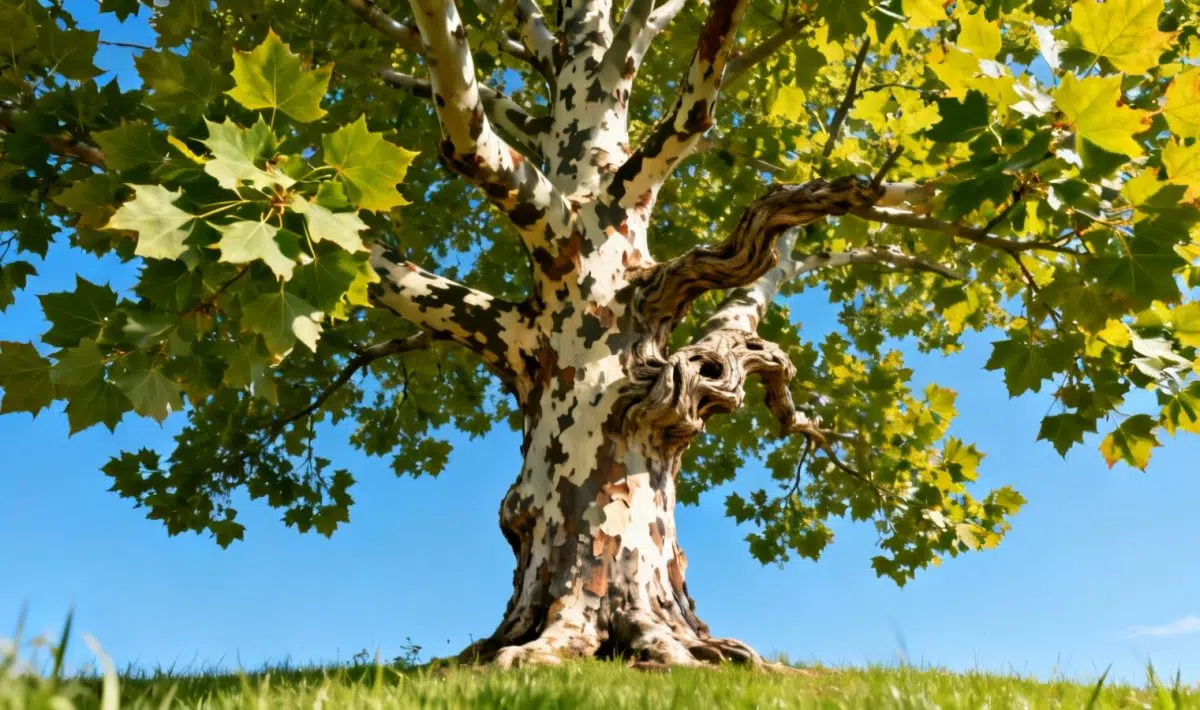
The American sycamore, or Platanus occidentalis, stands as one of North America’s most impressive native trees. This magnificent species captures attention with its distinctive mottled bark and massive spreading canopy. Whether you’re planning to add this tree to your landscape or simply want to understand its ecological importance, this comprehensive overview will provide you with essential knowledge about its characteristics and care requirements.
Understanding American sycamore characteristics and identification
The American sycamore presents several unmistakable features that make identification straightforward. This deciduous tree can reach heights of 75 to 100 feet in optimal conditions, with a trunk diameter that often exceeds 3 feet. The most striking characteristic remains its exfoliating bark, which peels away in irregular patches to reveal a beautiful mosaic of cream, green, and brown colors underneath.
The leaves of this platane species measure 4 to 9 inches across and display a distinctive three to five-lobed shape. During spring and summer, these large leaves provide dense shade with their bright green coloration. Come autumn, they transform into warm yellow and brown tones before dropping. The tree produces small, inconspicuous flowers in spring, followed by distinctive spherical seed balls that persist through winter.
The branching pattern creates an open, spreading crown that extends nearly as wide as the tree is tall. Young branches appear smooth and pale, while the massive trunk develops deep furrows with age. These physical traits make the sycamore an excellent specimen tree for large landscapes where space allows for its impressive mature size.
Distinctive bark and seasonal changes
The écorce of the American sycamore serves as its most recognizable feature throughout all seasons. Unlike other trees that maintain consistent bark appearance, the sycamore continuously sheds outer bark layers, creating an ever-changing canvas of colors and textures. This natural process helps the tree maintain healthy growth while providing visual interest year-round.
During winter months, when most trees appear dormant, the sycamore’s bark becomes even more prominent. The contrast between the mottled trunk and snow creates striking visual appeal. Spring brings fresh green growth that complements the bark’s natural palette, while summer’s full canopy frames this distinctive feature beautifully.
Optimal growing conditions for American sycamore culture
Successfully growing an American sycamore requires understanding its natural habitat preferences. This espèce thrives in moist, well-drained soils typically found along riverbanks and floodplains throughout eastern North America. From southern Canada down to northern Florida, and from the Atlantic coast to the Great Plains, these arbres have adapted to various climate conditions.
Soil preferences lean toward deep, fertile ground with consistent moisture availability. However, established trees demonstrate remarkable drought tolerance once their extensive root system develops. The ideal pH range falls between 6.0 and 7.5, though sycamores adapt to slightly alkaline conditions as well. Much like how you might learn about growing rutabaga plants for their adaptability, sycamores show impressive flexibility in various soil types.
Full sun exposure promotes the best growth and development, though young trees benefit from partial shade protection during establishment. These trees require ample space due to their extensive canopy spread and should be planted at least 40 feet from structures. Consider mature size carefully, as the broad crown can overwhelm smaller landscapes.
Water requirements and irrigation strategies
Water management plays a crucial role in sycamore health and vigor. Young trees need consistent moisture during their first two growing seasons to establish strong root systems. Deep, weekly watering works better than frequent shallow applications, encouraging roots to grow deeper and improving drought resistance.
Mature trees rarely require supplemental irrigation except during severe drought conditions. However, extended dry periods can stress even established specimens, leading to premature leaf drop or reduced growth. Monitoring soil moisture levels around the root zone helps determine when additional water becomes necessary.
Essential care practices for healthy growth
Proper maintenance ensures your American sycamore remains healthy and attractive throughout its long lifespan. These trees typically live 250 to 300 years with appropriate care, making initial investment in proper establishment worthwhile. Regular monitoring for common issues helps prevent serious problems before they develop.
Pruning should focus on removing dead, damaged, or crossing branches rather than extensive shaping. The natural form of a sycamore requires minimal intervention when given adequate space to develop. Late winter or early spring provides the best timing for major pruning work, before active growth begins.
Fertilization requirements remain minimal for trees planted in good soil. A balanced, slow-release fertilizer applied in early spring can benefit young trees or those growing in poor conditions. Similar to how explore painted-leaf begonia care tips focus on appropriate nutrition, sycamores respond well to moderate feeding schedules rather than heavy applications.
Disease management and pest control
American sycamores face several common health challenges that require attention. Anthracnose, a fungal disease, can cause significant defoliation during cool, wet springs. While rarely fatal, repeated infections weaken trees and affect their appearance. Proper spacing for air circulation and avoiding overhead irrigation help prevent this issue.
Sycamore lace bugs occasionally cause cosmetic damage to feuilles, creating a stippled appearance that reduces the tree’s aesthetic value. These pests rarely threaten tree health but can be managed through beneficial insect conservation and targeted treatments when necessary. Regular inspection helps catch problems early when intervention proves most effective.
Propagation methods and techniques
Several reliable methods exist for propagating American sycamores, each with specific advantages and requirements. Seed collection and germination provides the most natural approach, while cutting propagation allows for faster establishment. Understanding proper timing and techniques ensures higher success rates regardless of your chosen method.
Seed collection should occur in fall when the spherical fruits begin releasing individual seeds. Fresh seeds germinate more readily than stored ones, though cold stratification improves germination rates for older seeds. Plant seeds in well-draining soil mix and maintain consistent moisture until germination occurs in spring.
Hardwood cuttings taken in late winter offer another propagation option. Select healthy, pencil-thick branches from the previous season’s growth and prepare 6 to 8-inch sections. Much like techniques used when you discover how to care for rhododendrons, proper hormone treatment and controlled conditions significantly improve rooting success.
Grafting and advanced propagation
Professional nurseries often use grafting techniques to propagate specific cultivars or improve disease resistance. While more complex than other methods, grafting allows preservation of desirable traits from exceptional parent trees. This technique requires specialized knowledge and equipment but produces genetically identical specimens.
Air layering provides another option for experienced gardeners wanting to propagate mature branches. This method involves encouraging root development on attached branches before severing them from the parent tree. Success rates vary, but this technique works well for branches that resist traditional cutting propagation.
Landscape uses and ecological benefits
The American sycamore offers numerous landscape applications beyond its ornamental value. Large properties, parks, and naturalized areas benefit most from this tree’s impressive size and spreading habit. Its rapid growth rate makes it excellent for establishing shade quickly, though adequate space remains essential.
Ecological benefits extend far beyond visual appeal. These trees support various wildlife species through their fruits, nesting sites, and shelter opportunities. Birds particularly appreciate the large branches for nesting, while small mammals utilize the seed balls as food sources. The extensive root system helps prevent soil erosion along waterways, making it valuable for restoration projects.
Urban applications require careful consideration due to the tree’s mature size and root spread. However, properly sited specimens can thrive in city environments, providing significant environmental benefits including air purification and temperature moderation. Just as find out more about riverbank grape vines contribute to ecosystem health, sycamores play important roles in urban forest sustainability.
Companion planting and garden integration
Selecting appropriate companion plants enhances the sycamore’s landscape value while creating diverse, healthy plant communities. Understory plants should tolerate the dense shade created by the mature canopy. Native wildflowers, ferns, and shade-tolerant shrubs work well beneath established trees.
Consider seasonal changes when planning companion plantings. Spring ephemerals that bloom before leaf emergence take advantage of available sunlight, while summer-flowering shade plants provide color during the growing season. This layered approach creates year-round interest while supporting local wildlife populations. Techniques similar to those used when you get insights on mock strawberry cultivation can help establish groundcover beneath your sycamore.
Regional considerations and climate adaptation
American sycamores demonstrate excellent cold hardiness throughout most of their native range, typically surviving temperatures well below freezing. However, northern limits exist, particularly in Canada where only the southernmost regions support natural populations. Understanding your local climate helps ensure successful establishment and long-term survival.
Heat tolerance proves equally important, especially in southern regions where summer temperatures can stress even well-established trees. Adequate moisture and protection from extreme heat help maintain tree health during challenging periods. Mulching around the base conserves soil moisture while moderating root zone temperatures.
Regional pests and diseases vary significantly across the species’ range. Northern areas may face different challenges than southern locations, making local extension service consultation valuable for specific recommendations. What works well in one climate zone may require modification for success elsewhere.
Seasonal care adjustments
Adapting care practices to seasonal changes optimizes tree health and performance. Spring emergence requires monitoring for new pest problems and disease development. Early intervention proves most effective when dealing with emerging issues.
Summer maintenance focuses on water management and stress reduction during peak growing season. Fall preparation includes final feeding if necessary and debris cleanup to reduce disease pressure. Winter protection for young trees may include wrapping or mulching, though mature specimens rarely need special treatment. Understanding these seasonal rhythms, much like understand how to grow lemon balm requires seasonal awareness, ensures your sycamore receives appropriate care year-round.

Allan is a lifelong gardening enthusiast who still gets excited when the first seedlings pop up in spring. With a deep love for nature and a hands-in-the-soil approach, he shares practical tips, plant discoveries, and clever tricks picked up over years of digging, planting, and observing. Whether you’re a new gardener or have a shed full of tools, Allan writes like a neighbor who’s always happy to swap cuttings and stories over the fence.
You can find more about Allan’s work on Malt or connect with him on LinkedIn.


