
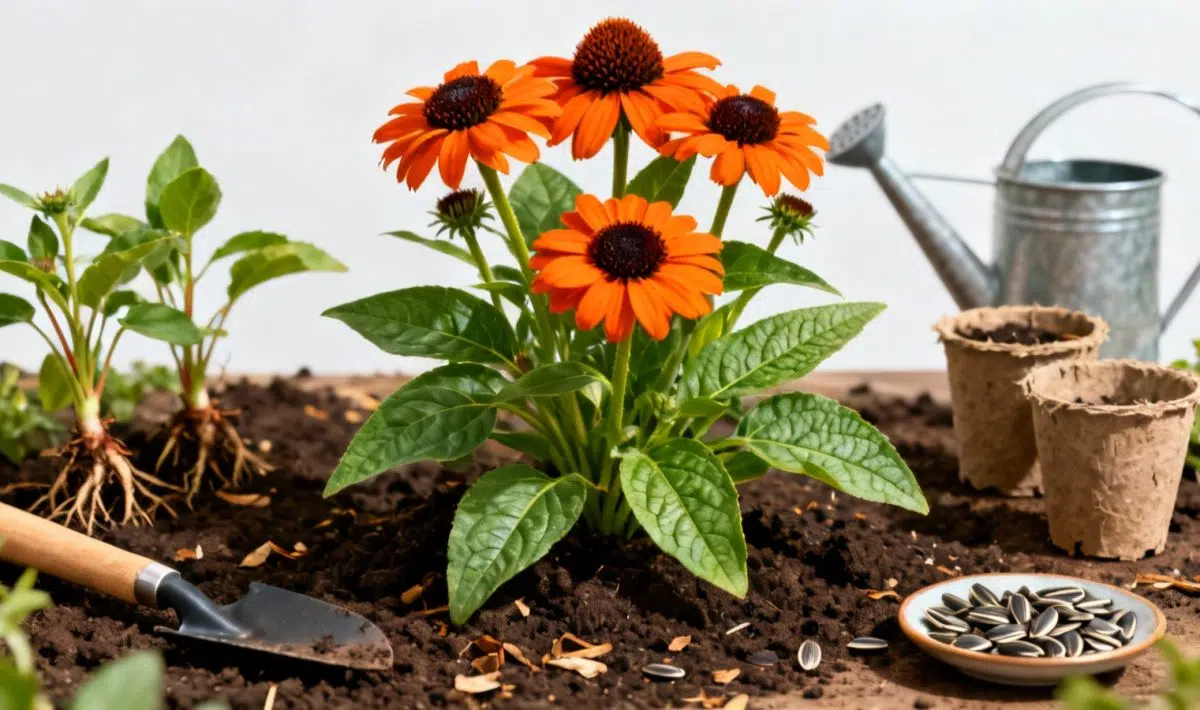
Orange coneflower, scientifically known as Rudbeckia fulgida, stands as one of the most rewarding perennial plants for gardeners seeking vibrant, long-lasting blooms. This native American wildflower brings brilliant yellow-orange capitules with dark centers to any garden space from midsummer through autumn. The rudbeckia family offers exceptional versatility, making it perfect for both novice and experienced gardeners who want reliable, colorful results with minimal fuss.
Understanding orange coneflower characteristics
The distinctive appearance of Rudbeckia fulgida makes it instantly recognizable in any garden setting. These sturdy vivace plants typically reach heights between 2 to 4 feet, creating dense clumps of dark green feuillage that serves as an excellent backdrop for the stunning fleurs. The signature capitules feature bright jaunes petals surrounding deep brown or black centers, creating a striking contrast that attracts both gardeners and pollinators alike.
The feuilles of orange coneflower display a rough, hairy texture with an elongated shape that remains attractive throughout the growing season. During automne, the feuillage maintains its appeal even as other plants begin to fade. This remarkable vivace demonstrates exceptional drought tolerance once established, making it an excellent choice for low-maintenance landscaping projects.
Popular varieties of Rudbeckia fulgida
Several outstanding variétés of Rudbeckia fulgida offer unique characteristics for different garden situations. Rudbeckia fulgida var. sullivantii ‘Goldsturm’ remains the most popular cultivar, producing abundant golden fleurs from July through September. This particular variété reaches about 24 inches in height and spreads gradually to form attractive colonies.
Another excellent choice is Rudbeckia fulgida var. deamii, which tends to be slightly taller and more robust than other forms. For those interested in diverse gardening options, you can discover painted-leaf begonia care tips to complement your perennial borders with striking foliage plants that offer different textures and couleurs.
Ideal growing conditions for orange coneflower culture
Creating the perfect environment for your rudbeckia begins with understanding its basic requirements. These adaptable plantes thrive in full sun conditions, receiving at least six hours of direct sunlight daily. However, they can tolerate partial shade, though floraison may be reduced in shadier locations.
Soil preparation plays a crucial role in successful culture. Orange coneflowers prefer well-draining terre that ranges from slightly acidic to neutral pH levels. While they tolerate various sol types, including clay and sandy conditions, they perform best in moderately fertile ground. Adding organic matter such as compost improves both drainage and nutrient content.
Planting and establishment
The optimal timing for plantation depends on your location and growing season. In most regions, printemps planting after the last frost date ensures the best establishment. Dig holes twice the width of the root ball and slightly shallower than the pot depth to prevent crown rot issues.
Space individual plantes approximately 18 to 24 inches apart to allow for natural spreading. Water thoroughly after plantation and maintain consistent moisture during the first few weeks while roots establish. Once settled, these drought-tolerant vivaces require minimal supplemental watering except during extended dry periods.
Essential care and maintenance practices
Proper entretien ensures vigorous growth and abundant blooms throughout the season. Regular deadheading of spent fleurs encourages continued flowering and prevents excessive self-seeding. Simply pinch or cut off faded capitules just above the next set of leaves or buds.
Fertilizing requirements remain minimal for established plants. A light application of balanced fertilizer in early printemps provides sufficient nutrition for the entire growing season. Over-fertilizing can actually reduce flowering and create weak, floppy growth that requires staking.
Similar maintenance principles apply to other perennial plants, and you can understand pontic rhododendron growth requirements to learn about caring for different types of long-lived garden plants that share some basic care needs.
Seasonal care considerations
During automne, you can choose to leave the seed heads for winter bird feeding or cut plants back to ground level for a tidier appearance. The dried stems and seed heads provide valuable food sources for finches and other small birds throughout winter months.
Winter protection is rarely necessary in appropriate hardiness zones, as these tough vivaces handle cold temperatures exceptionally well. In colder regions, a light mulch layer helps protect crowns from freeze-thaw cycles that can damage root systems.
Propagation methods for expanding your collection
Orange coneflowers offer several reliable propagation options for gardeners wanting to increase their plantings. Division represents the most common and successful method, best performed every 3 to 4 years in early printemps or fall. Carefully dig up established clumps and separate them into smaller sections, ensuring each division has both roots and shoots.
Seed collection and sowing provide another viable propagation approach. Collect ripe graines from dried flower heads in late automne, then store them in cool, dry conditions over winter. Direct sowing in printemps or starting indoors 6 to 8 weeks before the last frost both yield good results.
For gardeners interested in diverse propagation techniques, you can learn about growing rutabaga effectively to explore different methods used for various plant types in the jardin.
Tips for successful propagation
When dividing mature clumps, use sharp, clean tools to minimize root damage and disease transmission. Water newly divided sections thoroughly and maintain consistent moisture until new growth appears. Young divisions may take a full season to become fully established and bloom reliably.
Starting from graines requires patience, as plants typically won’t flower until their second year. However, this method allows you to grow larger quantities at minimal cost, perfect for naturalizing areas or creating extensive drifts of couleur in larger jardins.
Companion planting and garden design
Orange coneflowers work beautifully in mixed perennial borders, prairie gardens, and naturalized settings. Their bright jaunes blooms complement purple and blue fleurs particularly well, creating vibrant color combinations that enhance any landscape design.
Consider pairing rudbeckia with ornamental grasses, purple coneflowers, or fall-blooming asters for extended seasonal interest. These combinations provide habitat diversity while creating visually appealing displays that change throughout the growing season.
For additional garden diversity, you can explore American sycamore planting guidelines to incorporate trees that provide structure and shade for understory plantings, or find out how to propagate riverbank grape for adding vertical elements and wildlife value to your garden design.
Wildlife benefits and ecological value
Beyond their ornamental appeal, orange coneflowers provide significant ecological benefits. The fleurs attract butterflies, bees, and other beneficial pollinators throughout their blooming period. Later in the season, birds feed on the nutritious seeds, making these plantes valuable additions to wildlife-friendly jardins.
The dense feuillage also provides shelter for beneficial insects and small creatures, contributing to overall garden biodiversity. This dual-purpose nature makes rudbeckia an excellent choice for sustainable gardening practices that support local ecosystems while maintaining beautiful displays.
Common problems and solutions
Orange coneflowers generally experience few serious problems when grown in appropriate conditions. Powdery mildew can occasionally affect feuillage during humid conditions, but proper spacing for air circulation typically prevents this issue. Remove affected leaves promptly and avoid overhead watering to minimize fungal problems.
Aphids may occasionally cluster on young growth, but these pests rarely cause significant damage and can be controlled with insecticidal soap or strong water sprays. The naturally robust nature of these plantes means they recover quickly from minor pest issues without long-term effects.
For those dealing with various garden challenges, you can get tips on growing mock strawberry to learn about managing different types of ground-covering plants that may face similar growing conditions and potential issues.
With their brilliant orange and yellow blooms, exceptional hardiness, and valuable wildlife benefits, Rudbeckia fulgida deserves a place in every garden. These reliable vivaces reward gardeners with months of colorful displays while requiring minimal maintenance once established. Whether you’re creating a cottage garden, prairie planting, or simply adding long-lasting couleur to existing borders, orange coneflowers deliver consistent beauty and ecological value that enhances any outdoor space.

Allan is a lifelong gardening enthusiast who still gets excited when the first seedlings pop up in spring. With a deep love for nature and a hands-in-the-soil approach, he shares practical tips, plant discoveries, and clever tricks picked up over years of digging, planting, and observing. Whether you’re a new gardener or have a shed full of tools, Allan writes like a neighbor who’s always happy to swap cuttings and stories over the fence.
You can find more about Allan’s work on Malt or connect with him on LinkedIn.


