
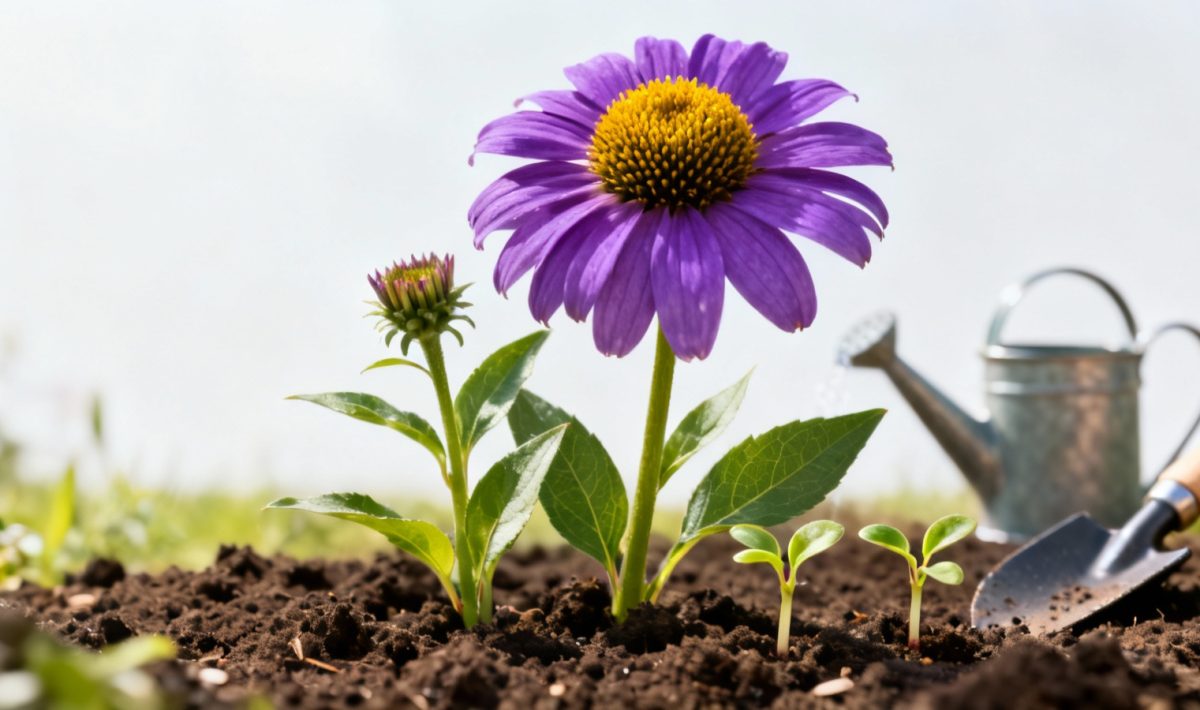
Today I’m excited to share everything you need to know about growing one of nature’s most resilient and beautiful flowers – the purple coneflower, or Echinacea purpurea. This remarkable plant has captured gardeners’ hearts worldwide with its striking purple blooms and impressive medicinal properties. Whether you’re a seasoned gardener or just starting out, this hardy perennial will reward your efforts with spectacular displays year after year.
Understanding the purple coneflower characteristics
Purple coneflower stands out in any garden with its distinctive appearance and robust nature. The plant typically reaches heights of 1.5 to 6 feet, depending on growing conditions, with a spread of approximately 20 to 28 inches. Its rough, hairy stems support beautiful daisy-like flowers featuring drooping purple petals surrounding a prominent central cone that gives the plant its common name.
The name “echinacea” comes from the Greek word “echinos,” meaning hedgehog, referring to the spiky central cone. This vivace plant belongs to the sunflower family and produces stunning fleurs from early summer through fall. The feuilles are lance-shaped with serrated edges, creating an attractive backdrop for the colorful blooms that attract butterflies and beneficial pollinators.
One fascinating aspect of echinacea cultivation is how it compares to other perennial care practices. Much like care tips for Pontic rhododendron, understanding the plant’s native habitat helps ensure successful growing conditions.
Optimal growing conditions for echinacea purpurea
Creating the perfect environment for your purple coneflower starts with understanding its natural preferences. This plante thrives in full soleil conditions, requiring 6-8 hours of direct sunlight daily for optimal floraison. In particularly hot climates (zones 8 and above), some afternoon shade can prevent stress during intense summer heat.
Soil requirements are refreshingly straightforward for this adaptable vivace. Purple coneflower tolerates various soil types but performs best in well-draining terre with a pH between 6.5 and 7.2. The plant’s extensive racines system makes it remarkably drought-tolerant once established, though consistent moisture during the first growing season helps ensure strong development.
Proper drainage is crucial – waterlogged conditions can lead to root rot and other problems. If your jardin has heavy clay soil, consider amending it with compost or creating raised beds to improve drainage. Sandy soils work well too, though you may need to water more frequently during dry spells.
Seasonal care throughout the year
Spring marks the beginning of active growth for established echinacees. As new shoots emerge from the ground, apply a balanced fertilizer to support healthy development. This is also the ideal time for dividing mature plants every 3-4 years to maintain vigor and prevent overcrowding.
During summer, deadheading spent fleurs encourages continued blooming, though many gardeners prefer leaving some seed heads for winter bird food. Regular watering during prolonged dry periods keeps plants healthy, but avoid overhead watering to prevent fungal issues.
Automne preparation involves cutting stems back to ground level after the first hard frost. However, leaving some stems standing provides winter interest and food sources for wildlife. The plant’s hardy nature means it requires no special winter protection in most climates.
Propagation methods for purple coneflower
Growing new plants from graines offers an economical way to expand your collection. Collect seeds from mature flower heads in late automne, or purchase quality graines from reputable suppliers. Echinacea graines require cold stratification – a period of cold, moist conditions that mimics winter – to break dormancy.
For stratification, mix graines with slightly moist sand or peat moss and refrigerate for 60-90 days. In late hiver or early printemps, sow stratified graines in containers filled with quality potting mix. Keep soil consistently moist and provide bright, indirect light until germination occurs, typically within 2-3 weeks.
Division represents the fastest propagation method for maintaining specific variétés. Dig up established plants in early printemps or fall, carefully separating the root system into sections. Each division should have several healthy racines and growing points. Replant immediately and water thoroughly.
Successful planting techniques
When transplanting seedlings or divisions, choose a location that receives adequate sunlight and has well-prepared sol. Dig holes slightly larger than the root ball and backfill with a mixture of existing terre and compost. Space plants 18-24 inches apart to allow for mature spread.
Container growing works exceptionally well for purple coneflower. Use a pot at least 12 inches wide with drainage holes, filled with quality potting mix. Container plants may require more frequent watering but offer flexibility in placement and easier maintenance access.
The timing of plantation significantly impacts establishment success. Spring planting allows the full growing season for root development, while fall plantation in mild climates takes advantage of cooler temperatures and autumn rains. Just as growing apricot trees successfully requires proper timing, echinacea establishment benefits from seasonal considerations.
Health benefits and medicinal uses
Beyond its ornamental value, purple coneflower has been treasured for centuries for its medicinal properties. Native American tribes traditionally used various parts of the plante to treat wounds, infections, and boost immune system function. Modern research continues to investigate these traditional uses.
The racine contains the highest concentration of active compounds, though leaves and fleurs also possess beneficial properties. Many gardeners harvest their own echinacea for making teas, tinctures, or dried preparations. However, it’s essential to properly identify the plant and consult healthcare professionals before using any herbal remedies.
Commercial echinacea products are widely available, but growing your own ensures you know exactly how the plante was cultivated and harvested. Organic growing methods, similar to those used in effective cucumber cultivation methods, help maintain the plant’s natural beneficial properties.
Companion planting and garden design
Purple coneflower integrates beautifully with other native vivaces in naturalized gardens or formal borders. Its upright habit and long blooming period make it an excellent companion for ornamental grasses, black-eyed susans, and other prairie plants. The purple fleurs create stunning contrasts with yellow blooms like rudbeckia.
For wildlife gardens, echinacea serves as both a nectar source for butterflies and a seed source for goldfinches and other birds. Plant it alongside other pollinator favorites for maximum ecological benefit. The sturdy tiges also provide winter structure when left standing.
Consider the mature size when planning your garden layout. Taller variétés work well in the back of borders, while compact cultivars suit front-of-border positions or container displays. The plant’s natural tendency to self-seed means you’ll often find volunteer seedlings appearing in unexpected places – a delightful bonus for many gardeners.
Troubleshooting common issues
While generally low-maintenance, purple coneflower can occasionally face challenges. Powdery mildew may appear during humid conditions, particularly when air circulation is poor. Ensure adequate spacing and avoid overhead watering to minimize this risk.
Root rot can occur in poorly draining sol, emphasizing the importance of proper site selection. If plants appear stunted or yellowing despite adequate care, examine the racines for signs of decay and improve drainage immediately.
Pest issues are relatively rare, though aphids occasionally attack new growth. Regular garden maintenance practices, similar to those used when growing beautiful oxeye daisies, help prevent most problems before they become serious.
Varieties and cultivar selection
The popularity of purple coneflower has led to numerous cultivar developments, offering gardeners exciting options beyond the classic species. Double-flowered variétés like ‘Razzmatazz’ feature pompom-like blooms, while ‘White Swan’ provides crisp white fleurs for different color schemes.
Compact cultivars such as ‘Pixie Meadowbrite’ suit smaller gardens or container growing, reaching only 18 inches tall while maintaining full-sized blooms. For those seeking unusual colors, ‘Sunset’ offers orange-red fleurs that add warmth to autumn displays.
When selecting variétés, consider your climate zone, available space, and desired garden style. Native species remain excellent choices for naturalizing and wildlife support, while newer hybrids may offer extended bloom times or unique characteristics. Understanding plant selection principles, much like when caring for Oriental arborvitae trees, ensures long-term garden success.
Harvesting and preserving echinacea
For those interested in harvesting their purple coneflower for medicinal use, timing and technique matter significantly. The best time for racine harvest is fall, after the plante has stored energy from the growing season. Three-year-old plants typically provide the most potent material.
Clean roots thoroughly and dry them slowly in a well-ventilated area away from direct sunlight. Properly dried echinacea root can be stored for several years in airtight containers. Feuilles and fleurs should be harvested during peak flowering for maximum potency.
Always harvest sustainably, taking no more than one-third of any plante to ensure continued health and productivity. Many gardeners prefer to dedicate specific plants to harvesting while leaving others purely for ornamental enjoyment and wildlife support.
Creating your echinacea garden
Starting your purple coneflower garden begins with selecting quality plants or graines from reputable sources. Whether you choose to start from seed or purchase established plants, success depends on proper site preparation and ongoing care throughout the first growing année.
The investment in purple coneflower pays dividends for years to come. Once established, these remarkable vivaces require minimal intervention while providing maximum garden impact. Their combination of beauty, wildlife value, and potential health benefits makes them invaluable additions to any garden space.
Remember that gardening success comes from understanding each plante’s unique needs and providing appropriate care. Purple coneflower’s forgiving nature and adaptability make it an excellent choice for both beginners and experienced gardeners seeking reliable, beautiful additions to their outdoor spaces.

Allan is a lifelong gardening enthusiast who still gets excited when the first seedlings pop up in spring. With a deep love for nature and a hands-in-the-soil approach, he shares practical tips, plant discoveries, and clever tricks picked up over years of digging, planting, and observing. Whether you’re a new gardener or have a shed full of tools, Allan writes like a neighbor who’s always happy to swap cuttings and stories over the fence.
You can find more about Allan’s work on Malt or connect with him on LinkedIn.


