How often should you water your european beech for healthy growth
The European beech, or Fagus sylvatica, is a magnificent tree that can transform any garden into a stunning landscape feature. However, knowing how often should you water your European beech is crucial for ensuring this majestic tree thrives in your garden. From my experience growing these beautiful trees, proper watering makes all the difference between a struggling plant and a flourishing specimen that will grace your property for generations.
European beech trees have specific watering requirements that change dramatically as they mature. Young plants demand consistent moisture, while established trees become remarkably drought-tolerant. The key is understanding these evolving needs and adjusting your watering schedule accordingly.
During the first growing season, your beech tree is establishing its root system and needs regular attention. This critical period determines whether your tree will thrive or struggle throughout its life. The quality of your early care directly impacts the plant’s long-term health and resilience.
Young European beech trees (0-3 years)
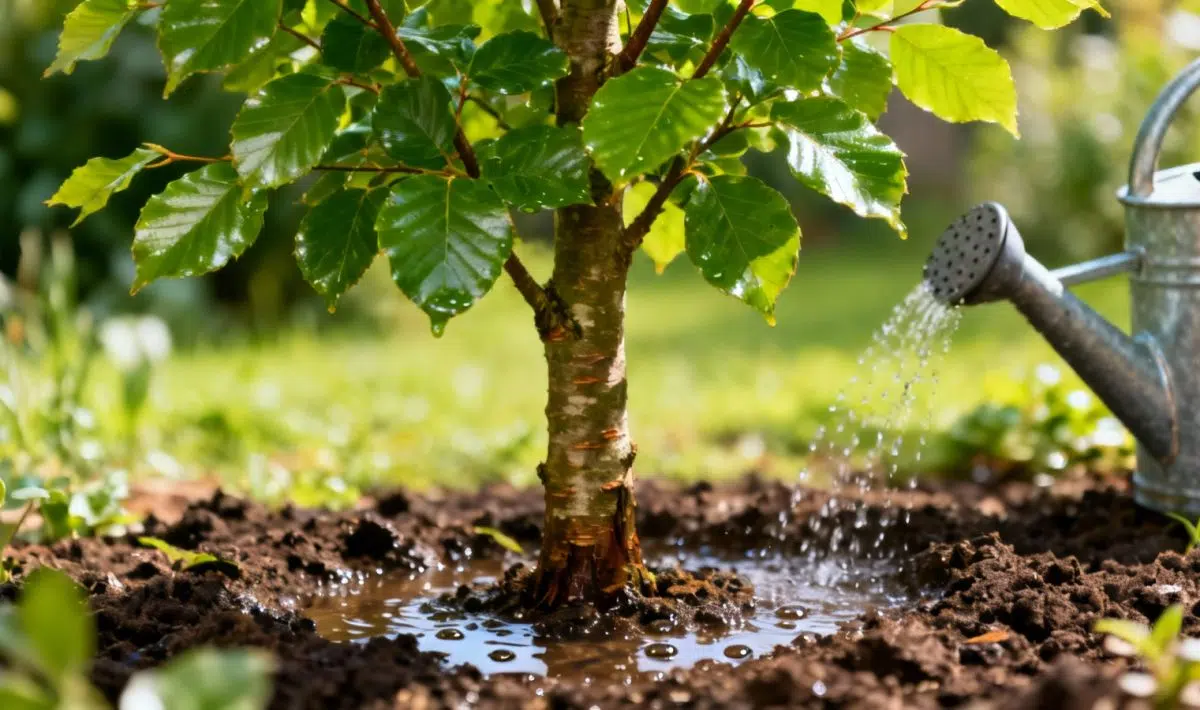
For newly planted European beech trees, consistency is everything. Water your young tree deeply once or twice per week, providing approximately 10 liters of water each session. This deep watering encourages roots to grow downward rather than staying near the surface, creating a stronger foundation for your tree.
During the first summer after planting, monitor the soil moisture carefully. The top inch should feel slightly moist but not waterlogged. If you notice the leaves wilting or the soil pulling away from the tree base, increase your watering frequency immediately. Similarly, those caring for other garden plants will find that watering tips for African-lilies share similar principles of deep, infrequent watering.
Mature European beech trees (3+ years)
Once your European beech has been established for more than three years, its watering needs change dramatically. These mature trees develop extensive root systems that can access deep soil moisture, making them surprisingly drought-tolerant. You can reduce watering to only during extended dry periods of more than two weeks without rain.
Even established trees benefit from occasional deep watering during particularly hot summer months. However, avoid frequent shallow watering, which can encourage surface roots and make the tree more vulnerable to drought stress.
Seasonal watering adjustments
Your European beech’s water requirements vary significantly across the seasons. Understanding these seasonal changes helps you provide optimal care throughout the year while avoiding common watering mistakes that can harm your tree.
Spring and summer watering
Spring marks the beginning of active growth for your European beech. As temperatures rise and daylight hours increase, water requirements also increase. During this season, check soil moisture weekly and water when the top 2-3 inches feel dry. The growing season demands more attention, especially if you experience hot, dry spells.
Summer presents the greatest watering challenge. High temperatures and increased evaporation can stress your tree quickly. Water early morning or late evening to minimize water loss through evaporation. This timing also prevents leaf scorch that can occur when water droplets act as magnifying glasses under intense sunlight.
Fall and winter care
As autumn arrives, gradually reduce your watering frequency. Your European beech is preparing for dormancy and requires less moisture. However, don’t stop watering entirely until the ground freezes. A well-hydrated tree enters winter in better condition than a drought-stressed one.
Winter watering is rarely necessary in most climates, but keep an eye on your tree during unusually warm winter spells. If you notice soil becoming extremely dry during winter thaws, provide a light watering to prevent root damage.
Soil conditions and drainage considerations
The type of soil in your garden significantly affects how often you should water your European beech. Well-draining soil requires more frequent watering, while heavy clay soils hold moisture longer but can become waterlogged easily.
European beech trees prefer slightly acidic to neutral soil with good drainage. If your soil drains poorly, consider improving it with organic matter before planting. Poor drainage can lead to root rot, which is often fatal for these trees. Just as caring for calla lilies requires attention to soil drainage, beech trees thrive when their roots aren’t sitting in waterlogged conditions.
Testing your soil drainage
Before establishing a watering schedule, test your soil drainage. Dig a hole about 12 inches deep and fill it with water. If water remains after 24 hours, your soil drains too slowly for optimal beech tree health. In such cases, you’ll need to water less frequently but ensure you’re not overwatering.
Sandy soils drain quickly and may require more frequent watering, especially during hot weather. However, this quick drainage also means less risk of root rot, making it easier to maintain proper moisture levels.
Signs of watering problems
Learning to read your European beech’s signals helps you adjust your watering schedule before serious problems develop. Both overwatering and underwatering can cause significant stress, but the symptoms differ markedly.
Underwatering symptoms
When your European beech isn’t receiving enough water, you’ll notice several warning signs. Leaves may appear wilted or droopy, especially during the hottest part of the day. The foliage might also develop brown edges or begin dropping prematurely, even during the growing season.
Soil around the tree base will feel dry several inches down, and you might notice the ground pulling away from the trunk. These symptoms require immediate attention – increase your watering frequency and depth until the tree recovers. Much like watering advice for dog roses emphasizes watching for similar stress signals, beech trees communicate their needs through visible changes.
Overwatering symptoms
Overwatering is often more dangerous than underwatering for European beech trees. Signs include yellowing leaves that don’t recover with reduced watering, fungal growth around the base, and a general decline in tree vigor. The soil may smell sour or remain constantly soggy.
If you suspect overwatering, immediately reduce watering frequency and improve drainage around the tree. Allow the soil to dry out between waterings and consider adding organic mulch to help regulate soil moisture.
Best watering techniques
How you water your European beech is just as important as when you water it. Proper techniques ensure water reaches the root zone effectively while minimizing waste and reducing disease risk.
Deep watering methods
Use a slow, deep watering approach rather than frequent light sprinklings. Place your hose at the base of the tree and allow water to soak in slowly over 30-45 minutes. This method ensures water penetrates deep into the soil where roots can access it.
Avoid watering the trunk directly, as this can encourage fungal problems. Instead, water in a circle around the tree, extending out to the drip line where most feeder roots are located. For those maintaining multiple garden plants, similar deep watering principles apply to various species, including tips for American basswood care which shares comparable root system characteristics.
Mulching for moisture retention
Apply a 2-3 inch layer of organic mulch around your European beech to help retain soil moisture and regulate temperature. Keep mulch several inches away from the trunk to prevent pest and disease problems. Good mulch options include shredded bark, leaf mold, or well-composted organic matter.
Mulch significantly reduces watering needs by slowing evaporation and maintaining more consistent soil moisture. This natural approach mimics forest floor conditions that European beech trees prefer in their native habitat.
Common watering mistakes to avoid
Many gardeners unknowingly harm their European beech trees through well-intentioned but incorrect watering practices. Avoiding these common mistakes will help ensure your tree remains healthy and vigorous for years to come.
Never water on a rigid schedule without checking soil moisture first. Weather conditions, soil type, and tree age all affect water needs. What works well in spring may be too much or too little during summer heat waves or winter dormancy.
Avoid overhead watering that wets the foliage, especially during humid conditions. This practice can promote fungal diseases and waste water through evaporation. Always direct water to the soil around the root zone rather than spraying the entire tree.
Don’t assume that rainfall eliminates the need for supplemental watering. Light rain often doesn’t penetrate deeply enough to benefit tree roots, while heavy rain may run off without soaking in properly.
Finally, remember that European beech trees are long-term investments in your garden landscape. With proper watering care during their establishment years, these magnificent trees will reward you with decades of beauty, requiring minimal maintenance once they’re well-established in your garden soil.
Allan is a lifelong gardening enthusiast who still gets excited when the first seedlings pop up in spring. With a deep love for nature and a hands-in-the-soil approach, he shares practical tips, plant discoveries, and clever tricks picked up over years of digging, planting, and observing. Whether you’re a new gardener or have a shed full of tools, Allan writes like a neighbor who’s always happy to swap cuttings and stories over the fence.
You can find more about Allan’s work on Malt or connect with him on LinkedIn.