
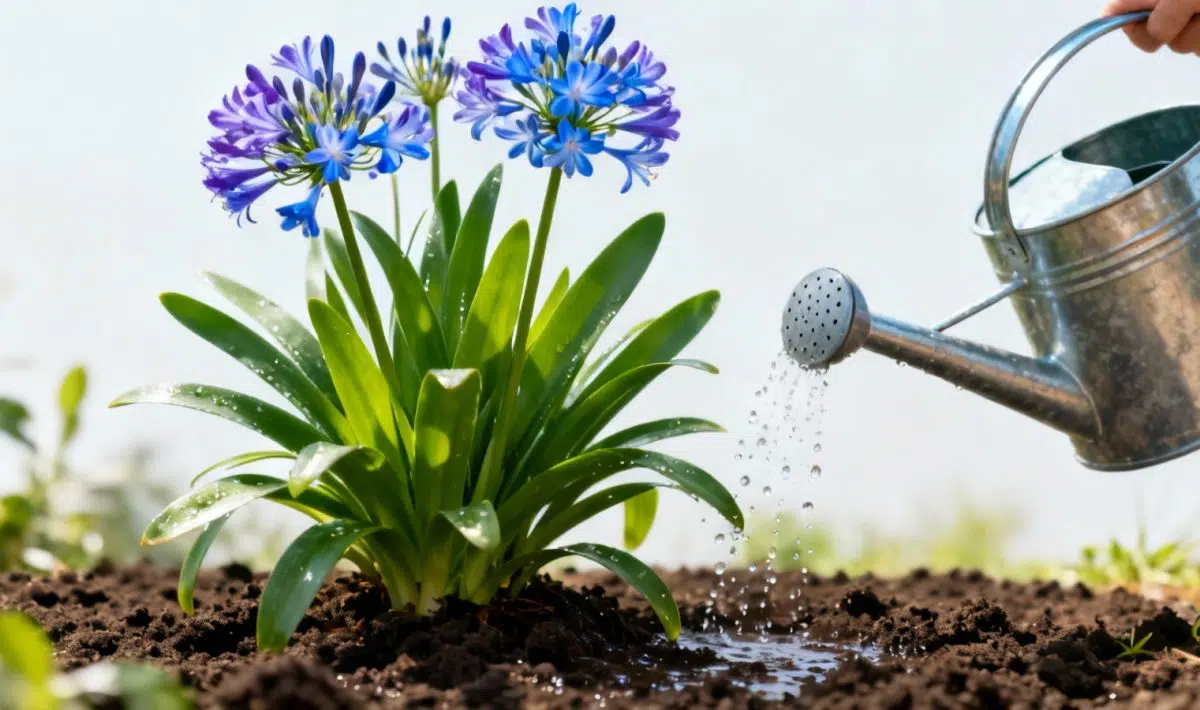
Understanding your African-lily’s water needs
Your African-lily, or Agapanthus, is a stunning plant that can transform any garden with its striking blue flowers. However, understanding how often should you water your African-lily is crucial for achieving those spectacular blooms you’re dreaming of. These plants are quite forgiving once established, but getting the watering right from the start makes all the difference.
The African-lily originates from South Africa, which gives us a clue about its water preferences. It’s naturally adapted to periods of drought followed by generous rainfall. This means your plant actually prefers a “feast or famine” approach rather than constant moisture.
Watering frequency for your African-lily plants
During the growing season from spring through summer, you’ll want to water your African-lily deeply but less frequently. Aim for once or twice a week, depending on your local conditions. Each watering session should provide about 5 to 10 liters of water per plant to ensure the moisture reaches the deep roots where it’s needed most.
The key is to let the soil dry out slightly between waterings. Your plant will tell you when it’s thirsty – the leaves might appear slightly less vibrant or the soil will feel dry when you stick your finger about 2 inches down. Just like learning a watering schedule for shrubby cinquefoil, consistency is important for establishing healthy patterns.
Signs your plant needs water
Watch for these telltale signs that your African-lily is ready for its next drink. The most obvious indicator is when the top inch of soil feels dry to the touch. You might also notice the leaves losing their usual glossy appearance or becoming slightly droopy during the hottest part of the day.
Another reliable method is the weight test if you’re growing your plant in a pot. Lift the container – a dry pot will feel noticeably lighter than one with moist soil. This technique works brilliantly and becomes second nature with practice.
Factors that influence watering needs
Several factors affect how often you’ll need to water your African-lily. Soil type plays a huge role – sandy soils drain quickly and may require watering every other day during hot spells, while clay soils hold moisture longer and need water perhaps once a week. The size of your plant matters too, as larger, more established plants have deeper root systems that can access water from further down.
Weather conditions are equally important. During hot, windy days, your plants lose water through their leaves much faster. Conversely, cool, humid conditions mean you can stretch the time between waterings. Similar principles apply when caring for your Boston fern, though the specific requirements differ.
How much water to give your African-lily
When you do water, make sure you’re giving your plant a thorough drink. A light sprinkle on the surface won’t do much good – the water needs to penetrate deep into the soil to encourage strong root development. Use a slow, steady stream of water and watch for it to start pooling slightly on the surface before moving on.
For container plants, water until you see it draining from the bottom holes. This ensures the entire root ball has been moistened. In garden beds, water slowly until the soil is saturated to a depth of about 6 inches.
Best watering techniques
Early morning is the ideal time to water your African-lily. This gives the plant time to absorb the moisture before the heat of the day causes evaporation. It also prevents the leaves from staying wet overnight, which can lead to fungal problems.
Use a soaker hose or drip irrigation system if you have multiple plants. These methods deliver water directly to the root zone without wetting the foliage. If you’re hand watering, aim for the base of the plant rather than spraying the leaves.
Common watering mistakes to avoid
The biggest mistake people make is watering too frequently with small amounts. This creates shallow root systems and plants that are less drought-tolerant. Another common error is watering in the evening, which keeps the foliage damp overnight and invites disease.
Overwatering is just as problematic as underwatering. African-lilies can develop root rot if they sit in waterlogged soil for too long. Always ensure your planting area has good drainage, whether in pots or garden beds.
Soil and sun conditions affecting watering
The amount of sun your African-lily receives directly impacts its water needs. Plants in full sun locations will require more frequent watering than those in partial shade. However, too much shade can lead to poor flowering, so finding the right balance is important.
Soil composition makes a massive difference in your watering schedule. Well-draining soil that retains some moisture is ideal. You can improve heavy clay soil by adding compost or coarse sand, while sandy soil benefits from organic matter that helps retain water. Understanding these basics helps whether you’re managing an optimal care for satin pothos or any other plant in your collection.
Creating the perfect growing environment
Your African-lily thrives in soil that drains well but doesn’t dry out completely. A good test is to water thoroughly and check how long it takes for the top inch to dry out. Ideally, this should happen within 3-4 days during the growing season.
Adding a layer of organic mulch around your plants helps maintain consistent soil moisture while suppressing weeds. Keep the mulch a few inches away from the plant stem to prevent pest problems.
Supporting healthy growth throughout the season
During winter months, significantly reduce watering frequency as your African-lily enters dormancy. The plant uses much less water during this period, and overwatering can cause the rhizomes to rot. Check soil moisture monthly and water only if the soil has become bone dry.
Spring is the perfect time to resume regular watering as new growth emerges. Gradually increase the frequency as temperatures warm and growth accelerates. This approach mirrors what you might do when following watering tips for Japanese maple or other seasonal plants.
Feeding and watering coordination
When you feed your African-lily with fertilizer, always water thoroughly afterward. This helps distribute the nutrients evenly through the soil and prevents fertilizer burn on the roots. A balanced, slow-release fertilizer applied in spring works wonderfully for most situations.
Liquid fertilizers can be applied monthly during the growing season, but always follow up with plain water to ensure proper absorption. Never fertilize a completely dry plant – give it a light watering first, then apply the fertilizer solution.
Troubleshooting common watering issues
If your African-lily isn’t flowering well despite regular watering, you might actually be giving it too much water. These plants often bloom better when they experience some water stress. Try reducing watering frequency slightly and see if flowering improves the following season.
Yellow leaves can indicate both overwatering and underwatering, so pay attention to other clues. With overwatering, leaves often turn yellow and feel soft or mushy. Underwatered plants typically have yellow leaves that feel dry and crispy. Similar diagnostic skills apply when determining optimal watering for Japanese meadowsweet in your garden.
Seasonal adjustments for success
Remember that your watering schedule should evolve with the seasons and your plant’s maturity. First-year plants need more attention and consistent moisture, while established plants become increasingly drought-tolerant. Keep notes about what works in your specific location – every garden is unique.
Pay attention to rainfall patterns in your area and adjust accordingly. During wet periods, you might not need to water at all, while drought conditions may require daily attention. Your African-lily will reward careful observation with years of stunning blooms and healthy growth.

Allan is a lifelong gardening enthusiast who still gets excited when the first seedlings pop up in spring. With a deep love for nature and a hands-in-the-soil approach, he shares practical tips, plant discoveries, and clever tricks picked up over years of digging, planting, and observing. Whether you’re a new gardener or have a shed full of tools, Allan writes like a neighbor who’s always happy to swap cuttings and stories over the fence.
You can find more about Allan’s work on Malt or connect with him on LinkedIn.


