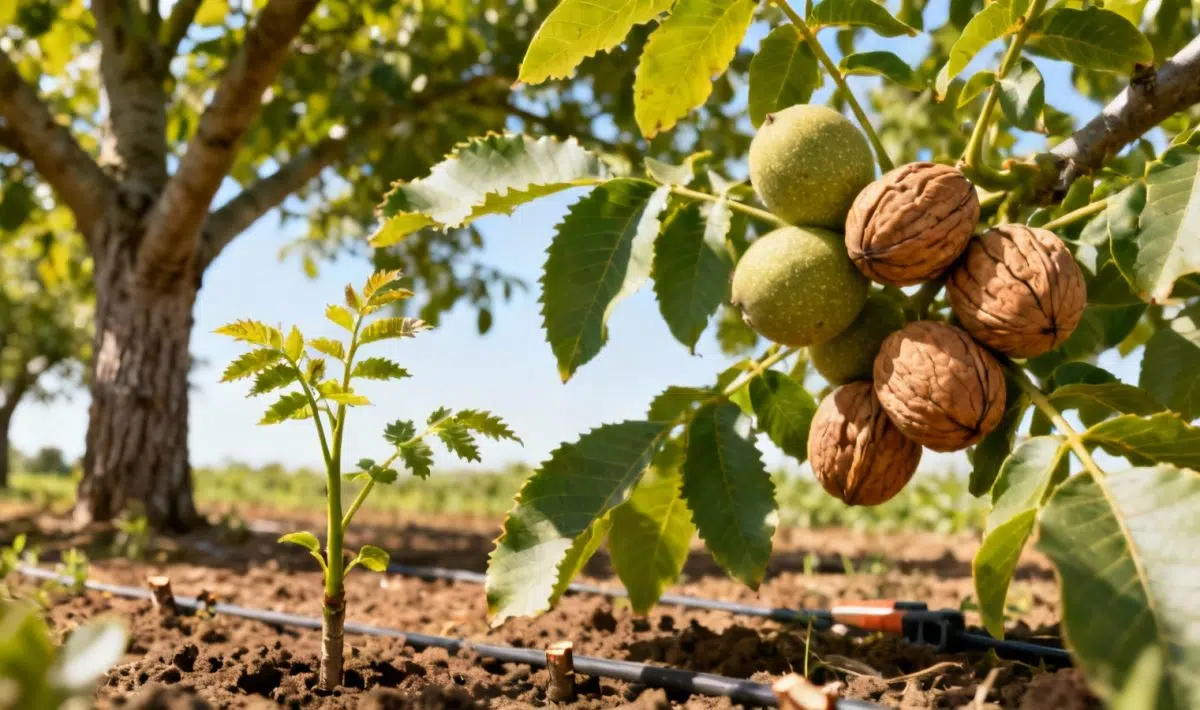
Introduction to the English Walnut – Juglans Regia
The English walnut (Juglans regia) stands as one of nature’s most magnificent trees, combining impressive height with exceptional fruit production. This majestic specimen can reach heights of 30 meters and spread up to 15 meters wide, making it a true centerpiece for any large garden or park. Despite its common name, this walnut species actually originated in the regions stretching from the Balkans to the Himalayas, earning its place in the Juglandaceae family through centuries of cultivation and appreciation.
What makes this tree particularly fascinating is its dual purpose nature. The English walnut produces both valuable timber and delicious nuts, creating an investment that pays dividends for generations. The rich, protein-packed walnuts have been treasured since ancient times, while the beautiful wood remains highly sought after for furniture making and decorative purposes. Modern gardeners continue to plant these trees not just for their practical benefits, but also for their stunning autumn displays and impressive architectural presence.
Botanical Characteristics and Growth Habits
The Juglans regia displays distinctive features that set it apart from other trees in your landscape. Its compound leaves consist of 5-9 leaflets, creating an elegant canopy that provides excellent shade during summer months. The tree produces both male and female flowers on the same plant, with male catkins appearing in spring before the leaves emerge, followed by small, inconspicuous female flowers.
Understanding the tree’s growth pattern helps in planning your garden layout effectively. Young English walnut trees grow relatively slowly for the first few years, establishing their root system before focusing on height. However, once established, they can add several feet of growth annually under optimal conditions. The tree’s mature form features a broad, rounded crown that creates a natural gathering space underneath.
Essential Care Requirements for English Walnut Trees
Proper care begins with understanding your English walnut’s fundamental needs. These trees thrive in full sun exposure, requiring at least 6-8 hours of direct sunlight daily for optimal nut production. While young trees can tolerate partial shade, mature specimens perform best when given plenty of room to spread their branches toward the light.
Soil quality plays a crucial role in your tree’s success. English walnuts prefer well-draining loamy soil with a pH between 6.0 and 7.5. The soil should be rich in organic matter and capable of retaining moisture without becoming waterlogged. Before planting, consider testing your soil and amending it with compost or aged manure to create the ideal growing environment.
Watering and Fertilization Practices
Establishing a proper watering routine ensures healthy growth throughout the seasons. Young English walnut trees need consistent moisture, especially during their first three years of establishment. Apply water slowly and deeply, allowing it to penetrate the soil around the entire root zone rather than just near the trunk.
Mature trees become quite drought tolerant once established, but they still benefit from supplemental watering during extended dry periods. During the growing season, aim to provide approximately 1 inch of water per week through rainfall or irrigation. Mulching around the base helps retain moisture and regulate soil temperature, creating conditions similar to the tree’s natural forest habitat.
Fertilization should be approached thoughtfully, as English walnuts don’t require heavy feeding. A balanced fertilizer applied in early spring supports healthy growth without encouraging excessive vegetative growth at the expense of nut production. Organic options like compost or well-aged manure work exceptionally well, releasing nutrients slowly throughout the growing season.
Pruning and Annual Maintenance
Pruning your English walnut requires timing and technique to avoid damaging this valuable tree. The best time for pruning is during the dormant season, typically between December and February, when the tree’s sap flow is minimal. This timing prevents the excessive bleeding that can occur when cuts are made during active growth periods.
Focus your pruning efforts on removing dead, diseased, or crossing branches that could create problems later. Young trees benefit from training to establish a strong central leader and well-spaced scaffold branches. However, mature English walnuts require minimal pruning beyond basic maintenance, as over-pruning can reduce nut production significantly.
Cultivation Techniques and Regional Considerations
Successfully cultivating English walnut trees requires understanding your local climate and growing conditions. These trees need a temperate climate with cold winters for proper dormancy and warm summers for nut development. The growing season should provide at least 140-150 frost-free days for reliable nut production, making climate consideration essential for success.
Regional variations significantly impact cultivation success. In cooler northern regions, choose early-maturing varieties that can complete their growing cycle before autumn frosts arrive. Southern gardeners have more variety options but must ensure adequate winter chilling hours for proper dormancy. Just as with care and propagation of oleander, understanding your local climate conditions proves crucial for long-term success.
Selecting Appropriate Varieties
Variety selection can make the difference between success and disappointment with your English walnut tree. Popular varieties like ‘Broadview’ offer excellent performance in smaller spaces, reaching only 7 meters tall while still producing abundant crops. This compact variety begins fruiting within 3-4 years and offers the advantage of being self-fertile.
For larger properties, varieties like ‘Lara’ provide exceptional yields with thin-shelled nuts that are easy to crack. ‘Europa’ works well in confined spaces, staying compact at 3.5 meters while still producing quality nuts. Each variety has specific climate requirements and harvest timing, so research carefully before making your selection.
Propagation Methods and Techniques
Propagating English walnut trees offers several pathways, each with distinct advantages and challenges. Seed propagation remains the most straightforward method, though it requires patience as seedling trees may not produce nuts identical to the parent tree. Fresh nuts planted in autumn often provide the best germination rates, following nature’s timing for optimal results.
For more predictable results, grafting onto rootstock ensures that your new tree will produce nuts identical to the desired variety. This method requires more skill and equipment but guarantees the characteristics you want in your mature tree. Similar to techniques used in growing and caring for apricots, proper timing and technique prove essential for successful grafting operations.
Seed Starting and Seedling Care
Starting English walnut trees from seed begins with selecting high-quality nuts from healthy, productive trees. The nuts need a cold stratification period of 90-120 days to break dormancy, mimicking the natural winter conditions they would experience in the wild. Store the nuts in slightly moist sand or peat moss in the refrigerator during this stratification period.
Plant stratified nuts in deep containers or directly in prepared garden beds, as walnut seedlings develop extensive taproots early in their development. Keep the growing medium consistently moist but not waterlogged, and provide protection from harsh weather conditions during the first growing season. Seedlings grow slowly initially, focusing energy on root development before significant above-ground growth begins.
Advanced Propagation Techniques
Grafting allows propagation of specific varieties while taking advantage of hardy rootstock characteristics. English walnut grafting typically occurs in late winter or early spring, using techniques like cleft grafting or bark grafting for best results. The key lies in matching the cambium layers of the rootstock and scion wood, ensuring proper healing and growth.
Budding offers another propagation option, particularly useful for commercial operations or when grafting wood is limited. This technique works best during the growing season when the bark slips easily from the rootstock. Success rates improve with practice, and many home gardeners find satisfaction in mastering these traditional horticultural skills. The principles share similarities with propagation methods used for other fruit trees, much like those employed in tips for cucumber care and culture, where attention to detail and proper technique determine success.
Common Challenges and Solutions
English walnut trees face several potential challenges that attentive gardeners can address proactively. Late spring frosts pose perhaps the greatest threat to nut production, as they can damage flowers and young developing nuts. Choosing appropriate planting locations with good air drainage and selecting varieties suited to your climate zone helps minimize frost damage risks.
Pests and diseases occasionally affect English walnut trees, though healthy specimens generally resist most problems. Walnut blight can cause significant damage during wet springs, while aphids may attack young growth. Regular monitoring allows early intervention when problems arise, often preventing minor issues from becoming major headaches.
Root competition presents another consideration, as walnut trees produce allelopathic compounds that can inhibit the growth of nearby plants. Planning your landscape with this characteristic in mind prevents conflicts with other garden plants. However, this same trait can be beneficial for natural weed suppression around the tree’s base. Indoor plant enthusiasts might appreciate learning about different plant characteristics, such as those found in caring for Philodendron ‘Birkin’, which demonstrates how understanding plant-specific needs leads to better gardening success.
Harvesting and Enjoying Your English Walnuts
The reward for proper English walnut care comes with the annual nut harvest, typically occurring in late summer or early autumn. Nuts are ready when their outer green hulls begin splitting naturally, revealing the familiar brown shells underneath. Collect nuts promptly after they fall to maintain quality and prevent pest problems.
Proper post-harvest handling ensures your nuts remain fresh and flavorful for months. Remove any remaining hull material and wash the nuts clean before drying them thoroughly. Properly dried and stored walnuts can last up to a year, providing a nutritious and delicious homegrown food source throughout the seasons.
Beyond their culinary value, English walnut trees provide numerous benefits to your landscape and environment. Their extensive root systems help prevent soil erosion, while their broad canopies offer cooling shade and wildlife habitat. The combination of practical benefits and natural beauty makes English walnut trees an excellent long-term investment for property owners with adequate space for these magnificent specimens.
Allan is a lifelong gardening enthusiast who still gets excited when the first seedlings pop up in spring. With a deep love for nature and a hands-in-the-soil approach, he shares practical tips, plant discoveries, and clever tricks picked up over years of digging, planting, and observing. Whether you’re a new gardener or have a shed full of tools, Allan writes like a neighbor who’s always happy to swap cuttings and stories over the fence.
You can find more about Allan’s work on Malt or connect with him on LinkedIn.