
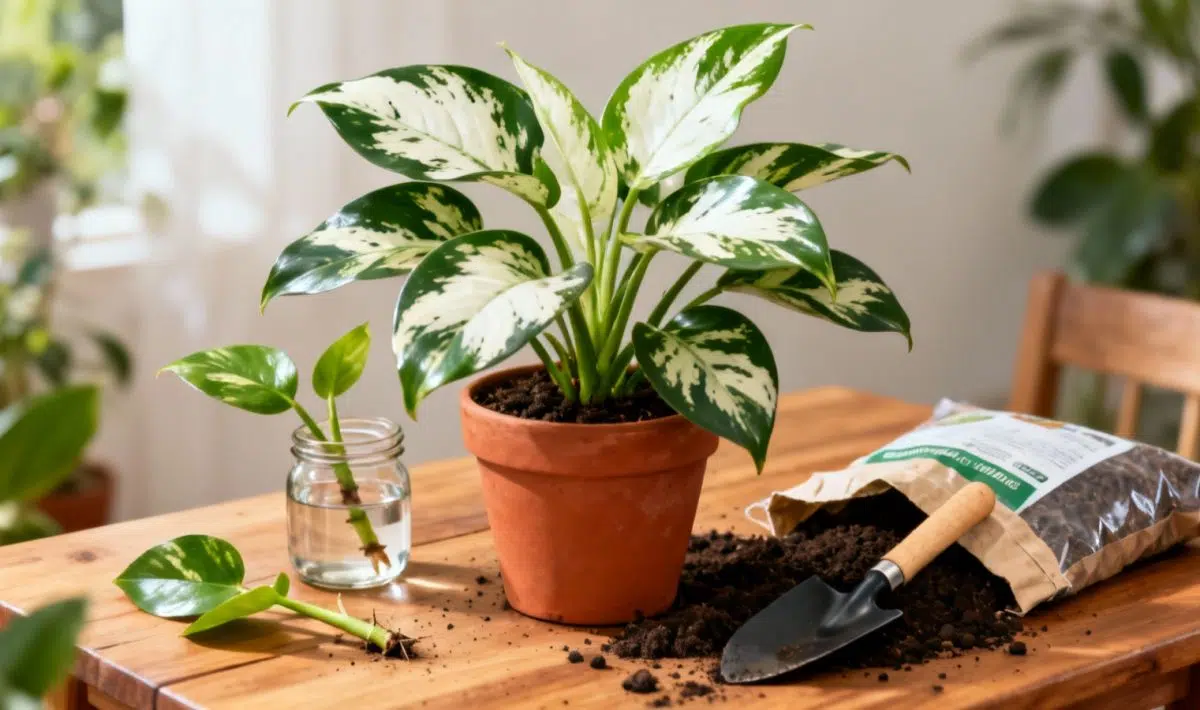
The Philodendron ‘Birkin’ has quickly become one of the most sought-after houseplants in recent years. With its striking white pinstripes against deep green leaves, this beauty transforms any indoor space into a tropical paradise. What makes this plant truly special is how it combines stunning visual appeal with surprisingly easy care requirements, making it perfect for both beginners and experienced plant enthusiasts.
Unlike many other variegated plants that can be finicky, the Birkin maintains its gorgeous patterns while tolerating the typical conditions found in most homes. This compact philodendron variety emerged from a natural mutation, giving us this incredible specimen that purifies our air while adding dramatic flair to our living spaces.
Understanding the Philodendron ‘Birkin’ characteristics
The Birkin stands out immediately with its glossy, heart-shaped leaves that can reach up to 15 cm in length and 13 cm in width. Each leaf displays unique white or cream-colored stripes that run from the center vein outward, creating patterns that no two leaves share exactly. The thick, sturdy petioles support these beautiful leaves on a compact stem that rarely exceeds 2-3 cm in diameter.
At maturity, your Birkin will typically reach 30-80 cm in both height and width when grown indoors. This makes it an ideal choice for apartments, offices, or any space where you want maximum visual impact without overwhelming the room. The plant maintains a naturally upright, bushy growth habit that requires minimal pruning or shaping.
What’s fascinating about this variety is how the variegation can change over time. Young leaves often emerge with more pronounced white markings, while older leaves may show more green coloration. Environmental factors like light intensity can influence these patterns, making each plant a unique living artwork.
Essential light requirements for healthy growth
Getting the lighting right is crucial for maintaining those gorgeous white stripes we all love. Your Birkin thrives in bright, indirect light that mimics the dappled sunlight of its native tropical understory. Place it near an east or north-facing window where it receives gentle morning light or consistent ambient brightness throughout the day.
Direct sunlight can actually damage the delicate variegated portions of the leaves, causing them to burn or turn brown. However, too little light will cause the plant to lose its striking patterns, with new growth emerging almost entirely green. Finding that sweet spot ensures your plant maintains its characteristic beauty while growing steadily.
If natural light is limited in your space, grow lights can work wonderfully. Position LED grow lights about 12-18 inches above the plant and run them for 10-12 hours daily. This approach works particularly well during winter months when daylight hours are shorter.
Watering and humidity needs
Proper watering technique makes all the difference in keeping your Birkin healthy and happy. The golden rule is to allow the top inch of soil to dry out between waterings, which typically means watering every 7-10 days during growing season and less frequently in winter.
When you do water, give the plant a thorough drink until water drains from the bottom holes. This ensures the entire root system gets moisture while preventing water from sitting in the soil and causing root rot. Always empty the drainage tray after 30 minutes to avoid waterlogged conditions.
Humidity levels between 50-60% keep your Birkin looking its absolute best. If your home runs dry, especially during winter heating season, try grouping plants together, using a humidifier, or placing the pot on a pebble tray filled with water. Just like caring for other tropical plants, you might learn about oleander care techniques that emphasize similar humidity preferences for optimal growth.
Soil and potting requirements
The perfect soil mix for your Birkin combines excellent drainage with moisture retention. A blend of high-quality potting soil, perlite, and orchid bark creates the ideal growing medium. This combination allows roots to breathe while maintaining consistent moisture levels that tropical plants crave.
You can also add a handful of coconut coir or sphagnum moss to increase water retention slightly. The goal is creating a substrate that drains well but doesn’t dry out too quickly. Many successful growers use a ratio of 60% potting soil, 25% perlite, and 15% orchid bark.
Repotting becomes necessary every 2-3 years or when roots begin circling the pot. Choose a container only one size larger than the current pot, as Birkins actually prefer being slightly rootbound. Fresh soil provides renewed nutrients and better drainage for continued healthy growth.
Propagation methods that work
Propagating your Birkin is surprisingly straightforward and incredibly rewarding. The most reliable method involves stem cuttings taken during the active growing season in spring or early summer. Look for sections with at least one node (the bumpy area where roots emerge) and one healthy leaf.
Water propagation offers the easiest approach for beginners. Place your cutting in a clear glass container filled with filtered water, ensuring the node stays submerged while keeping leaves above the waterline. Change the water every few days to prevent bacterial growth. Roots typically appear within 2-3 weeks.
Once roots reach 2-3 inches long, you can transplant into soil. Plant propagation can also be done directly in moist potting mix, though this method requires more attention to moisture levels. Similar techniques work well for other tropical varieties, and you might find it helpful to explore hardy fuchsia care methods for additional propagation insights.
Common issues and troubleshooting
Even with proper care, you might encounter some challenges with your Birkin. Brown leaf tips usually indicate low humidity or inconsistent watering patterns. Increase ambient moisture and establish a more regular watering schedule to address this issue.
Loss of variegation typically signals insufficient light exposure. Move your plant to a brighter location with more indirect sunlight. New growth should show improved striping within a few weeks of the change.
Yellowing leaves can indicate several problems: overwatering, underwatering, or natural aging. Check soil moisture levels first, then examine the overall health of older versus newer foliage. Sometimes plants naturally shed older leaves as they mature, which is completely normal.
Creating the perfect indoor environment
Your Birkin will thrive when you create conditions that mirror its tropical origins. Maintain temperatures between 65-80°F (18-27°C) throughout the year, avoiding cold drafts from windows or air conditioning vents. Consistent temperatures promote steady growth and vibrant foliage patterns.
Regular feeding during growing season supports healthy development. Use a balanced liquid fertilizer diluted to half strength every 4-6 weeks from spring through early fall. Reduce or eliminate feeding during winter months when growth naturally slows down.
Air circulation helps prevent fungal issues while strengthening stems. A gentle ceiling fan or occasional placement near an open window during mild weather can provide beneficial air movement. However, avoid placing the plant directly in front of heating or cooling vents that create harsh air currents.
Much like other houseplants that prefer stable conditions, you can apply similar principles when you discover southern magnolia care practices for outdoor specimens or tips for caring for Monstera obliqua for indoor tropical varieties.
Long-term care and maintenance
Establishing a routine helps ensure your Birkin remains healthy and continues producing those stunning variegated leaves. Weekly check-ins allow you to monitor soil moisture, inspect for pests, and rotate the pot to ensure even light exposure on all sides.
Gentle cleaning of leaves with a damp cloth removes dust buildup that can interfere with photosynthesis. This also gives you an opportunity to spot any early signs of pest issues or disease. Clean leaves also showcase the beautiful patterns more dramatically.
As your plant matures, you might notice it becoming more bushy and full. This is exactly what you want to see! The Birkin’s compact growth habit means it rarely needs aggressive pruning, though you can remove any damaged or yellowing leaves at any time to maintain appearance.
With consistent care and attention to its basic needs, your Philodendron ‘Birkin’ will reward you with years of stunning foliage and the satisfaction of successfully growing one of nature’s most beautiful houseplants. The combination of striking appearance and manageable care requirements makes this variety an excellent choice for anyone looking to add tropical elegance to their indoor garden.

Allan is a lifelong gardening enthusiast who still gets excited when the first seedlings pop up in spring. With a deep love for nature and a hands-in-the-soil approach, he shares practical tips, plant discoveries, and clever tricks picked up over years of digging, planting, and observing. Whether you’re a new gardener or have a shed full of tools, Allan writes like a neighbor who’s always happy to swap cuttings and stories over the fence.
You can find more about Allan’s work on Malt or connect with him on LinkedIn.


