
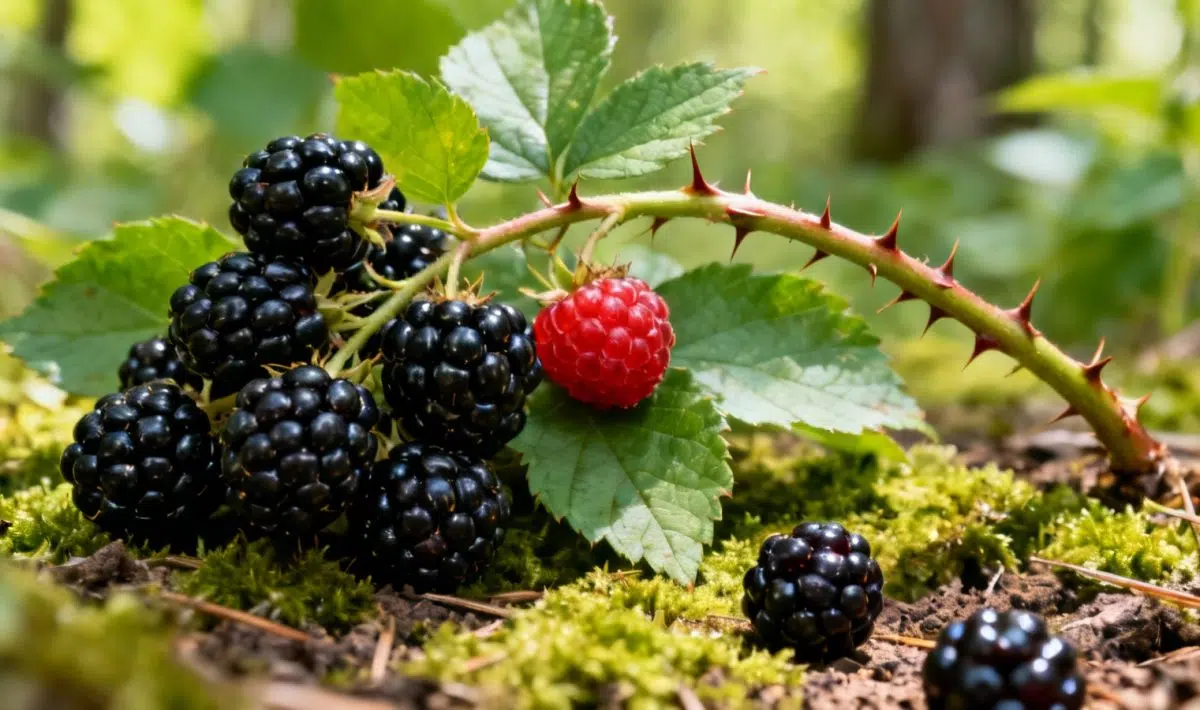
Understanding the Common Blackberry – Rubus allegheniensis
The Common Blackberry, scientifically known as Rubus allegheniensis, is a remarkable woody shrub that brings both beauty and delicious fruit to any garden space. This native North American plant produces those sweet, juicy blackberries we all love while creating a natural habitat for wildlife. With its distinctive white flowers and dark purple-black fruits, this species has become a favorite among gardeners seeking both ornamental value and edible rewards.
Understanding the basic characteristics of Rubus allegheniensis helps you appreciate why it’s such a valuable addition to your garden. The plant grows through a fascinating biennial cane system – first-year canes focus on vegetative growth and leaf production, while second-year canes bloom and fruit before dying back. This natural cycle means you’ll always have both productive and developing canes working together in your patch.
Key botanical features and identification
Identifying Common Blackberry plants becomes easier once you know what to look for. The leaves are compound with three to five leaflets, each serrated along the edges and bright green during the growing season. The canes start upright but arch gracefully as they mature, often reaching 6 to 12 feet in height depending on growing conditions and care.
The flowers appear in late spring to early summer, typically from April through June, displaying five white petals that attract beneficial pollinators. These blooms develop into aggregate fruits – what we call blackberries – that ripen to a deep purple-black color by July. Each berry measures roughly three-quarters of an inch long and contains multiple small drupelets packed with flavor.
Essential care requirements for healthy growth
Caring for Common Blackberry plants doesn’t require extensive expertise, but understanding their preferences ensures the best results. These plants thrive in full sun locations with at least 6-8 hours of direct sunlight daily, though they’ll tolerate partial shade if necessary. The key is providing consistent conditions that mimic their natural woodland edge habitat.
Water management plays a crucial role in successful blackberry cultivation. During the growing season, aim for 1-2 inches of water weekly, either through rainfall or supplemental irrigation. Deep, infrequent watering encourages strong root development better than frequent shallow watering. Just as care for common boxwood plants requires attention to moisture levels, blackberries need consistent hydration without waterlogging.
Soil preparation and nutrition needs
The foundation of healthy blackberry plants starts with proper soil preparation. These plants prefer well-draining soil with a slightly acidic pH between 5.5 and 6.5, though they’ll adapt to various soil types including clay, rocky, or organic-rich loam. Before planting, work compost or aged manure into the soil to improve both drainage and fertility.
Nutrition requirements remain relatively modest once established. A balanced fertilizer applied in early spring supports vigorous growth, while a light side-dressing of compost during the growing season maintains soil health. Avoid over-fertilizing with nitrogen, as this encourages excessive vegetative growth at the expense of fruit production.
Cultivation techniques for maximum productivity
Successful blackberry cultivation begins with proper planting techniques and spacing. Plant bare-root specimens in early spring or container plants throughout the growing season, spacing them 3-4 feet apart in rows separated by 6-8 feet. This spacing allows for adequate air circulation while providing room for the natural spreading habit.
Training and support systems help manage the arching canes and improve harvest accessibility. Simple wire trellises or post-and-rail systems work well, allowing you to tie canes in an organized manner. This approach not only makes picking easier but also improves air circulation around the plants, reducing disease pressure.
Pruning and seasonal maintenance
Annual pruning remains one of the most important maintenance tasks for blackberry plants. In late winter or early spring, remove all second-year canes that fruited the previous season – these will be brown and woody compared to the newer green canes. This practice prevents overcrowding and directs energy into productive growth.
During the growing season, tip-pruning first-year canes when they reach about 4 feet encourages lateral branching, increasing next year’s fruit production. Remove any weak, damaged, or diseased canes throughout the year to maintain plant health and vigor.
Propagation methods and expansion strategies
Expanding your blackberry patch through propagation offers several rewarding approaches. The most natural method takes advantage of the plant’s tendency to produce new shoots from the root system. These suckers can be carefully dug and transplanted to new locations during the dormant season, creating genetically identical plants.
Tip layering provides another reliable propagation technique. In late summer, bend a flexible cane tip to the ground and cover it with soil, leaving the tip exposed. By the following spring, roots will have formed at the buried section, allowing you to sever and transplant the new plant. This method works particularly well because it maintains the connection to the parent plant during root development, similar to how growing common borage successfully often involves natural self-seeding processes.
Advanced propagation techniques
For those interested in larger-scale propagation, root cuttings offer an efficient method during the dormant season. Cut healthy roots into 3-4 inch sections and plant them horizontally in prepared beds or containers. Keep the soil consistently moist but not waterlogged, and new shoots should emerge in spring.
Seed propagation, while possible, rarely produces plants true to the parent variety and requires patience. Collect ripe fruits, extract seeds, and stratify them in the refrigerator for several months before sowing in spring. This method works better for breeding programs than home garden expansion.
Managing common challenges and solutions
Like most fruit-bearing plants, blackberries can face various challenges throughout the growing season. Fungal diseases such as cane blight and rust thrive in humid conditions, making proper spacing and air circulation essential preventive measures. Regular inspection helps catch problems early when treatments are most effective.
Pest management typically involves monitoring for common insects like aphids, spider mites, and spotted wing drosophila. Encouraging beneficial insects through companion planting and avoiding broad-spectrum pesticides helps maintain natural pest control. Much like tips for caring for oleander emphasize integrated pest management, blackberry care benefits from a holistic approach to plant health.
Seasonal care calendar
Spring activities focus on pruning, fertilizing, and mulching around established plants. This is also the ideal time for planting new specimens and applying pre-emergent herbicides if weed pressure is a concern. Regular watering becomes crucial as temperatures rise and fruit development begins.
Summer care emphasizes consistent watering, monitoring for pests and diseases, and harvesting ripe fruit regularly. Proper harvesting technique involves picking berries when they’re fully black and come away easily from the plant. Fall preparation includes cleaning up fallen leaves and applying a thick mulch layer for winter protection.
Maximizing harvest and storage
Timing your harvest correctly ensures the best flavor and texture from your Common Blackberry plants. Ripe berries should be deep purple-black in color and pull away easily from the white core when gently tugged. Underripe berries will be red or light purple and remain firmly attached to the plant.
Fresh blackberries keep best when harvested during cooler morning hours and stored immediately in the refrigerator. For longer-term storage, freezing maintains both flavor and nutritional value – simply spread berries on a baking sheet, freeze until solid, then transfer to containers. Much like how to care for Monstera obliqua requires attention to environmental details, proper berry handling preserves quality and extends usability.
The rewards of growing Common Blackberry – Rubus allegheniensis extend far beyond the delicious fruit harvest. These plants provide habitat for wildlife, offer beautiful seasonal interest with their flowers and foliage, and create natural privacy screens when properly maintained. With consistent care and attention to their basic requirements, your blackberry plants will provide years of productive growth and abundant harvests for your family to enjoy.

Allan is a lifelong gardening enthusiast who still gets excited when the first seedlings pop up in spring. With a deep love for nature and a hands-in-the-soil approach, he shares practical tips, plant discoveries, and clever tricks picked up over years of digging, planting, and observing. Whether you’re a new gardener or have a shed full of tools, Allan writes like a neighbor who’s always happy to swap cuttings and stories over the fence.
You can find more about Allan’s work on Malt or connect with him on LinkedIn.


