
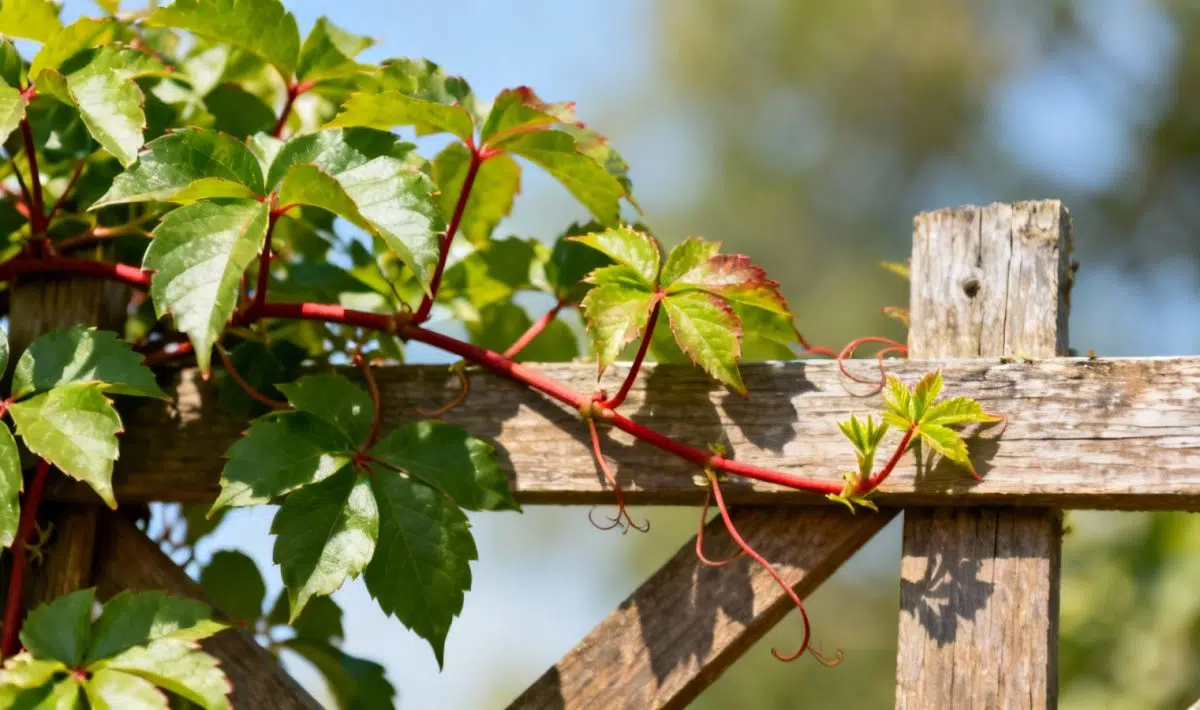
Virginia creeper transforms any garden wall or fence into a spectacular display of color, especially during autumn when its distinctive five-leaflet foliage turns brilliant shades of red and orange. This vigorous climbing vine, native to eastern and central North America, has become a favorite among gardeners who appreciate both its ornamental value and low-maintenance nature.
The plant’s botanical name, Parthenocissus quinquefolia, literally refers to its characteristic five-leaflet leaves that create dense coverage wherever it grows. Whether you’re looking to cover an unsightly wall or create natural shade, this versatile vine offers practical solutions while adding remarkable beauty to your outdoor space.
Understanding Virginia creeper characteristics
Virginia creeper stands out among climbing plants for its exceptional vigor and adaptability. The vine can reach impressive heights of over 18 meters and spread more than 15 meters wide, making it perfect for covering large surfaces. Its growth rate is remarkable, often adding several feet of new growth each growing season.
The distinctive foliage consists of five serrated leaflets arranged in a palmate pattern, creating an attractive texture throughout the growing period. During spring and summer, the leaves maintain a healthy green color that provides excellent coverage. However, autumn brings the real magic when the entire plant transforms into a brilliant display of red, orange, and purple hues.
Small, inconspicuous flowers appear in early summer, followed by clusters of blue-violet berries. While these fruits provide food for birds, they’re toxic to humans and should never be consumed. The plant climbs using specialized tendrils equipped with adhesive discs that allow it to attach to various surfaces without causing damage to properly maintained masonry.
Optimal growing conditions for Virginia creeper
This hardy vine thrives in various soil types, though it performs best in well-draining, fertile ground with neutral pH levels. Virginia creeper tolerates both full sun and partial shade, though plants grown in sunnier locations typically develop more intense autumn colors. The vine’s adaptability extends to challenging conditions, including salt exposure and drought once established.
When selecting a planting location, consider the plant’s mature size and vigorous growth habit. The ideal spot offers adequate space for expansion and sturdy support structures. Virginia creeper works exceptionally well for covering walls, fences, arbors, or steep slopes where erosion control is needed.
Spring represents the best period for plantation, allowing the vine to establish its root system before summer heat arrives. However, container-grown plants can be successfully planted throughout the growing season with proper care and regular watering during establishment.
Soil preparation and planting technique
Prepare the planting site by digging a hole twice as wide as the root ball and slightly shallower than the container depth. Amend heavy clay soils with compost or aged manure to improve drainage, while sandy soils benefit from organic matter additions to retain moisture and nutrients.
Position the plant so the root crown sits level with the surrounding soil surface. Backfill with native soil mixed with compost, water thoroughly to eliminate air pockets, and apply a 2-3 inch layer of organic mulch around the base, keeping it away from the stem.
Essential care and maintenance practices
Virginia creeper requires minimal care once established, making it an excellent choice for low-maintenance gardens. Regular watering during the first growing season helps establish a strong root system. After establishment, the vine typically tolerates dry periods, though supplemental watering during extended droughts promotes healthier growth and more vibrant autumn colors.
Fertilization needs remain modest for this vigorous grower. An annual application of balanced fertilizer in early spring provides adequate nutrition for healthy development. Over-fertilization can actually reduce the intensity of autumn coloration, so restraint proves beneficial.
Pruning represents the primary maintenance requirement for Virginia creeper. The vine’s vigorous growth habit means it can quickly outgrow intended boundaries without regular trimming. Late winter or early spring provides the best timing for major pruning work, before new growth begins.
Seasonal maintenance schedule
During the growing season, monitor the vine’s progress and direct growth as needed. Remove any wayward shoots that venture beyond desired areas, and check attachment points on structures to ensure they remain secure. Just like when you’re caring for crown of thorns, regular observation helps prevent problems before they become serious.
Autumn brings the spectacular color display, but also signals time to collect seeds if propagation is planned. Winter maintenance involves removing any dead or damaged growth and ensuring the vine hasn’t damaged building structures through excessive weight or improper attachment.
Effective propagation methods
Virginia creeper propagates easily through several reliable methods, making it simple to expand your plantings or share with fellow gardeners. The most successful approaches include seed collection, cutting propagation, and layering techniques.
Seed propagation requires patience but offers the satisfaction of growing plants from scratch. Collect ripe berries in autumn, clean the seeds thoroughly, and store them in slightly moist sand through winter. This cold stratification period improves germination rates significantly. Sow seeds in spring once soil temperatures reach consistently warm levels.
Cutting propagation provides faster results than seed starting. Take 6-8 inch cuttings from new growth during summer, remove lower leaves, and place them in well-draining potting mix. Keep the soil consistently moist and provide indirect light until roots develop, typically within 4-6 weeks.
Advanced propagation techniques
Layering takes advantage of Virginia creeper’s natural tendency to root where stems contact soil. Simply bend a flexible shoot to ground level, cover a portion with soil while leaving the tip exposed, and wait for roots to develop. Once established, sever the new plant from the parent vine and transplant as desired.
For gardeners interested in similar propagation challenges, the methods used for growing rutabaga effectively demonstrate how different plants respond to various propagation approaches, though Virginia creeper proves much more forgiving than most vegetables.
Troubleshooting common issues
Virginia creeper encounters few serious problems, but understanding potential challenges helps maintain healthy plants. Excessive vigor sometimes becomes the primary concern, requiring regular pruning to keep growth within bounds. The vine can overwhelm smaller plants or structures if left unchecked.
Pest problems rarely affect established Virginia creeper, though young plants might attract aphids or scale insects. These issues typically resolve themselves as the plant matures and beneficial insects establish balance. Fungal diseases occasionally appear in areas with poor air circulation or excessive moisture.
Structural damage concerns arise when the vine’s weight exceeds support capacity. Regular inspection of attachment points and prompt removal of dead growth prevents most structural issues. Unlike delicate plants such as those requiring tips for caring for common lantana, Virginia creeper’s robust nature makes it quite forgiving of minor care mistakes.
Landscape design applications
Virginia creeper excels in numerous landscape roles beyond simple wall coverage. The vine creates excellent natural screens for privacy or wind protection, especially when grown on sturdy trellises or arbor structures. Its dense growth habit provides effective coverage within a single growing season.
Slope stabilization represents another valuable application, as the vine’s extensive root system helps prevent erosion on banks or hillsides. The autumn color display rivals any ornamental tree, creating spectacular focal points when properly positioned in the landscape design.
Consider pairing Virginia creeper with other climbing plants for extended seasonal interest. While it provides autumn drama, companion plants like growing common hollyhocks in your garden can add summer flowers and different textures to vertical garden spaces.
Seasonal care considerations
Spring maintenance focuses on pruning, fertilizing, and training new growth. Remove any winter damage and direct emerging shoots toward desired coverage areas. This period also offers the best opportunity for major structural changes or relocating plants if necessary.
Summer care emphasizes water management during establishment and ongoing training of vigorous growth. Monitor for pest issues and ensure adequate support for rapidly expanding vines. Regular attention during this active growth period prevents problems later in the season.
Autumn brings harvest time for seeds and the spectacular color display that makes Virginia creeper so prized. This season also provides the best opportunity to evaluate the vine’s performance and plan any necessary changes for the following year. The approach mirrors seasonal care principles used for other ornamental plants like caring for the Ti plant, though Virginia creeper requires much less intensive management.
Winter preparation involves final pruning, structural inspection, and planning for the coming growing season. The vine’s hardy nature means minimal protection is needed in most climates, but ensuring proper support remains important throughout the dormant period.
Maximizing ornamental impact
Virginia creeper’s greatest strength lies in its autumn transformation, but planning enhances this natural spectacle. Plants grown in full sun develop more intense colors than those in shaded locations. Strategic placement near patios, windows, or frequently used outdoor areas maximizes enjoyment of the seasonal display.
Combining Virginia creeper with evergreen plants creates year-round interest while highlighting the deciduous vine’s seasonal changes. The contrast between the vine’s brilliant autumn colors and evergreen backgrounds intensifies the visual impact significantly.
For gardeners who appreciate dramatic foliage effects, learning about characteristics of painted-leaf begonia shows how different plants achieve ornamental impact through foliage, though Virginia creeper’s outdoor hardiness makes it suitable for much broader applications than tender tropical plants.

Allan is a lifelong gardening enthusiast who still gets excited when the first seedlings pop up in spring. With a deep love for nature and a hands-in-the-soil approach, he shares practical tips, plant discoveries, and clever tricks picked up over years of digging, planting, and observing. Whether you’re a new gardener or have a shed full of tools, Allan writes like a neighbor who’s always happy to swap cuttings and stories over the fence.
You can find more about Allan’s work on Malt or connect with him on LinkedIn.


