
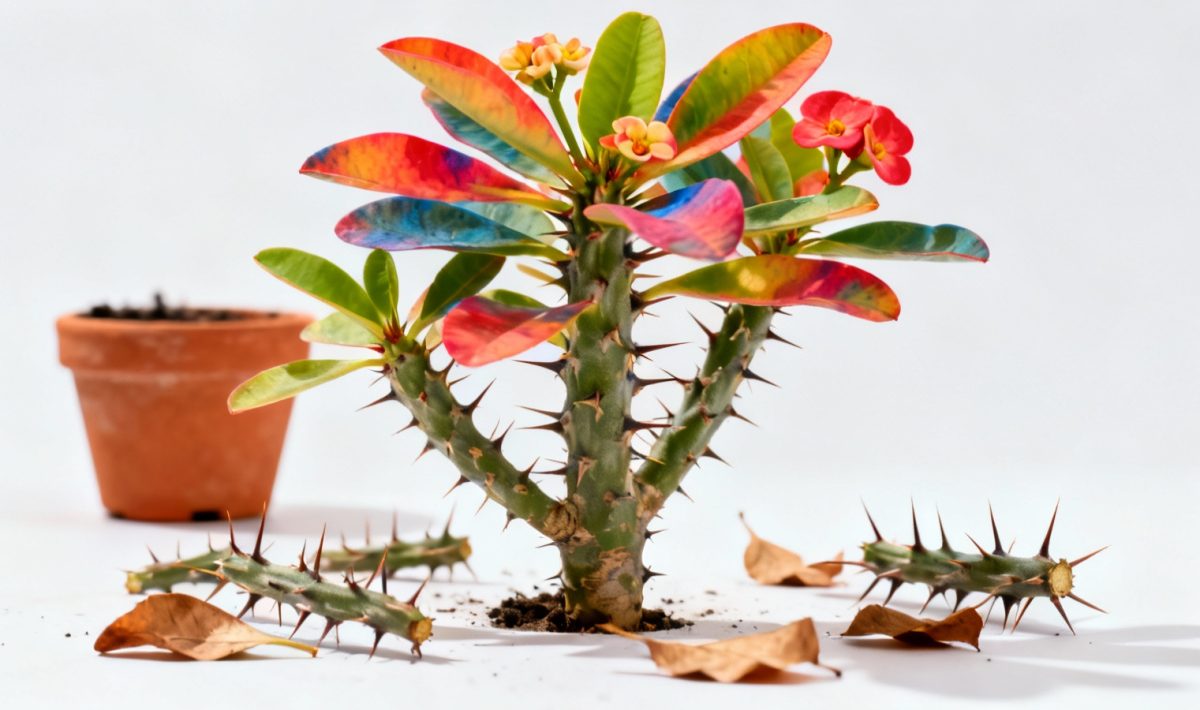
Today I’m excited to share with you everything you need to know about one of nature’s most resilient and beautiful succulents – the crown of thorns or Euphorbia milii. This remarkable plant has been winning hearts worldwide with its vibrant blooms and surprisingly easy care requirements, making it perfect for both beginners and experienced gardeners alike.
What makes this plant truly special is its ability to bloom almost year-round when given proper care. The crown of thorns doesn’t just survive – it thrives with minimal fuss, rewarding you with colorful bracts that come in shades of red, pink, yellow, and white. However, like many beautiful things in nature, this euphorbia comes with its own set of thorns and requires some specific knowledge to flourish.
Understanding the crown of thorns plant
Native to Madagascar, Euphorbia milii is a succulent shrub that can grow anywhere from 3 to 6 feet tall in optimal conditions. The plant gets its common name from the sharp thorns that cover its thick, fleshy stems – these aren’t just decorative features but serve as the plant’s natural defense mechanism in its arid homeland.
What we often mistake for flowers are actually colorful bracts that surround tiny, inconspicuous blooms. These bracts are what give the plant its spectacular display, and they can appear in various colors depending on the cultivar you choose. The actual leaves are small, oval-shaped, and bright green, though they may drop during periods of stress or dormancy.
One important safety note: the milky white latex that oozes from cut stems is irritating to skin and eyes. Always wear gloves when handling your plant, and keep it away from children and pets who might be tempted to touch or taste it.
Creating the perfect growing conditions
Getting the light requirements right is absolutely crucial for your crown of thorns success. This plant craves bright, direct sunlight for at least 4-6 hours daily. Indoors, place it near a south or west-facing window where it can soak up those precious rays. If you’re growing it outdoors in very hot climates, a bit of afternoon shade can prevent stress.
Temperature-wise, your euphorbia milii prefers warm conditions between 65-75°F (18-24°C). It’s not frost-tolerant at all, so if temperatures drop below 60°F (15°C), it’s time to bring your plant indoors or provide protection. Much like when you’re caring for Pontic rhododendrons, understanding temperature tolerance is key to success.
The soil requirements are refreshingly simple – well-draining is the name of the game. A standard cactus and succulent potting mix works perfectly, or you can create your own by mixing regular potting soil with coarse sand and perlite. The goal is to prevent water from sitting around the roots, which can quickly lead to rot.
Watering and feeding your plant
Here’s where many people go wrong with their crown of thorns – overwatering. This plant is drought-tolerant and actually prefers to dry out between waterings. During the growing season (spring and summer), water thoroughly when the top inch of soil feels dry, then allow excess water to drain completely.
In winter, reduce watering significantly. The plant may go dormant and drop some leaves – this is completely normal behavior. Think of it as the plant’s way of conserving energy, much like how other hardy plants adapt to seasonal changes.
Fertilizing doesn’t need to be complicated either. A balanced, water-soluble fertilizer diluted to half strength every month during the growing season will keep your plant happy. Skip feeding during winter when growth slows down naturally.
Mastering propagation techniques
Propagating your crown of thorns is surprisingly straightforward and incredibly rewarding. The most reliable method is stem cuttings, which root relatively quickly when done correctly. This process is somewhat similar to techniques used when growing Common Hollyhocks successfully, though the specifics differ.
To take cuttings, use clean, sharp pruning shears to cut a 4-6 inch piece from a healthy stem. The cut should be made just above a leaf node. Here’s the crucial part: let the cutting dry for 24-48 hours until the cut end forms a callus. This prevents rot when you plant it.
Once callused, dip the cutting in rooting hormone (optional but helpful) and plant it in a well-draining potting mix. Keep the soil barely moist – not wet – and place the cutting in bright, indirect light. Roots typically develop within 2-4 weeks, and you’ll know it’s working when you see new growth appearing.
Alternative propagation methods
While less common, you can also grow crown of thorns from seeds if you can get your hands on them. Fresh seeds have the best germination rates, but they can be tricky to find since most plants sold commercially are propagated from cuttings.
If you do try seeds, plant them in a light, sandy mix and keep them warm (around 75-80°F). Germination can take several weeks and isn’t always reliable. The cutting method remains the most practical approach for home gardeners.
Pruning and maintenance essentials
Regular pruning helps maintain your plant’s shape and encourages more blooms. The best time to prune is late winter or early spring, just before the growing season kicks into high gear. Always wear thick gloves and eye protection when pruning due to the thorns and irritating sap.
Remove any dead, damaged, or overly long stems by cutting them back to a healthy growth point. You can also pinch back growing tips to encourage bushier growth. Any pruned material can potentially be used for propagation if you follow the cutting process described earlier.
Just as you would when learning how to care for Ti plants, understanding proper pruning techniques will significantly impact your plant’s health and appearance over time.
Troubleshooting common problems
Even though crown of thorns plants are relatively low-maintenance, they can face a few common issues. Leaf drop is probably the most frequent concern new owners face, but it’s usually not a serious problem. Stress from changes in light, temperature, or watering can trigger leaf drop, as can natural seasonal dormancy.
Root rot from overwatering shows up as yellowing leaves, soft stems, and a generally unhealthy appearance. If caught early, you can often save the plant by reducing watering and improving drainage. In severe cases, you might need to take healthy cuttings and start over.
Scale insects and mealybugs occasionally bother these plants. Regular inspection helps catch problems early, and these pests can usually be controlled with insecticidal soap or neem oil applications.
Seasonal care adjustments
Understanding your plant’s seasonal needs makes all the difference in long-term success. During spring and summer, your euphorbia milii should be actively growing and blooming. This is when it needs the most water, fertilizer, and attention to pruning.
Fall signals the beginning of the rest period. Gradually reduce watering and stop fertilizing as temperatures cool. If you’re growing outdoors, this is the time to consider bringing container plants inside or preparing garden plants for cooler weather.
Winter care focuses on protection and patience. Keep the plant in the brightest spot available indoors, water sparingly, and don’t worry if it drops leaves or stops blooming temporarily. This dormant period is natural and necessary for the plant’s health.
Creating attractive displays and combinations
Crown of thorns plants look stunning both as standalone specimens and as part of mixed succulent displays. Their upright growth habit makes them excellent centerpiece plants in container arrangements. When combining with other plants, consider varieties with similar water and light needs, such as those you might find when growing Rutabagas in your garden in terms of requiring well-drained conditions.
For indoor displays, try pairing different colored varieties of euphorbia milii together. The contrast between red, pink, and yellow bracts creates a vibrant, eye-catching arrangement. Add some trailing succulents around the base to soften the thorny stems and create visual interest.
In outdoor settings, crown of thorns works beautifully in rock gardens, desert landscapes, or as accent plants in Mediterranean-style gardens. They’re also excellent in large containers on patios or decks where their architectural form can be appreciated up close.
Long-term care and expectations
With proper care, your crown of thorns can live for many years and grow into an impressive specimen. Mature plants develop thick, sculptural stems that become more attractive with age. The key is consistency in care rather than perfection – these plants are forgiving of occasional mistakes.
Expect your plant to reach its full size gradually over 3-5 years. Young plants may take a season or two to establish their blooming pattern, so be patient if flowering seems sparse initially. Once established, however, they’re remarkably reliable bloomers.
Regular repotting every 2-3 years helps maintain healthy growth, though crown of thorns plants don’t mind being slightly rootbound. When repotting, choose a container only slightly larger than the previous one, as too much soil can hold too much moisture.
The beauty of growing crown of thorns lies in their combination of resilience and reward. Much like the satisfaction you get from understanding Common Buckthorn care or mastering tips for Painted-leaf Begonias, successfully growing Euphorbia milii gives you confidence to tackle other interesting plants. These remarkable succulents prove that sometimes the most beautiful gardens are built on plants that ask for very little but give back so much in return.

Allan is a lifelong gardening enthusiast who still gets excited when the first seedlings pop up in spring. With a deep love for nature and a hands-in-the-soil approach, he shares practical tips, plant discoveries, and clever tricks picked up over years of digging, planting, and observing. Whether you’re a new gardener or have a shed full of tools, Allan writes like a neighbor who’s always happy to swap cuttings and stories over the fence.
You can find more about Allan’s work on Malt or connect with him on LinkedIn.


