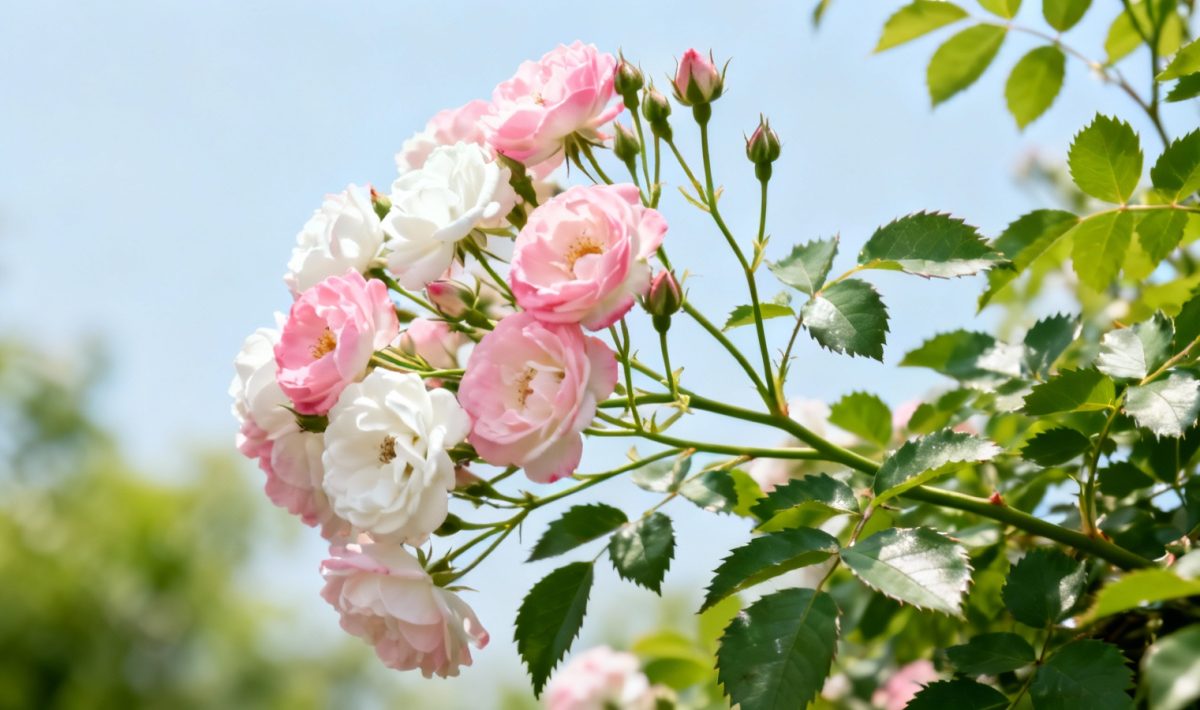
The lady banks’s rose (Rosa banksiae) stands as one of the most remarkable climbing roses you can grow in your garden. Originating from the mountainous regions of China, this vigorous rosier has captured gardeners’ hearts worldwide with its spectacular spring display and thornless stems. Unlike typical roses, this banksiae species offers unique characteristics that make it both beginner-friendly and irresistibly beautiful.
Named after Lady Dorothea Banks, wife of botanist Sir Joseph Banks, this rose represents a perfect blend of elegance and resilience. The species grows naturally at altitudes between 500 to 2200 meters in its native China, which explains its remarkable adaptability to various growing conditions. What sets this rosier apart is its vigorous climbing habit, reaching impressive heights while producing cascades of delicate fleurs in spring.
Essential care requirements for Rosa banksiae
Location and sunlight needs
Your lady banks’s rose thrives in full sun to partial shade, though maximum floraison occurs with at least six hours of direct sunlight daily. Choose a location with good air circulation to prevent fungal issues, yet protected from harsh winds that might damage the long, flexible rameaux. The climbing nature of this plante means you’ll need substantial support structures like pergolas, arbors, or sturdy fences.
Consider the mature hauteur when selecting your planting site, as this rosier can reach 12 to 20 feet in ideal conditions. The sarmenteux growth habit creates beautiful coverage for walls and structures, but requires adequate space for proper development. Morning sun with afternoon shade works particularly well in hot climates.
Soil preparation and requirements
The ideal sol for Rosa banksiae should be well-draining yet moisture-retentive, with a slightly acidic to neutral pH between 6.0 and 7.0. This adaptable espèce tolerates various soil types, from sandy loam to clay, provided drainage remains adequate. Poor drainage leads to root rot and compromises the overall health of your rosier.
Enrich your planting area with organic matter such as compost or aged manure before planting. This improves soil structure and provides slow-release nutrients that support healthy growth. A layer of mulch around the base helps retain moisture and suppress weeds while protecting the root system during temperature fluctuations.
Watering and moisture management
Established lady banks’s roses demonstrate excellent drought tolerance, but consistent moisture promotes better growth and more abundant fleurs. Water deeply but infrequently, allowing the sol to dry slightly between waterings. During the first growing season, maintain regular watering to help establish a strong root system.
Avoid overhead watering which can promote fungal diseases on the feuillage. Instead, water at soil level using drip irrigation or soaker hoses. During hot summer months, increase watering frequency while maintaining the deep, infrequent pattern that encourages deep root development.
Characteristics and varieties of lady banks’s rose
Foliage and growth patterns
The feuillage of Rosa banksiae creates year-round interest with its glossy, dark green leaves that remain evergreen in mild climates. Each leaf consists of three to five leaflets with serrated edges, creating a refined texture that complements the delicate fleurs. The absence of thorns makes this rosier particularly appealing for areas with foot traffic.
Growth occurs rapidly during spring and early summer, with flexible stems that bend gracefully rather than breaking under weight. This characteristic makes the lady banks’s rose ideal for training over structures where other climbing roses might prove too rigid. The vigorous nature means annual growth can exceed six feet under optimal conditions.
Flowering characteristics and timing
The spectacular floraison typically occurs once per year in late spring, usually April through May depending on your climate. Clusters of small fleurs cover the entire plante, creating a breathtaking display that lasts several weeks. The individual roses measure approximately one inch across and appear in dense clusters along the previous year’s growth.
Different variétés offer distinct flowering characteristics. ‘Lutea’ produces double yellow fleurs with a light fragrance, while ‘Alba Plena’ showcases pure white double blooms. ‘Rosea’ features soft pink single fleurs, and ‘Lutescens’ displays single yellow blooms with prominent stamens. Each variety maintains the same vigorous growth habit while offering unique visual appeal.
Popular varieties and hybrides
Among the most sought-after forms, Rosa banksiae ‘Lutea’ remains the most commonly grown variety due to its reliable blooming and attractive yellow color. This lutea form produces thornless stems and demonstrates excellent disease resistance. The double fleurs create impressive visual impact when the entire plante bursts into bloom.
For those seeking different colors, ‘Alba Plena’ offers pristine white double flowers that illuminate shaded areas beautifully. Much like care tips for common lantana, these roses reward gardeners with abundant blooms when provided proper care. Single-flowered forms like ‘Rosea’ attract beneficial insects while maintaining the same vigorous climbing characteristics.
Culture and propagation techniques
Propagation methods
Propagating lady banks’s rose proves remarkably straightforward using several reliable methods. Softwood cuttings taken in late spring or early summer root easily in well-draining potting mix. Cut 4-6 inch sections from current year’s growth, remove lower leaves, and dip in rooting hormone before planting in moist growing medium.
Layering offers another effective propagation technique, particularly for established plantes. Bend a low-growing branch to soil level, wound the underside slightly, and cover with soil while keeping the tip exposed. Roots typically develop within one growing season, allowing you to separate the new rosier the following spring.
Division of suckers provides the quickest method for obtaining new plantes, though this works best with own-root specimens rather than grafted roses. Carefully dig up rooted suckers in early spring and transplant to prepared locations. This method ensures genetic consistency with the parent plante.
Optimal growing conditions
Success with Rosa banksiae culture depends on understanding its preferences for climate and growing conditions. This espèce performs best in zones 8-11, though protected specimens survive in zone 7 with proper winter protection. The climbing habit requires substantial support structures capable of supporting mature weight.
Temperature fluctuations between seasons help promote better blooming, as this rosier benefits from a winter chill period. However, extreme cold below 15°F can damage growth tips and reduce next year’s flowering potential. In borderline climates, plant against south-facing walls for additional warmth protection.
Similar to successful caring for a Ti plant, consistent environmental conditions promote healthier growth patterns. Wind protection becomes particularly important during establishment, as young stems need time to strengthen before handling strong weather conditions.
Maintenance and seasonal care
Pruning and training techniques
The taille of lady banks’s rose requires a different approach than typical roses since blooming occurs on previous year’s growth. Immediately after floraison ends, remove dead, damaged, or weak growth while preserving healthy stems that will produce next year’s fleurs. Avoid autumn or winter pruning which removes flowering wood.
Training involves tying new growth to support structures while stems remain flexible. Horizontal training encourages more flowering spurs along the length of each branch, resulting in denser bloom coverage. Use soft ties that won’t cut into bark as stems thicken with age.
Remove any crossing or rubbing branches to improve air circulation and prevent damage to the bark. The vigorous growth habit means annual maintenance keeps the rosier within bounds while promoting healthy development. Major renovation pruning should occur gradually over several years rather than all at once.
Fertilization and nutrition
Rosa banksiae demonstrates modest nutritional requirements compared to hybrid tea roses, though regular feeding promotes optimal growth and flowering. Apply balanced organic fertilizer in early spring as new growth begins, followed by a second application in mid-summer to support continued development.
Compost and aged manure provide excellent slow-release nutrition while improving soil structure around the root zone. Avoid high-nitrogen fertilizers late in the growing season, as this promotes tender growth susceptible to winter damage. Regular mulching with organic materials supplies ongoing nutrition as decomposition occurs.
Just as growing rutabaga effectively requires understanding specific nutritional needs, roses benefit from targeted feeding programs that support their unique growth patterns.
Disease and pest management
One of the greatest advantages of Rosa banksiae lies in its exceptional resistance to common rose diseases like black spot, powdery mildew, and rust. This natural resistance reduces maintenance requirements significantly compared to other rosiers, making it ideal for low-maintenance gardens or organic growing situations.
Aphids occasionally appear on new growth tips but rarely cause significant damage to established plantes. Beneficial insects usually provide adequate control, though severe infestations may require organic insecticidal soap treatment. Good air circulation and proper spacing prevent most pest problems.
Scale insects sometimes affect older stems but respond well to horticultural oil applications during dormant seasons. Monitor for any unusual leaf discoloration or growth abnormalities, though problems remain rare with this robust espèce. Prevention through proper cultural practices remains the most effective disease management strategy.
Winter protection and seasonal considerations
In marginal hardiness zones, winter protection helps ensure reliable spring flowering. Mulch heavily around the base in late fall and consider wrapping exposed stems with burlap in areas experiencing harsh winter conditions. Remove protection gradually in spring as temperatures warm consistently.
Container-grown specimens require additional winter protection since roots face more extreme temperature fluctuations than those planted in the ground. Move containers to protected locations or insulate thoroughly with mulch and protective coverings during coldest periods.
Understanding seasonal care requirements, much like tips for painted-leaf begonia care, helps ensure your plants thrive throughout the year. Spring emergence marks the beginning of the active growing season when most maintenance activities should occur.
Landscape applications and design considerations
Garden integration strategies
Lady banks’s rose creates stunning focal points when allowed to cascade over pergolas, arbors, or substantial fences. The vigorous climbing habit makes it suitable for covering unsightly structures or creating natural privacy screens. Consider the mature size when planning, as this rosier can overwhelm smaller gardens without proper management.
Companion planting enhances the overall garden design while providing extended seasonal interest. Spring bulbs planted beneath provide early color before the rose leafs out, while summer perennials carry the display after flowering ends. Choose companions that appreciate similar growing conditions for best results.
The thornless nature makes Rosa banksiae appropriate for areas near walkways or seating areas where other climbing roses might pose safety concerns. This characteristic also simplifies maintenance tasks and makes harvesting fleurs for indoor arrangements more pleasant.
When planning garden layouts, consider integrating other easy-care plants such as those requiring similar attention to how to care for crown of thorns, creating cohesive maintenance schedules that simplify overall garden care.
Conclusion and growing success tips
Rosa banksiae offers gardeners a unique combination of spectacular spring beauty, minimal maintenance requirements, and exceptional disease resistance. This remarkable rosier rewards proper planting and basic care with years of reliable performance and breathtaking seasonal displays. The climbing habit and thornless stems make it versatile for various landscape applications.
Success with lady banks’s rose depends on understanding its specific needs: proper support structures, appropriate pruning timing, and suitable climate conditions. The once-yearly flowering may seem limiting, but the incredible abundance and beauty of spring blooms more than compensates for the shorter display period compared to repeat-flowering varieties.
Whether you’re new to rose growing or seeking low-maintenance additions to established gardens, Rosa banksiae deserves serious consideration. Its combination of vigor, beauty, and ease of culture makes it an excellent choice for gardeners who appreciate spectacular spring displays with minimal ongoing care requirements throughout the growing season.
Allan is a lifelong gardening enthusiast who still gets excited when the first seedlings pop up in spring. With a deep love for nature and a hands-in-the-soil approach, he shares practical tips, plant discoveries, and clever tricks picked up over years of digging, planting, and observing. Whether you’re a new gardener or have a shed full of tools, Allan writes like a neighbor who’s always happy to swap cuttings and stories over the fence.
You can find more about Allan’s work on Malt or connect with him on LinkedIn.