
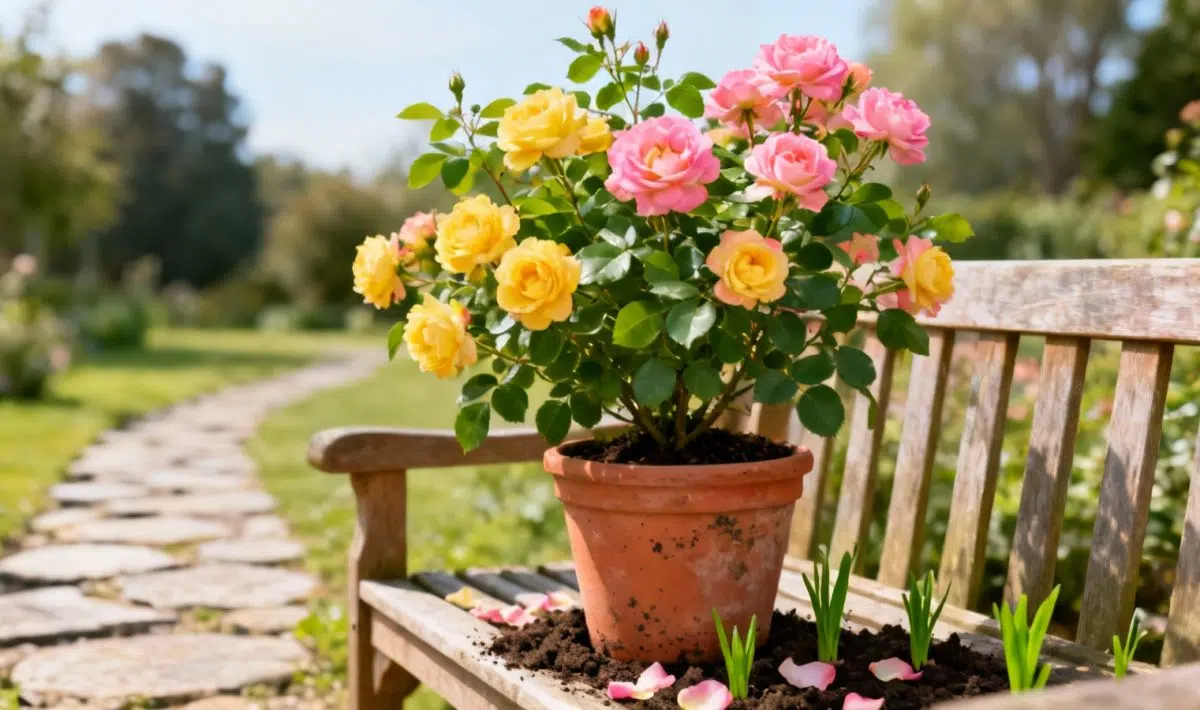
Understanding your lady banks’s rose water requirements
The Lady Banks rose stands out as one of the most vigorous climbing roses you can grow in your garden. This Chinese native can reach impressive heights from 4 to 10 meters, making it a spectacular choice for covering walls or creating natural privacy screens. However, knowing how often should you water your lady banks’s rose is crucial for its success, as this determines whether your plant will thrive or struggle through the seasons.
Water serves as the lifeblood for your rose, carrying essential nutrients through its extensive root system and supporting the development of those characteristic dense flower clusters. When you provide the right amount of moisture, your Lady Banks rose will reward you with abundant blooms that appear early in the season, typically from February through April.
Factors that influence watering frequency for your rose
Several key elements determine how often you should water your Lady Banks rose throughout the year. The type of soil in your garden plays a fundamental role, as well-draining soil will require more frequent watering than clay-based earth that retains moisture longer. Additionally, your local climate conditions significantly impact water needs, with hot, dry periods demanding more attention than cool, humid weather.
The age of your plant also matters considerably when establishing a watering routine. Young plants need consistent moisture to develop their root systems, while established roses become remarkably drought-tolerant once they reach maturity. This adaptability makes the Lady Banks rose particularly appealing for gardeners who prefer low-maintenance plants.
Soil drainage and its impact on watering needs
Your rose performs best in humiferous, deep soil that allows excess water to drain away while retaining enough moisture for healthy growth. Sandy soils drain quickly and may require watering every few days during hot weather, while heavier clay soils can hold water for extended periods. Testing your soil drainage by digging a small hole and observing how quickly water disappears will help you adjust your watering schedule accordingly.
Watering schedule during the establishment phase
During the first year after planting, your Lady Banks rose requires careful attention to moisture levels. Water deeply once per week, ensuring the soil remains consistently humid without becoming waterlogged. This regular watering schedule helps establish a strong root system that will support the plant’s vigorous growth in subsequent years.
For newly planted roses, maintain soil moisture by checking the top few inches of earth regularly. When this area feels dry to the touch, it’s time to water again. Generally, this translates to watering once or twice weekly, depending on weather conditions and soil type. Remember that consistent moisture is more beneficial than sporadic heavy watering sessions.
Much like establishing proper care routines for other garden plants, such as following watering frequency for dog roses, maintaining regular schedules during early growth phases ensures long-term success.
Signs your young rose needs water
Watch for specific indicators that signal when your establishing rose requires moisture. Slightly wilted foliage in the morning, soil that pulls away from the plant base, or leaves that feel less firm than usual all suggest it’s time to water. However, avoid overwatering, as this can lead to root rot and other fungal issues that may damage your plant permanently.
Mature plant watering requirements
Once established after the second growing season, your Lady Banks rose becomes remarkably self-sufficient regarding water needs. In fact, you may need to water only during extended periods of extreme heat or drought. This drought tolerance makes the species particularly valuable for gardens in areas with water restrictions or for gardeners who travel frequently.
The key to successful watering of mature plants lies in deep, infrequent applications rather than light, frequent sprinklings. When you do water, ensure the moisture penetrates deeply into the soil to encourage the roots to grow downward rather than staying near the surface where they’re more vulnerable to heat stress.
Similar principles apply when caring for other resilient garden plants, and you might find useful parallels in optimal watering for kikuyu grass for maintaining robust outdoor spaces.
Seasonal watering adjustments
Spring requires moderate watering as your rose emerges from winter dormancy and begins producing new growth. Summer demands the most attention, particularly during heat waves when even drought-tolerant plants may show stress. Fall watering should gradually decrease as the plant prepares for winter, while winter typically requires little to no supplemental watering in most climates.
Effective watering techniques for optimal results
The method you choose for delivering water to your Lady Banks rose can significantly impact its health and growth. Drip irrigation systems provide consistent, slow-release moisture directly to the root zone, making them ideal for busy gardeners or those managing large rose gardens. This approach minimizes water waste while ensuring deep soil penetration.
Manual watering offers more control but requires proper technique to be effective. Direct water at the base of the plant rather than spraying the foliage, as wet leaves can promote fungal diseases. Use a soaker hose or watering wand to deliver water slowly and steadily, allowing it to soak into the soil rather than running off the surface.
Just as different flowering plants have varying needs, understanding these techniques can benefit other garden areas. For instance, applying similar deep-watering principles works well when learning best watering practices for zinnias or other annual flowers.
Mulching to retain soil moisture
Applying a layer of organic mulch around your rose helps retain soil moisture while suppressing weeds that compete for water. Use materials like wood chips, bark, or compost, maintaining a 2-3 inch layer while keeping mulch away from direct contact with the plant stem. This simple addition can reduce watering frequency by up to 50% during dry periods.
Recognizing water stress symptoms
Learning to identify when your Lady Banks rose experiences water stress helps you adjust your watering routine before serious damage occurs. Yellowing leaves, particularly those starting from the bottom of the plant, often indicate either overwatering or underwatering. Wilting during the hottest part of the day may be normal, but persistent wilting suggests inadequate moisture.
Flower production can also indicate water stress, with reduced bloom size or quantity signaling that your plant needs attention. However, remember that established Lady Banks roses naturally have periods of heavy and light flowering, so consider the overall plant health rather than focusing solely on bloom production.
These observation skills prove valuable across different types of garden plants, whether you’re monitoring roses or learning about watering needs for african marigolds and other colorful additions to your landscape.
Special considerations for container growing
Lady Banks roses grown in containers require more frequent watering than those planted directly in garden soil. Containers dry out much faster, especially during hot weather, and may need daily watering during peak summer months. Choose large containers with excellent drainage holes to prevent waterlogging while providing adequate root space for this vigorous climber.
Monitor container-grown plants closely, as they can quickly transition from adequately moist to bone dry. Check soil moisture daily by inserting your finger into the potting mix, and water thoroughly when the top inch feels dry. Container roses also benefit from morning watering, which allows excess moisture to evaporate before evening.
The principles of container gardening extend to various plants, and you might find similar care requirements when exploring watering guidelines for dragon fruit or other specialty plants grown in pots.
Maximizing your lady banks’s rose potential through proper care
Success with your Lady Banks rose ultimately depends on finding the right balance between providing adequate moisture and avoiding overwatering. This resilient climber rewards patient gardeners with spectacular displays of small, fragrant flowers that can transform any outdoor space into a romantic garden setting.
Remember that each garden situation is unique, and what works perfectly in one location may need adjustment in another. Pay attention to your specific conditions, from soil type to local climate patterns, and adjust your watering routine accordingly. With proper care and attention to moisture needs, your Lady Banks rose will provide years of beautiful blooms and vigorous growth that enhances your garden’s appeal throughout the growing season.

Allan is a lifelong gardening enthusiast who still gets excited when the first seedlings pop up in spring. With a deep love for nature and a hands-in-the-soil approach, he shares practical tips, plant discoveries, and clever tricks picked up over years of digging, planting, and observing. Whether you’re a new gardener or have a shed full of tools, Allan writes like a neighbor who’s always happy to swap cuttings and stories over the fence.
You can find more about Allan’s work on Malt or connect with him on LinkedIn.


