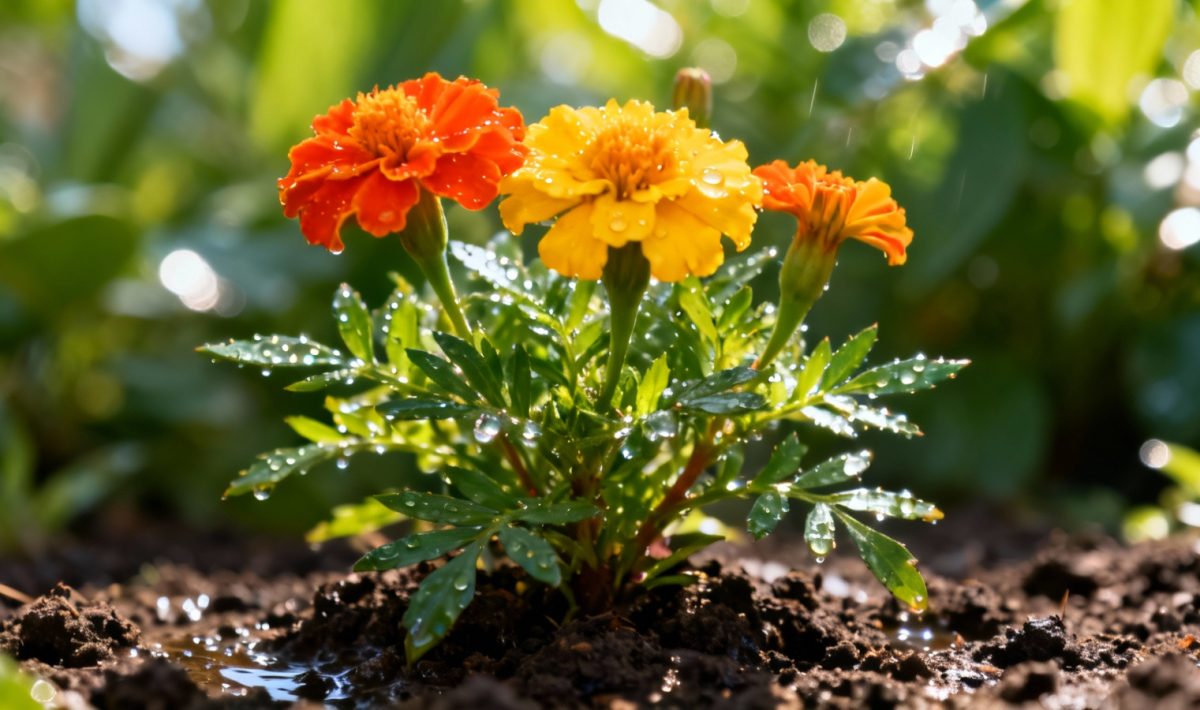
African marigolds are truly remarkable flowers that can transform any garden with their vibrant mix of colors and hardy nature. These beautiful blooms, also known as Tagetes erecta, are surprisingly forgiving when it comes to watering, but understanding their specific needs will help you achieve the most spectacular display possible.
The key to successful African marigold care lies in finding that sweet spot between too much and too little water. These plants prefer consistently moist soil during their growing phase, but they’re also quite resilient once established. Most gardeners find that watering every 2-3 days works well, though this can vary based on your local climate and soil conditions.
What makes African marigolds special is their ability to communicate their needs through their appearance. When they need water, the leaves will start to look slightly wilted, and the soil will feel dry about an inch below the surface. This natural indicator system makes it easier for both novice and experienced gardeners to provide the right care.
Factors that influence watering frequency
Several important factors determine how often you should water your African marigold plants. The climate in your area plays a crucial role – hot, dry conditions will require more frequent watering, while cooler, humid environments need less. Additionally, the type of soil you’re working with makes a significant difference in water retention.
Container-grown marigolds typically need more frequent attention than those planted directly in garden beds. Pots and planters dry out faster, especially during warm weather, so you might find yourself watering every day or two. For gardeners dealing with similar watering challenges, the principles used for watering tips for African-lilies can provide valuable insights into proper moisture management.
The size and maturity of your plants also affects their water needs. Young seedlings require more consistent moisture to establish their root systems, while mature plants can tolerate slightly drier conditions between waterings. This flexibility makes African marigolds an excellent choice for gardeners who want beautiful flowers without constant maintenance.
Seasonal watering adjustments
Spring watering should focus on supporting new growth as your marigolds emerge from their winter dormancy or as you plant new seeds. During this period, the soil should remain consistently moist but not waterlogged. This is when your plants are developing their root systems and preparing for their major growing season.
Summer brings the most intensive watering period, especially during heat waves. African marigolds are quite heat-tolerant, but they’ll need regular water to maintain their vibrant blooms and healthy foliage. Early morning watering is ideal during hot weather, as it gives plants time to absorb moisture before the heat of the day.
Fall watering can be gradually reduced as temperatures cool and growth slows. This is also when you might consider collecting seeds from your best-performing plants for next year’s garden. The reduced watering schedule helps prepare the plants for dormancy while preventing root rot in cooler, wetter conditions.
Best watering techniques for African marigolds
The method you use to water your African marigolds is just as important as the frequency. Deep, thorough watering encourages strong root development and helps plants become more drought-resistant over time. Rather than light, frequent sprinklings, aim for less frequent but more substantial watering sessions.
Water at the base of the plants rather than from overhead to prevent fungal diseases and ensure the water reaches the root zone where it’s needed most. A soaker hose or drip irrigation system works wonderfully for larger plantings, while a watering can with a long spout gives you precision control for container gardens.
Many successful gardeners find that techniques similar to those used when learning how to water dragon fruit work well – focusing on deep penetration rather than surface moisture. The goal is to encourage roots to grow deep into the soil, creating more resilient plants.
Monitoring soil moisture effectively
Learning to read your soil’s moisture level is an essential skill that will serve you well beyond just growing African marigolds. The finger test is simple but effective – stick your finger about an inch into the soil near the plant base. If it feels dry at this depth, it’s time to water.
For those who prefer a more scientific approach, inexpensive soil moisture meters can provide accurate readings without the guesswork. These tools are particularly helpful when you’re managing multiple varieties of plants with different water requirements, much like when caring for other moisture-sensitive plants such as those requiring watering guidelines for mandarin oranges.
Visual cues from the plants themselves are equally valuable. Healthy African marigolds have upright stems and vibrant green foliage. When they start to droop slightly or the leaves appear dull, it’s usually a sign they need water. However, be careful not to confuse temporary midday wilting during extreme heat with genuine water stress.
Common watering mistakes to avoid
One of the most common errors gardeners make is overwatering their African marigolds, especially when growing them in containers. These plants are quite drought-tolerant once established, and soggy soil can quickly lead to root rot and other fungal problems. Always ensure your containers have adequate drainage holes.
Another frequent mistake is watering during the hottest part of the day, which can actually stress the plants and lead to rapid evaporation before the roots can absorb the moisture. Early morning watering is ideal, followed by early evening as a second choice if morning isn’t possible.
Inconsistent watering can also cause problems, leading to stressed plants that may drop buds or produce fewer flowers. While African marigolds are forgiving, they perform best with a regular, predictable watering schedule. This consistency principle applies to many flowering plants, including those discussed in guides about watering your greater periwinkle.
Troubleshooting water-related issues
If your African marigolds are showing signs of stress despite regular watering, the problem might be with water quality or soil drainage rather than frequency. Hard water with high mineral content can sometimes cause issues, while poorly draining soil creates conditions perfect for root rot.
Yellowing leaves often indicate either too much or too little water, so it’s important to examine the overall growing conditions. Check the soil moisture, drainage, and recent weather patterns to determine the most likely cause. Sometimes, what appears to be a watering problem is actually related to soil compaction or poor air circulation around the plants.
For gardeners dealing with challenging growing conditions, it can be helpful to study the approaches used for other demanding plants. The techniques described for European beech watering frequency often translate well to flower gardening, particularly the emphasis on deep, infrequent watering.
Special considerations for different growing conditions
Container gardening with African marigolds requires more attention to watering than in-ground planting. Pots dry out faster and can experience temperature fluctuations that affect moisture levels. Choose containers with good drainage and consider using a high-quality potting mix that retains moisture while still allowing excess water to escape.
Raised bed gardens offer excellent drainage but may also dry out more quickly than traditional ground-level beds. The improved drainage is generally beneficial for African marigolds, but you’ll need to monitor moisture levels more closely, especially during hot weather.
Indoor growing or greenhouse conditions create their own unique challenges. While you have more control over environmental factors, the artificial environment often means more frequent watering is necessary. Proper ventilation becomes crucial to prevent fungal issues in these more humid conditions, similar to the care requirements for how to care for calla lilies in controlled environments.
Maximizing bloom production through proper watering
Consistent moisture during the flowering period is crucial for maintaining the spectacular display that makes African marigolds so popular. However, avoiding overwatering is equally important, as waterlogged conditions can reduce flowering and make plants more susceptible to disease.
The mix of varieties available today offers gardeners incredible options for color and form, but all benefit from the same basic watering principles. Whether you’re growing compact varieties for borders or tall types for cutting gardens, maintaining that balance between adequate moisture and good drainage will give you the best results.
Regular deadheading combined with proper watering encourages continuous blooming throughout the growing season. This simple maintenance routine, along with consistent care, can keep your African marigolds producing beautiful flowers from late spring until the first frost, making them one of the most rewarding annual flowers for any garden.
Allan is a lifelong gardening enthusiast who still gets excited when the first seedlings pop up in spring. With a deep love for nature and a hands-in-the-soil approach, he shares practical tips, plant discoveries, and clever tricks picked up over years of digging, planting, and observing. Whether you’re a new gardener or have a shed full of tools, Allan writes like a neighbor who’s always happy to swap cuttings and stories over the fence.
You can find more about Allan’s work on Malt or connect with him on LinkedIn.