
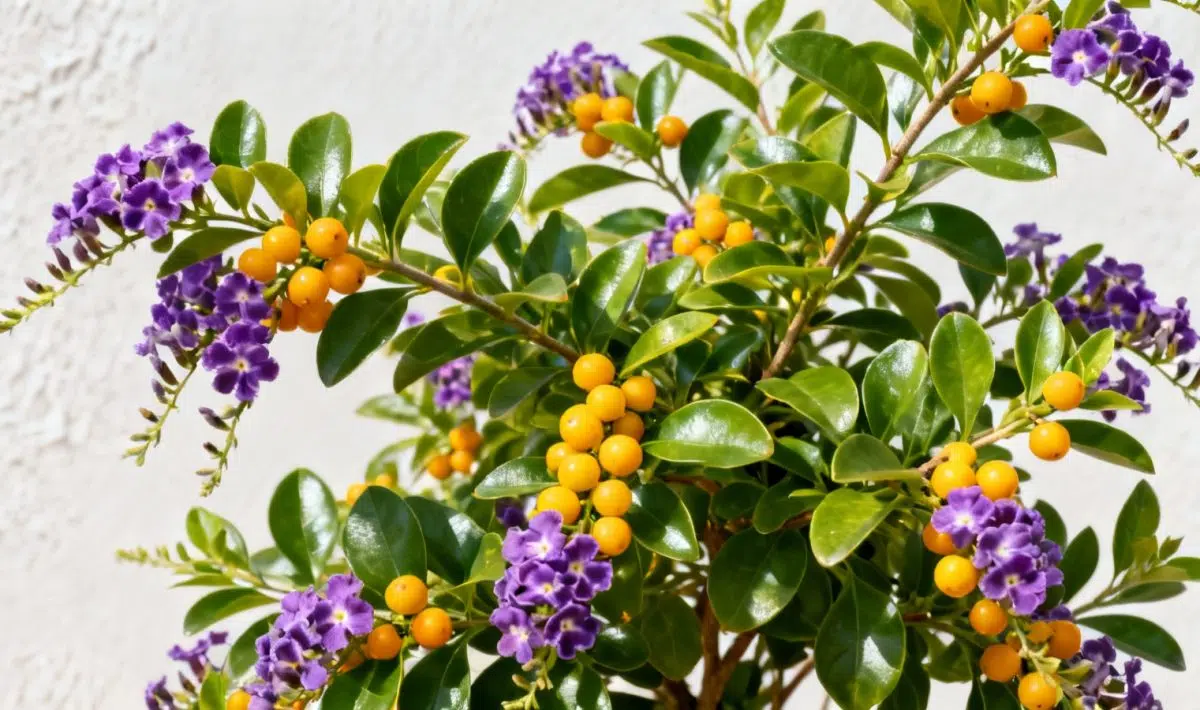
Golden dewdrops, scientifically known as Duranta erecta, are truly magnificent ornamental plants that bring vibrant color to tropical gardens worldwide. These stunning shrubs produce delicate tubular flowers in beautiful clusters, followed by bright golden berries that give the plant its charming common name. Native to tropical regions, this species has become a beloved choice for gardeners seeking low-maintenance plants with exceptional visual appeal.
Key characteristics of Duranta erecta
This remarkable plant typically reaches heights between 6 to 15 feet, making it perfect for both container gardening and landscape applications. The foliage consists of opposite leaves that range from light to dark green, often featuring attractive serrated or scalloped edges. During blooming season, the plant produces spectacular clusters of blue, purple, or white flowers that attract butterflies and hummingbirds.
The most distinctive feature appears after flowering when bright yellow berries develop, creating a stunning contrast against the green foliage. However, it’s important to note that these decorative berries are toxic and should be kept away from children and pets. The plant thrives in USDA zones 9a through 11b and demonstrates remarkable tolerance to various growing conditions.
Like many tropical plants that require specific care approaches, understanding the growth patterns helps ensure success. For gardeners interested in similar low-maintenance options, exploring care tips for common coleus can provide valuable insights into caring for other colorful garden plants.
Essential care requirements for golden dewdrops
Proper lighting represents the foundation of successful Duranta erecta cultivation. These plants perform best in full sun to partial shade conditions, requiring at least six hours of direct sunlight daily for optimal flowering and berry production. In regions with intense summer heat, providing afternoon shade can prevent leaf scorch and maintain plant vigor.
Soil requirements remain relatively flexible, though well-draining soil with good organic content produces the best results. The plant tolerates various soil types, from sandy to clay, but consistently waterlogged conditions can lead to root rot. A soil pH between 6.0 and 7.5 provides ideal growing conditions for healthy development.
Watering needs vary throughout the growing season, with established plants showing impressive drought tolerance. During the first growing season, maintain consistent moisture to encourage strong root development. Once established, water deeply but infrequently, allowing the soil to dry slightly between waterings. Overwatering causes more problems than occasional drought stress.
Cultivation techniques and garden applications
Creating optimal growing conditions begins with proper site selection and soil preparation. Choose locations that receive morning sunlight with protection from harsh afternoon winds. Dig planting holes twice as wide as the root ball but no deeper, ensuring the plant sits at the same depth as in its container.
Regular fertilization supports vigorous growth and abundant flowering. Apply a balanced, slow-release fertilizer three times during the growing season – early spring, mid-summer, and early fall. Supplemental feeding with liquid fertilizer every four to six weeks during active growth periods enhances flower production and overall plant health.
Pruning plays a crucial role in maintaining shape and encouraging bushy growth. Remove spent flowers regularly to promote continuous blooming and prevent excessive self-seeding. Annual pruning in late winter or early spring helps control size and removes any frost-damaged growth. Many gardeners appreciate learning about similar pruning techniques when growing garlic mustard successfully in their herb gardens.
Propagation methods for expanding your collection
Duranta erecta propagates easily through multiple methods, making it simple to expand your garden collection or share with fellow gardeners. Seed propagation offers the most economical approach, though plants grown from seed may not maintain exact parent plant characteristics. Collect ripe berries in late fall, remove the pulp, and plant fresh seeds in seed-starting mix.
Cutting propagation provides faster results and ensures genetic consistency with the parent plant. Take 4-6 inch softwood cuttings in spring or early summer, removing lower leaves and dipping cut ends in rooting hormone. Plant cuttings in well-draining potting mix and maintain consistent moisture until roots develop, typically within 4-6 weeks.
Layering represents another effective propagation technique, particularly useful for larger specimens. Bend a flexible branch to ground level, wound the bark lightly where it touches soil, and cover with earth while keeping the tip exposed. Roots typically develop within 2-3 months, after which the new plant can be separated from the parent.
Medicinal properties and traditional uses
Traditional medicine systems have long recognized Duranta erecta for various therapeutic properties, though scientific research remains limited. Indigenous communities in tropical regions have used different parts of the plant for treating inflammation, minor wounds, and digestive issues. The leaves contain compounds that preliminary studies suggest possess antimicrobial and antioxidant properties.
However, it’s essential to exercise extreme caution with any medicinal applications due to the plant’s toxic berries and potential adverse reactions. Professional medical consultation should always precede any therapeutic use of plant materials. The berries contain saponins and other compounds that can cause serious poisoning in humans and animals.
Research into plant-based medicines continues expanding our understanding of natural remedies. For gardeners interested in other plants with traditional medicinal applications, learning about tips for Japanese pieris care can provide insights into growing another historically significant species.
Managing common growing challenges
While generally hardy, Duranta erecta can face several growing challenges that affect plant health and appearance. Pest problems occasionally arise, particularly with scale insects, spider mites, and whiteflies in greenhouse or indoor growing situations. Regular inspection and prompt treatment with horticultural oils or insecticidal soaps effectively manages most pest issues.
Cold sensitivity represents the primary limitation for northern gardeners, as temperatures below 40°F can damage foliage and kill plants outright. In marginal climates, container cultivation allows moving plants indoors during winter months. Alternatively, treating the plant as an annual provides seasonal color without winter protection concerns.
Disease problems remain relatively uncommon with proper cultural practices. Root rot can develop in poorly drained soils, while powdery mildew may appear during humid conditions with poor air circulation. Understanding similar challenges helps when care guidelines for Dieffenbachia seguine become relevant for indoor plant enthusiasts.
Design applications and companion planting
Golden dewdrops excel in various landscape applications, from specimen plantings to mixed borders and foundation plantings. Their moderate size makes them perfect for intermediate layers in layered garden designs, while their colorful berries provide winter interest in mild climates. The plant’s naturally rounded form requires minimal pruning to maintain attractive shape.
Companion planting opportunities abound with Duranta erecta’s adaptable nature. Pair with other tropical plants like hibiscus, bougainvillea, or ixora for vibrant color combinations. In mixed borders, combine with perennials that appreciate similar growing conditions, creating dynamic seasonal displays that evolve throughout the year.
Container gardening opens additional possibilities for incorporating golden dewdrops into garden designs. Large containers allow the plant to reach substantial size while maintaining portability for seasonal arrangements. This versatility mirrors the flexibility found when growing garden cosmos plants in both containers and garden beds.
Conclusion and future considerations
Duranta erecta represents an excellent choice for gardeners seeking reliable, attractive plants that provide multi-season interest with minimal maintenance requirements. From its delicate flowers that support beneficial insects to its striking golden berries that add winter color, this versatile species offers numerous benefits for both novice and experienced gardeners.
Understanding proper care, cultivation, and propagation techniques ensures success with this rewarding plant. Whether grown as a specimen, in mixed plantings, or container gardens, golden dewdrops consistently deliver outstanding performance when basic growing requirements are met. Their adaptability and resilience make them valuable additions to sustainable garden designs that support local ecosystems while providing lasting beauty.

Allan is a lifelong gardening enthusiast who still gets excited when the first seedlings pop up in spring. With a deep love for nature and a hands-in-the-soil approach, he shares practical tips, plant discoveries, and clever tricks picked up over years of digging, planting, and observing. Whether you’re a new gardener or have a shed full of tools, Allan writes like a neighbor who’s always happy to swap cuttings and stories over the fence.
You can find more about Allan’s work on Malt or connect with him on LinkedIn.


