
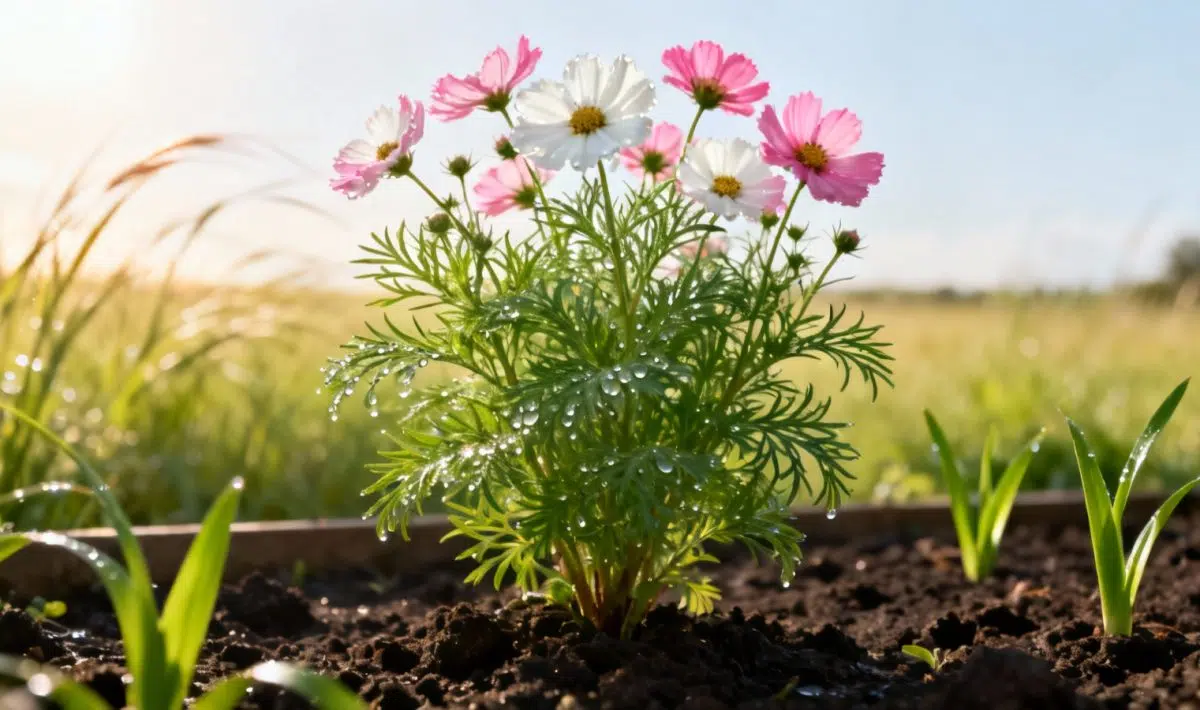
Understanding Garden cosmos – Cosmos bipinnatus
Garden cosmos bipinnatus stands out as one of the most rewarding annual flowers you can grow in your space. These cheerful plants produce masses of daisy-like fleurs in shades of pink, white, and rouge throughout the growing season. What makes cosmos particularly appealing is their incredible tolerance for poor soil conditions and minimal care requirements.
The feuillage of cosmos features delicate, feathery leaves that create an airy texture in garden beds. These plantes typically reach heights of 3 to 6 feet, making them excellent background plants or natural screens. The flowers attract beneficial insects and pollinisateurs, contributing significantly to your garden’s ecosystem health.
Most gardeners appreciate cosmos for their rapid croissance and extended floraison period. From early summer until frost, these annuelle plants continuously produce new blooms, ensuring constant color in your outdoor space. The bipinnatus variety particularly excels in creating that cottage garden sensation many gardeners seek.
Optimal growing conditions for cosmos cultivation
Cosmos thrives in full sun locations with well-drained sol. These hardy plantes actually prefer poorer terre conditions over rich, fertile ground. When soil is too nutrient-dense, cosmos tends to produce excessive feuillage at the expense of flower production.
The ideal growing setup includes sandy or loamy soil with good drainage. Heavy clay soils should be amended with compost or sand to improve water movement. Similarly, when learning to learn about common coleus care, you’ll notice that different plants have varying soil preferences, making cosmos uniquely adaptable.
Temperature requirements are quite flexible for cosmos culture. These plantes handle heat excellently while tolerating light frosts in autumn. However, they cannot survive freezing temperatures, confirming their annuel status in most growing zones.
Planting and propagation techniques
Starting cosmos from graines offers the most cost-effective approach to filling your garden spaces. Direct seeding works wonderfully for these fast-germinating flowers. Simply scatter the graines over prepared soil in late spring after frost danger passes.
For earlier blooms, start semis indoors 4-6 weeks before your last frost date. The graines germinate quickly at temperatures around 70°F, usually sprouting within 7-10 days. This head start allows for longer enjoyment of the colorful fleur displays.
Transplanting young plants requires gentle handling due to their delicate root systems. Space cosmos plants 12-18 inches apart to allow for proper air circulation and growth. When establishing new garden areas, you might also want to explore garlic mustard propagation tips for companion planting ideas.
Step-by-step seeding process
- Prepare the planting area by removing weeds and loosening the top 2-3 inches of sol
- Scatter graines thinly across the surface, aiming for 2-3 seeds per square inch
- Lightly rake or press seeds into the terre, covering with just 1/4 inch of soil
- Water gently with a fine spray to avoid disturbing the newly planted graines
- Maintain consistent moisture until germination occurs
Essential care and maintenance practices
Once established, cosmos requires minimal intervention to thrive. Water deeply but infrequently, allowing the sol to dry between watering sessions. Overwatering actually harms these drought-tolerant plantes and can lead to weak, floppy growth.
Deadheading spent fleurs encourages continued bloom production throughout the growing season. Simply pinch or cut off faded flowers just above the next set of leaves or buds. This practice redirects the plant’s energy into creating new blooms rather than seed production.
Fertilizing cosmos should be done sparingly, if at all. These plantes perform best in lean soil conditions. Excessive nutrients promote leaf growth at the expense of flowering. If your sol is particularly poor, a light application of balanced fertilizer at planting time suffices for the entire season.
Staking may become necessary for taller varieties, especially in windy locations. Use bamboo stakes or plant supports early in the season before the plantes reach full height. For gardeners interested in supporting plant structures, techniques used when you discover Japanese pieris care guidelines can provide additional insights.
Common varieties and their characteristics
Several popular cosmos varieties offer different heights, colors, and growth habits. The classic ‘Sensation Mix’ produces large fleurs in pink, white, and rose shades on plants reaching 4-6 feet tall. This variety works excellently as a background plante in mixed borders.
Shorter varieties like ‘Sonata’ series reach only 18-24 inches, making them perfect for front-of-border plantings or container gardens. These compact plants still produce abundant fleurs while maintaining a neat, controlled appearance throughout the growing season.
For those seeking unusual colors, ‘Chocolate’ cosmos offers deep burgundy blooms with a subtle chocolate scent. However, this variety requires slightly different care than the standard bipinnatus types and may need more consistent moisture.
Companion planting and garden design
Cosmos works beautifully with many other garden plantes, creating stunning combinations throughout the growing season. Their airy feuillage provides excellent contrast to bold-leaved plants like cannas or dahlias. The delicate texture also complements ornamental grasses wonderfully.
In vegetable gardens, cosmos serves multiple beneficial purposes. The fleurs attract pollinators that help with crop production while providing cut flowers for indoor arrangements. Many gardeners plant cosmos along garden borders to create natural windbreaks for more delicate crops.
For indoor plant enthusiasts transitioning to outdoor gardening, the care principles learned when you find out about Dieffenbachia seguine care demonstrate how different plants require adapted approaches, making cosmos an excellent choice for beginners.
Ideal companion plants include
- Zinnias for continuous color combinations
- Marigolds for pest control benefits
- Sunflowers for height variation
- Sweet alyssum for ground coverage
- Nasturtiums for edible flower options
Harvesting and seed collection
Collecting graines from your cosmos plants ensures a continuous supply for future seasons. Allow some fleurs to remain on the plantes until they dry completely and turn brown. The seeds will be dark brown or black when fully mature and ready for collection.
Cut the dried flower heads and place them in paper bags to finish drying. Shake the bags gently to release the seeds, then store them in cool, dry conditions until the next planting season. Properly stored cosmos graines remain viable for 2-3 years.
Many gardeners find that cosmos readily self-seeds in favorable conditions. If you want volunteer plants next year, simply allow some flowers to go to seed naturally. These self-sown plantes often appear in spring and can be transplanted to desired locations.
Troubleshooting common issues
While generally problem-free, cosmos can occasionally face challenges that affect their performance. Aphids sometimes attack new growth, but they’re easily controlled with insecticidal soap or strong water sprays. Beneficial insects usually keep aphid populations under control naturally.
Fungal issues rarely affect cosmos, but poor air circulation can lead to problems in humid conditions. Proper spacing between plantes and avoiding overhead watering help prevent most fungal concerns. If problems persist, remove affected plant parts promptly.
Leggy growth typically results from insufficient light or overly rich sol. Cosmos needs full sun to develop strong, sturdy stems. In partial shade, plants stretch toward light sources, creating weak, floppy growth that requires staking. For gardeners dealing with similar structural issues in other plants, techniques from understand how to care for Gollum jade might offer relevant solutions.
Garden cosmos represents one of the most reliable and rewarding annual fleurs you can grow. Their combination of easy culture, extended bloom period, and beneficial ecological impact makes them invaluable additions to any garden space. Whether you’re creating cutting gardens, attracting pollinators, or simply adding cheerful color to your landscape, cosmos delivers consistent results with minimal effort.

Allan is a lifelong gardening enthusiast who still gets excited when the first seedlings pop up in spring. With a deep love for nature and a hands-in-the-soil approach, he shares practical tips, plant discoveries, and clever tricks picked up over years of digging, planting, and observing. Whether you’re a new gardener or have a shed full of tools, Allan writes like a neighbor who’s always happy to swap cuttings and stories over the fence.
You can find more about Allan’s work on Malt or connect with him on LinkedIn.


