
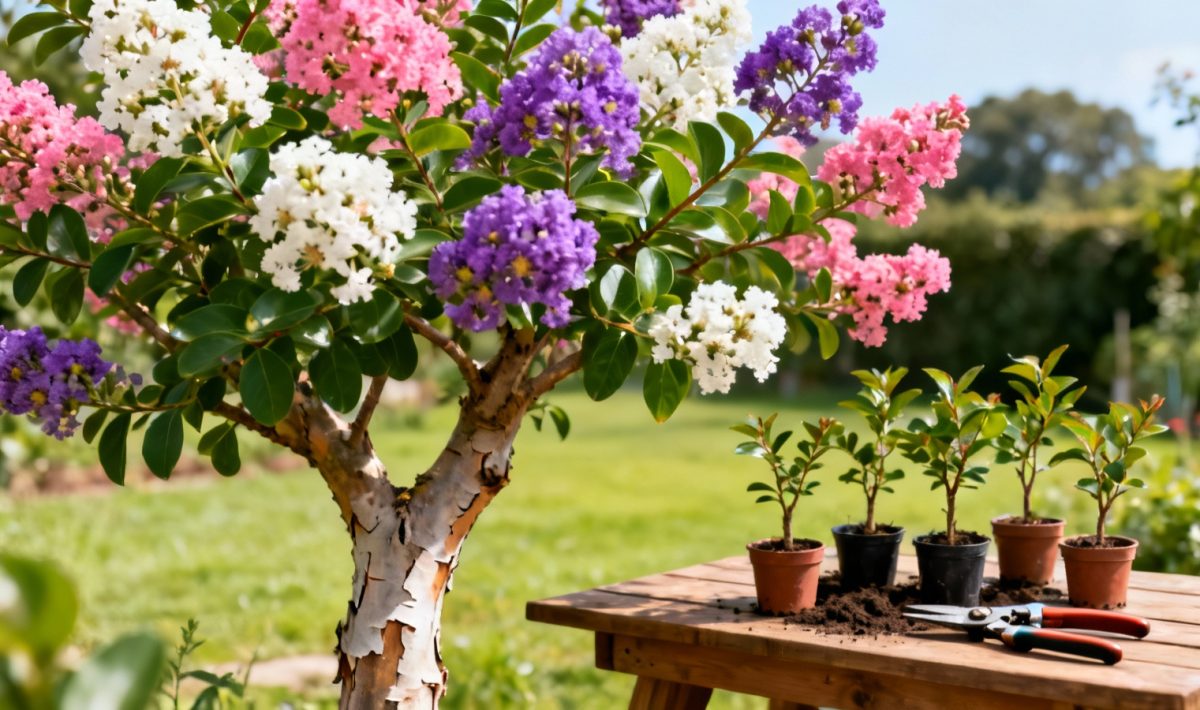
Understanding the magnificent crape myrtle
The crape myrtle (Lagerstroemia indica) stands out as one of the most rewarding flowering trees you can grow in your garden. Originally from China, this stunning ornamental plant has captured hearts worldwide with its spectacular summer blooms and distinctive exfoliating bark. What makes this tree truly special is its ability to provide year-round interest, from vibrant summer fleurs to gorgeous autumn feuillage that transforms into brilliant shades of red and orange.
This versatile plante adapts beautifully to various landscape uses, whether you’re looking for a striking focal point or planning a colorful massif. The lagerstroemia produces abundant grappes of papery flowers in shades ranging from deep rouge to soft rose and pure white, creating a display that rivals any ornamental arbre in your garden.
Essential characteristics of Lagerstroemia indica
The crape myrtle typically reaches heights of 4 to 8 meters, making it perfect for medium-sized gardens. Its caduc feuillage emerges fresh green in spring, providing excellent texture throughout the growing season. The leaves are oval-shaped with smooth edges, creating an elegant backdrop for the spectacular floraison period that spans from June through September.
One of the most distinctive features is the tree’s smooth, mottled bark that exfoliates naturally, revealing beautiful patches of cream, pink, and cinnamon colors underneath. This characteristic becomes more pronounced as the arbuste matures, adding winter interest when the branches are bare. Different variétés offer varying growth habits, from upright columnar forms to more spreading shapes that work well in larger spaces.
The flower clusters appear at the branch tips, with each individual bloom featuring crinkled petals that give the tree its common name. These grappes can measure up to 20 centimeters long, creating an impressive display that attracts butterflies and other beneficial insects to your garden.
Popular varieties and their unique traits
Several excellent variétés of crape myrtle are available to suit different garden needs. The ‘Magic’ series offers compact growth perfect for smaller spaces or container cultivation on terrasse areas. These dwarf forms maintain all the beauty of their larger cousins while staying under 2 meters tall.
For those seeking specific couleur combinations, the ‘Red Rocket’ variety produces intense rouge fleurs on a narrow, upright frame, while ‘Natchez’ offers pure white blooms with particularly attractive cinnamon-colored bark. The rose-flowered varieties like ‘Tuscarora’ provide softer tones that blend beautifully with other garden plantes.
Optimal growing conditions and sol requirements
Success with crape myrtle begins with choosing the right location and preparing proper sol conditions. These trees absolutely require full soleil exposure, needing at least 6 hours of direct sunlight daily to produce their best floraison. In shaded locations, you’ll notice reduced flowering and increased susceptibility to fungal issues.
The ideal sol should be well-drainant while retaining some moisture during dry periods. Crape myrtles adapt to various soil types, from sandy to clay, but they perform best in slightly acidic to neutral conditions with a pH between 5.5 and 7.5. Avoid areas where water tends to pool, as soggy conditions can lead to root problems.
When preparing for plantation, dig a hole twice as wide as the root ball but no deeper. This allows the roots to spread horizontally, which is crucial for establishing a strong foundation. Amending heavy clay sol with organic matter improves drainage, while sandy soils benefit from compost to increase water retention.
Spacing and companion planting
Proper spacing ensures good air circulation around your crape myrtle, which helps prevent disease issues. Plant standard varieties at least 3 to 4 meters apart, while dwarf forms can be spaced closer for haies or grouped plantings. Consider the mature size when planning, as crowded trees rarely reach their full potential.
Companion plantes that work well include ornamental grasses, perennial flowers, and low shrubs that won’t compete for nutrients. Just as caring for Japanese pieris plants requires attention to spacing, proper placement of crape myrtles ensures each tree has room to develop its natural form.
Proper care and maintenance practices
Establishing a good watering routine is essential during the first few years after plantation. Young trees need consistent moisture but not waterlogged conditions. Water deeply once or twice weekly rather than frequent shallow watering, which encourages surface roots. Once established after about three years, crape myrtles become remarkably drought-tolerant.
Fertilization should be moderate and focused on promoting healthy growth rather than excessive feeding. Apply a balanced, slow-release fertilizer in early printemps as new growth begins. Avoid high-nitrogen produits that promote soft growth at the expense of flowering. A layer of organic mulch around the base helps retain moisture and suppress weeds.
The taille of crape myrtles is often misunderstood, with many gardeners practicing harmful “crape murder” by severely cutting back all branches. Proper pruning focuses on removing suckers from the base, eliminating crossed or damaged branches, and selectively thinning to improve air circulation. The best time for major taille work is during the dormant période in late winter.
Seasonal care calendar
Spring marks the beginning of active growth, making it the ideal time to apply fertilizer and check for any winter damage. Remove any dead wood and plan your pruning strategy. As the weather warms, watch for new feuillage emergence and the development of flower buds.
Summer care focuses on maintaining adequate moisture during hot periods and deadheading spent flower clusters to encourage additional blooms. This is also when you’ll enjoy the peak floraison période and should monitor for any pest or disease issues.
Successful propagation methods
Growing new crape myrtles from cuttings is surprisingly straightforward and cost-effective. Take semi-hardwood cuttings in late summer, choosing healthy stems about 15 centimeters long. Remove the lower leaves and dip the cut end in rooting hormone before placing in a well-drainant potting mix.
Keep cuttings in a warm, bright location but out of direct sunlight. Maintain consistent moisture without overwatering, and you should see root développement within 6 to 8 weeks. Once rooted, young plants can be grown in containers until they’re large enough for transplanting.
Semis from graines is also possible, though results may vary from the parent plante if it’s a named variety. Collect seeds from mature pods in autumn and stratify them in the refrigerator for several weeks before sowing in spring. This method requires more patience but can be rewarding for those interested in growing native species forms.
Much like tips for growing garlic mustard emphasize proper timing, successful crape myrtle propagation depends on choosing the right season and providing appropriate growing conditions for young plants.
Caring for young plants
Newly propagated crape myrtles need extra attention during their first year. Keep them in a protected environment, whether in a greenhouse, cold frame, or sheltered outdoor location. Gradually acclimate them to full sunlight and outdoor conditions over several weeks.
Container-grown young arbustes can remain in pots for their first season, allowing for easier monitoring and care. Use a good-quality potting mix and provide regular but not excessive watering. These young plantes will be ready for permanent planting the following spring.
Common challenges and solutions
Powdery mildew represents the most common disease affecting crape myrtles, particularly in humid conditions with poor air circulation. This fungal issue appears as white, powdery patches on leaves and can weaken the plante over time. Prevention through proper spacing and avoiding overhead watering works better than treatment after problems develop.
Aphids occasionally attack new growth, causing leaves to curl and potentially transmitting viral diseases. These pests often appear in late spring on tender shoots. Regular inspection allows for early intervention with insecticidal soap or simply washing them off with a strong stream of water.
Scale insects can also become problematic, particularly on stressed trees. These small, immobile pests attach to branches and leaves, sucking sap and weakening the plante. Treatment options include horticultural oils applied during dormant periods or systemic insecticides for severe infestations.
Similar to guidelines for Dieffenbachia seguine care which emphasize preventing problems through proper care, maintaining healthy crape myrtles through appropriate cultural practices prevents most pest and disease issues.
Environmental stress factors
Drought stress can affect even established trees during extended dry periods, leading to premature leaf drop and reduced flowering. While mature crape myrtles are drought-tolerant, they perform better with occasional deep watering during severe droughts.
Cold damage occasionally occurs in marginal climate zones, particularly on young trees or tender new growth. Protecting young arbustes with mulch and selecting appropriate variétés for your climate zone helps minimize winter injury.
Design applications and landscape integration
Crape myrtles excel in various landscape roles, from specimen plantings to naturalistic groupings. Their extended blooming période and attractive winter silhouette make them valuable four-season performers. Consider using them as focal points in mixed borders, where their summer fleurs complement perennial plantings.
For urban environments, crape myrtles adapt well to street plantings and small garden spaces. Their tolerance of air pollution and compact root system makes them excellent choices for balcon gardens and restricted growing areas. Dwarf varieties work particularly well in bac plantings for terrasse decoration.
The natural grace of these trees complements both formal and informal garden styles. In formal settings, they can be pruned to maintain specific shapes, while in naturalistic landscapes, their organic growth habit creates beautiful specimens that require minimal intervention.
Just as how to care for common persimmon involves understanding the tree’s natural growth patterns, successful landscape use of crape myrtles requires appreciating their inherent beauty and working with their natural characteristics.
Seasonal interest and year-round appeal
Beyond their spectacular summer bloraison, crape myrtles offer changing beauty throughout the seasons. Spring brings fresh green feuillage and the anticipation of upcoming fleurs. Summer showcases the peak flowering display that can last for months with proper deadheading.
Autumn transforms the foliage into brilliant reds, oranges, and yellows, rivaling traditional fall color trees. Winter reveals the elegant branching structure and the beautiful exfoliating bark that provides visual interest even when the tree is dormant.
Advanced cultivation techniques
Experienced gardeners can enhance crape myrtle performance through selective breeding and specialized care techniques. Understanding bloom timing allows for strategic deadheading that promotes multiple flowering cycles throughout the estivale période.
Container cultivation opens up possibilities for growing crape myrtles in climates where they wouldn’t normally survive winters. Large containers allow for seasonal movement, bringing trees into protected areas during cold months. This technique works particularly well with dwarf variétés.
Grafting techniques can combine the best characteristics of different varieties, such as superior root systems with exceptional flower colors. While more advanced, this propagation method allows for creating unique specimens suited to specific garden conditions.
Much like care tips for golden pothos plants which emphasize understanding plant needs, mastering crape myrtle cultivation requires patience and observation to achieve the best results.
The crape myrtle continues to prove itself as an outstanding choice for gardeners seeking beautiful, low-maintenance trees that provide exceptional value. With proper care and appropriate variety selection, these remarkable plantes will reward you with decades of stunning blooms and year-round beauty in your landscape.

Allan is a lifelong gardening enthusiast who still gets excited when the first seedlings pop up in spring. With a deep love for nature and a hands-in-the-soil approach, he shares practical tips, plant discoveries, and clever tricks picked up over years of digging, planting, and observing. Whether you’re a new gardener or have a shed full of tools, Allan writes like a neighbor who’s always happy to swap cuttings and stories over the fence.
You can find more about Allan’s work on Malt or connect with him on LinkedIn.


