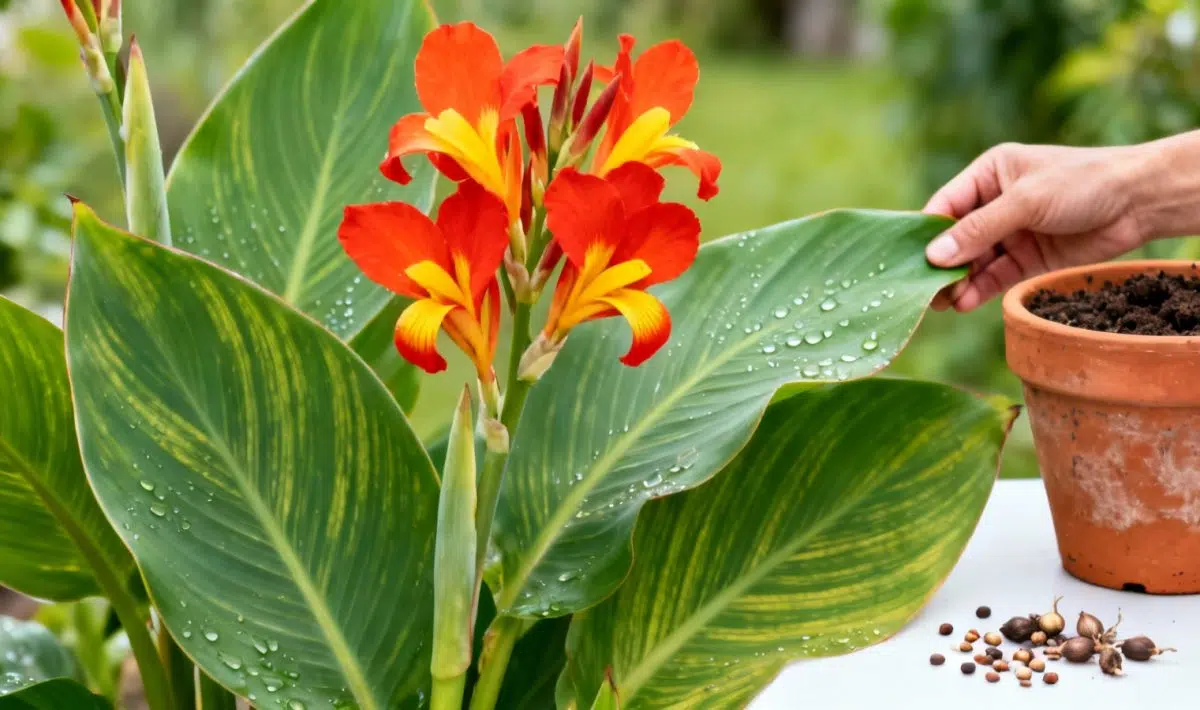
Indian shot – Canna indica: care, characteristics, culture, propagation
Today I’m excited to share everything you need to know about the stunning Canna indica, commonly known as Indian shot. This tropical beauty has been captivating gardeners for centuries with its bold foliage and vibrant orange-red flowers that bloom from summer through fall.
Understanding Canna indica: characteristics and origin
The Indian shot is a remarkable tropical plant that originates from the Caribbean and Andean regions, where it thrives at altitudes up to 2,500 meters. What makes this plant truly special is its impressive height of 50 to 120 cm and its distinctive black seeds that are as hard as lead pellets. These seeds historically gave the plant its common name, as they were once used as ammunition during conflicts.
The plant’s banana-like leaves create a lush, exotic appearance in any garden setting. Its rhizomes can extend up to 60 cm in length and are actually edible when properly prepared. However, most gardeners today cultivate Canna indica purely for its ornamental value rather than culinary purposes.
Distinctive features of the plant
The large, paddle-shaped leaves of Canna indica create an impressive backdrop for its showy flowers. These blooms appear in striking shades of red, orange, and yellow, making them perfect focal points in garden designs. The flowering period typically runs from July through September in temperate regions, though in tropical climates, blooming can occur at different times throughout the year.
What’s particularly fascinating is how this plant has adapted to various climates and soil types. Much like how care tips for nerium oleander focus on Mediterranean conditions, Canna indica thrives in warm, humid environments but can adapt to cooler regions with proper care.
Essential growing conditions for Canna indica
Creating the perfect environment for your Indian shot plants requires attention to several key factors. These tropical beauties prefer full sun exposure, receiving at least six hours of direct sunlight daily. The soil should be rich, well-draining, and consistently moist but never waterlogged.
Soil and sunlight requirements
The ideal soil for Canna indica should have a pH between 6.0 and 6.8, with plenty of organic matter incorporated. Before planting, work compost or well-aged manure into the soil to improve both drainage and fertility. These plants appreciate consistent moisture, so consider adding mulch around the base to retain soil moisture and regulate temperature.
Temperature is equally important for success. While Canna indica can tolerate brief periods of cooler weather, prolonged exposure to temperatures below 10°C can damage the plant. In regions with harsh winters, you’ll need to lift the rhizomes and store them indoors until spring returns.
Watering and humidity needs
Regular watering is crucial for maintaining healthy Canna indica plants throughout the growing season. During active growth periods, these plants need approximately 2.5 cm of water per week. Deep, thorough watering encourages strong root development and prevents stress during hot summer months.
Monitor soil moisture levels regularly, especially during extended dry periods. The soil should feel consistently moist but never soggy. Poor drainage can lead to rhizome rot, which is one of the most common problems encountered when growing these plants.
Maintenance and seasonal care
Proper maintenance ensures your Canna indica plants remain vigorous and productive throughout the growing season. Regular fertilization, deadheading, and monitoring for pests are essential components of successful cultivation.
Fertilization schedule
Feed your plants every 4-6 weeks during the growing season with a balanced, slow-release fertilizer. A formulation with equal parts nitrogen, phosphorus, and potassium works well for encouraging both foliage growth and flower production. Apply fertilizer according to package directions, watering thoroughly after each application.
For those seeking natural alternatives, compost tea or liquid kelp fertilizer can provide excellent nutrition. These organic options release nutrients slowly and improve soil structure over time, creating an ideal environment for healthy root development.
Pruning and deadheading
Regular deadheading encourages continuous flowering and prevents the plant from putting energy into seed production. Remove spent flowers by cutting back to the nearest leaf joint. Similarly, remove any damaged or yellowing leaves promptly to maintain the plant’s appearance and prevent disease.
At the end of the growing season, cut back all foliage to ground level after the first hard frost. This preparation is essential before lifting and storing rhizomes in cold climates.
Propagation methods for expanding your collection
Expanding your Canna indica collection is straightforward using either rhizome division or seed propagation. Division is the most reliable method and ensures plants identical to the parent, while seed propagation offers genetic diversity but requires more patience.
Rhizome division technique
The best time for dividing rhizomes is early spring, just before planting season begins. Carefully lift dormant rhizomes from storage and examine them for signs of new growth buds. Each division should have at least one healthy growth bud and a portion of the original rhizome.
Use a sharp, sterilized knife to make clean cuts, ensuring each section has adequate root material. Allow cut surfaces to dry for 24 hours before planting to prevent rot. This method typically produces flowering plants within the same growing season.
Starting from seed
Growing from seed requires patience but can be rewarding for gardeners interested in genetic diversity. Before planting, scarify the hard seed coat by filing or nicking the surface to improve germination rates. Soak seeds in warm water for 24 hours before sowing.
Plant seeds in warm, moist potting mix and maintain temperatures around 24-27°C for optimal germination. Seedlings typically emerge within 2-3 weeks and will need an entire growing season to develop into flowering-sized plants.
Managing common challenges
While generally robust, Canna indica can face several common issues that gardeners should recognize and address promptly. Early identification and proper treatment prevent minor problems from becoming major setbacks.
Pest and disease prevention
Spider mites and aphids are the most frequent pests affecting Canna indica plants. Regular inspection of leaf undersides helps catch infestations early when they’re easier to control. Strong water sprays can dislodge light infestations, while insecticidal soap provides effective treatment for larger populations.
Fungal issues typically arise from poor air circulation or excessive moisture on foliage. Ensure adequate spacing between plants and avoid overhead watering during evening hours. If fungal problems develop, remove affected foliage and apply appropriate fungicides according to label directions.
Just as characteristics of Philodendron ‘Birkin’ include specific humidity requirements, Canna indica benefits from good air movement around the foliage to prevent moisture-related issues.
Winter storage considerations
In regions where temperatures drop below freezing, proper storage of Canna indica rhizomes ensures their survival until the following spring. After cutting back foliage, carefully lift rhizomes from the soil and brush off excess dirt without washing.
Store rhizomes in slightly moist peat moss or vermiculite at temperatures between 7-10°C. Check stored rhizomes monthly, removing any that show signs of rot and adjusting moisture levels as needed. Properly stored rhizomes typically maintain viability for 4-6 months.
Landscape applications and companion planting
Canna indica creates stunning focal points in tropical-themed gardens and works beautifully in mixed borders. Its bold foliage provides excellent contrast to finer-textured plants, while its height makes it perfect for background plantings or screening applications.
Consider pairing Canna indica with other heat-loving plants that appreciate similar growing conditions. Tips for caring for Monstera obliqua demonstrate how tropical plants often share similar environmental needs, making them natural companions in garden design.
For container gardening, choose large pots with drainage holes and use high-quality potting mix enriched with compost. Container-grown plants may need more frequent watering and fertilization but offer the advantage of easy winter storage in cold climates.
The versatility of Canna indica extends beyond traditional garden applications. Many gardeners appreciate how these plants create natural privacy screens while adding tropical flair to outdoor living spaces. Care and propagation of magnolia grandiflora shows similar principles of using large, dramatic plants as landscape anchors.
Whether you’re creating a bold tropical display or adding exotic appeal to traditional garden designs, Canna indica offers reliable performance and stunning visual impact. With proper care and attention to its basic needs, this remarkable plant will reward you with months of vibrant color and lush foliage that transforms any garden space into a tropical paradise.
Allan is a lifelong gardening enthusiast who still gets excited when the first seedlings pop up in spring. With a deep love for nature and a hands-in-the-soil approach, he shares practical tips, plant discoveries, and clever tricks picked up over years of digging, planting, and observing. Whether you’re a new gardener or have a shed full of tools, Allan writes like a neighbor who’s always happy to swap cuttings and stories over the fence.
You can find more about Allan’s work on Malt or connect with him on LinkedIn.