Understanding your indian shot’s water requirements
Your Indian shot, also known as Canna indica, is one of those beautiful tropical plants that makes you feel like you’ve got your own little paradise going in the garden. But here’s the thing – getting the watering schedule right can make all the difference between a thriving plant and one that’s struggling to keep up.
This gorgeous plant needs consistent moisture, but not so much that you’re drowning it. Think of it as finding that sweet spot where the soil stays pleasantly damp without turning into a soggy mess. The key is understanding what your plant is actually telling you through its leaves and growth patterns.
Factors that influence watering frequency
Several elements come into play when determining how often to water your Indian shot. Your local climate plays a huge role – if you’re dealing with scorching summer heat, your plant will be thirstier than during cooler months. The type of soil you’re working with matters too, as sandy soils drain faster than clay-heavy ones.
Container size also affects your watering schedule. Smaller pots dry out more quickly, while larger containers hold moisture longer. Just like when you’re watering tomatoes during a heatwave, you need to adjust your approach based on these environmental factors.
Signs your plant needs attention
Your Indian shot will give you clear signals when it’s not getting the right amount of water. Leaves that start looking wilted or develop brown, crispy edges are crying out for more moisture. On the flip side, yellowing leaves that feel mushy might indicate you’re being a bit too generous with the watering can.
Watch for changes in growth rate too. A happy, well-watered Indian shot should be putting out new growth regularly during the growing season. If things seem to have stalled, it might be time to reassess your watering routine.
Seasonal watering schedules for optimal growth
Summer care: meeting increased water demands
During those hot summer months, your Indian shot will be working overtime to stay cool and keep growing. This is when you’ll need to step up your watering game. Check the soil every couple of days by sticking your finger about two inches down – if it feels dry at that depth, it’s time to water.
Generally, you’ll find yourself watering every 3-4 days in summer, but this can vary based on your specific conditions. The goal is to keep the soil consistently moist but never waterlogged. Similar to caring for Angel’s-wings begonia, you want to maintain steady moisture levels throughout the growing season.
Early morning is the best time for summer watering – this gives your plant time to absorb the water before the heat of the day kicks in. Avoid watering in the evening during summer, as this can create humid conditions that attract pests and diseases.
Winter adjustments: scaling back appropriately
Winter brings a completely different set of requirements for your Indian shot. If you’re growing it as an annual or storing rhizomes indoors, watering needs drop dramatically. For plants that remain active in mild winter climates, you’ll typically water about once a week, or even less frequently.
The key during winter is preventing the soil from becoming bone dry while avoiding excess moisture that could lead to rot. Check the soil weekly and water only when the top inch feels dry to the touch.
Effective watering methods and techniques
Manual watering: pros and considerations
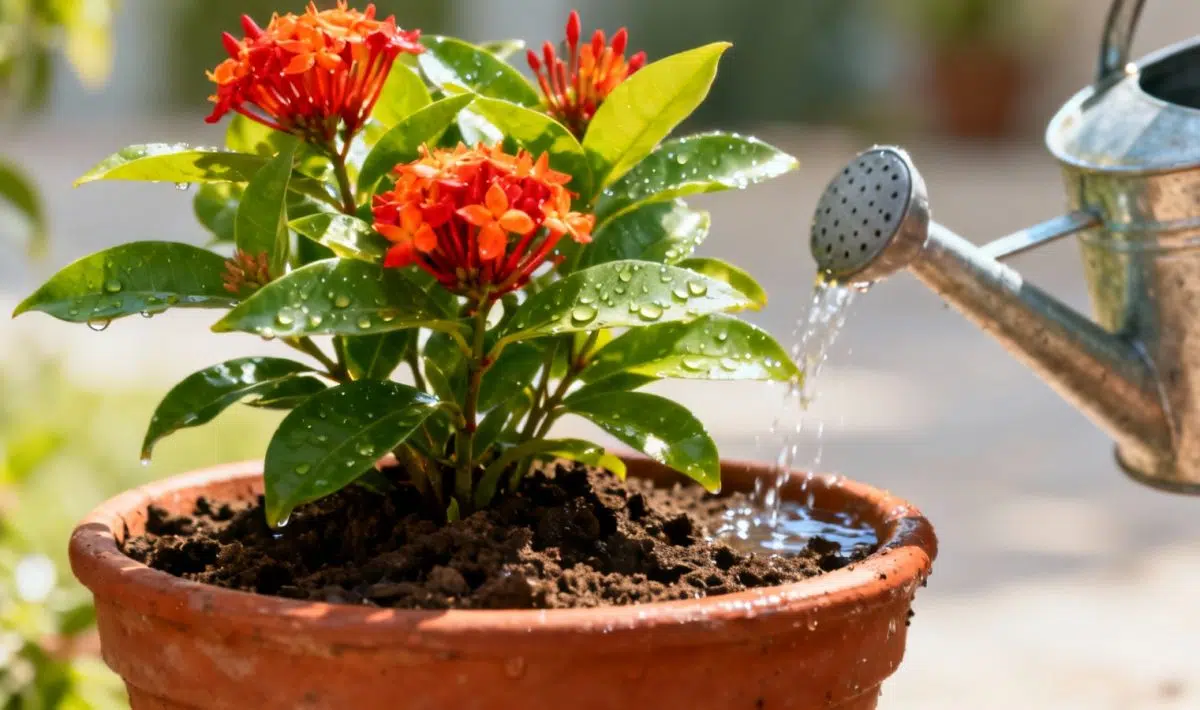
Hand watering gives you the most control over how much water your Indian shot receives. You can target the root zone directly and avoid getting water on the leaves, which helps prevent fungal issues. Use a watering can with a long spout or a hose with a gentle spray attachment.
Water slowly and deeply, allowing the soil to absorb moisture gradually. This approach encourages deep root development, which makes your plant more resilient during dry spells. The process is similar to watering china asters for blooms – thorough, deep watering beats frequent shallow applications every time.
Automated systems: convenience with control
Drip irrigation or soaker hoses can be fantastic options for Indian shot care, especially if you have multiple plants or travel frequently. These systems deliver water directly to the root zone at a steady rate, which many plants absolutely love.
Set up timers to run your system early in the morning, and adjust the duration based on seasonal needs. During peak summer, you might run the system for 20-30 minutes every few days, while winter might only require weekly sessions.
Troubleshooting common watering issues
Dealing with overwatering problems
Overwatering is probably the most common mistake people make with Indian shots. If you notice yellowing leaves, a musty smell from the soil, or soft, blackened stems, you’re likely overdoing it. The first step is to stop watering immediately and let the soil dry out.
Improve drainage around your plant by adding perlite or coarse sand to heavy soils. For potted plants, make sure your containers have adequate drainage holes. Sometimes you might need to repot entirely if root rot has set in.
Addressing underwatering stress
Plants that aren’t getting enough water will show wilted, crispy leaves and stunted growth. The solution seems obvious – add more water – but you need to do it gradually. Sudden heavy watering after a dry spell can shock the plant.
Start by giving your Indian shot a thorough but gentle watering, then monitor closely for the next few days. Much like proper care for parlor palms, consistency is key to helping your plant recover from water stress.
Creating your perfect watering routine
The secret to success with Indian shot watering lies in developing a routine that adapts to changing conditions. Start by checking your plant every few days, noting how quickly the soil dries out and how your plant responds to different amounts of water.
Keep a simple log for the first few weeks – you’ll quickly identify patterns that help you fine-tune your approach. Remember that each garden is unique, so what works for your neighbor might need tweaking for your specific situation.
Most importantly, trust your instincts and pay attention to what your plant is telling you. With time and observation, you’ll develop an intuitive sense for when your Indian shot needs water, leading to healthier, more beautiful plants that reward your care with stunning blooms and vigorous growth throughout the growing season.
Allan is a lifelong gardening enthusiast who still gets excited when the first seedlings pop up in spring. With a deep love for nature and a hands-in-the-soil approach, he shares practical tips, plant discoveries, and clever tricks picked up over years of digging, planting, and observing. Whether you’re a new gardener or have a shed full of tools, Allan writes like a neighbor who’s always happy to swap cuttings and stories over the fence.
You can find more about Allan’s work on Malt or connect with him on LinkedIn.