How much sunlight does garden petunia need for beautiful blooms
Garden petunias are among the most beloved flowering plants for a good reason. These vibrant beauties transform any garden space with their continuous blooms and stunning variety of colors. However, understanding how much sunlight does garden petunia need remains crucial for achieving that picture-perfect display we all desire.
Petunias thrive with 6 to 8 hours of direct sunlight daily for optimal flower production. This requirement isn’t just a gardening suggestion – it’s the foundation of healthy petunia growth. When these plants receive adequate sunlight, they reward gardeners with abundant blooms from spring through fall.
The strong correlation between sunlight exposure and flower quality becomes evident when you compare plants in full sun versus partial shade. Full-sun petunias produce significantly more blooms with richer colors and stronger stems. Meanwhile, those in insufficient light often become leggy and produce fewer flowers.
Different petunia varieties may have slightly varying light preferences, though most garden petunias share similar requirements. Grandiflora types with their large, showy blooms particularly benefit from consistent morning sun. Similarly, just as we consider sunlight requirements for English ivy, understanding each plant’s specific needs ensures gardening success.
Choosing the perfect location for your petunias
Selecting the right spot in your garden makes all the difference for petunia success. South-facing locations typically provide the most consistent sunlight throughout the day. East-facing areas also work well, especially in regions with intense afternoon heat.
When planning your garden layout, observe how sunlight moves across your space. Morning sun proves particularly valuable for petunias because it helps dry dew from leaves quickly. This reduces the risk of fungal diseases that can plague these flowers in humid conditions.
Consider the mature size of nearby plants and structures that might cast shadows as the season progresses. What appears sunny in early spring might become shaded once trees leaf out fully. Much like understanding light needs of painted-leaf begonia, proper site assessment prevents disappointment later in the growing season.
Soil preparation and planting considerations
Well-draining soil complements adequate sunlight to create ideal growing conditions. Petunias dislike waterlogged conditions, which can lead to root rot even with perfect light exposure. Amend heavy clay soils with compost or perlite to improve drainage.
Plant your petunia seeds or seedlings after the last frost date in your area. These tender annuals cannot tolerate freezing temperatures. Spacing plants appropriately ensures each one receives adequate light penetration and air circulation.
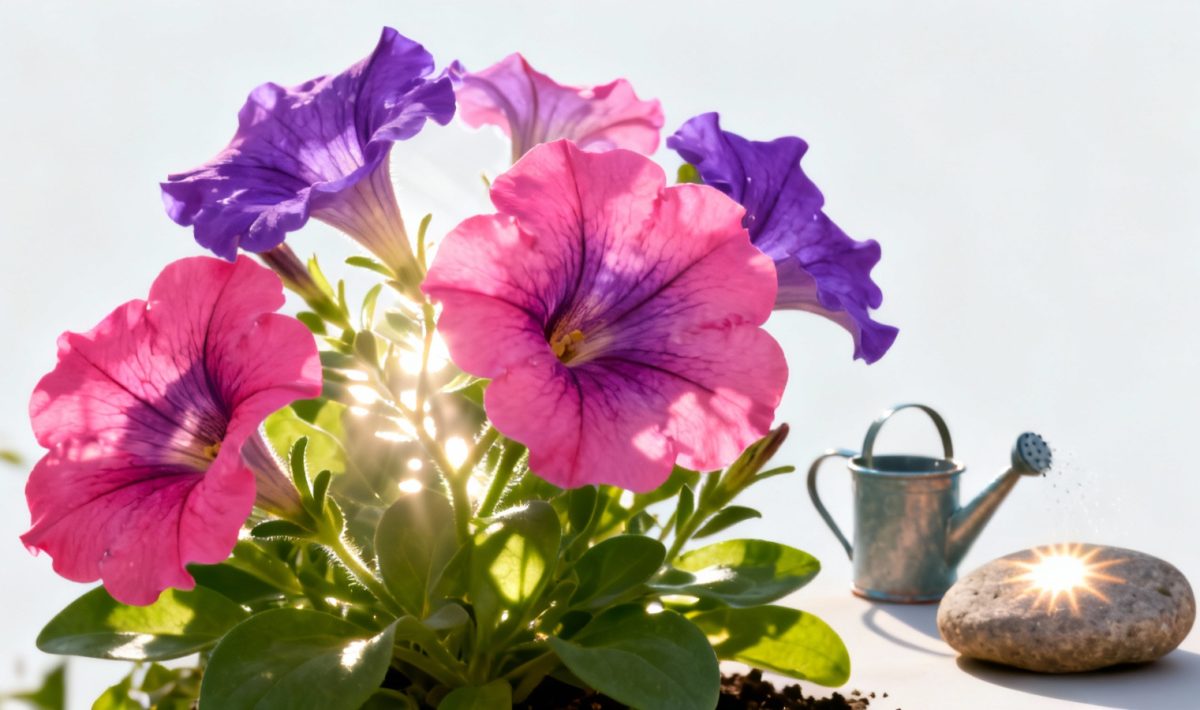
The variety of colors available in modern petunia cultivars is truly remarkable. Pink petunias often show exceptional heat tolerance, while purple and red varieties maintain their color intensity better in strong sunlight than some lighter shades.
Managing sunlight exposure throughout the season
Summer heat can occasionally become too intense even for sun-loving petunias. In regions where temperatures regularly exceed 90°F (32°C), some afternoon shade can actually benefit these plants. The key lies in maintaining morning sun while providing protection during the hottest part of the day.
Mulching around petunias helps regulate soil temperature and moisture, which becomes especially important in full-sun locations. Organic mulches like shredded bark or compost work excellently for this purpose.
Regular deadheading encourages continuous blooming throughout the season. Remove spent flowers by pinching them off at the stem, which redirects the plant’s energy into producing new blooms rather than setting seed.
Companion planting strategies
Companion plants can enhance your petunia display while sharing similar light requirements. Marigolds, zinnias, and salvia all thrive in full sun conditions alongside petunias. These combinations create stunning color displays throughout the growing season.
Consider the growth habits of companion plants carefully. Tall varieties should be positioned where they won’t shade shorter petunias. Similarly, understanding requirements for other garden plants, such as sunlight preferences for common borage, helps create harmonious garden designs.
Annual herbs like basil or oregano also make excellent companions for petunias, sharing similar care requirements while adding practical value to ornamental gardens.
Troubleshooting common sunlight-related issues
Insufficient sunlight often manifests as stretched, weak stems and reduced flowering. These symptoms typically appear when petunias receive fewer than four hours of direct sun daily. Moving containers to brighter locations or removing overhead obstructions can remedy this situation.
Conversely, excessive heat stress in very sunny locations may cause wilting even with adequate moisture. This problem often resolves with temporary shade cloth during heat waves or increased watering frequency.
Leaf burn occasionally occurs when potted petunias are moved suddenly from shade to full sun. Gradually acclimating plants over several days prevents this shock. Just as farmers carefully manage growing conditions for crops like those requiring specific care protocols such as sunlight needs of mango trees, gradual transitions yield better results.
Container growing considerations
Container petunias require extra attention to watering since pots dry out faster than garden beds in full sun. Choose containers with drainage holes and use quality potting mix designed for flowering plants.
The color of your containers affects soil temperature significantly. Light-colored pots reflect heat and keep roots cooler, while dark containers may overheat in intense sunlight. Position containers where they receive morning sun but some afternoon protection in very hot climates.
Regular fertilizing becomes even more important for container-grown petunias since frequent watering leaches nutrients from the soil more quickly than in garden beds.
Maximizing bloom production with proper care
Beyond providing adequate sunlight, several care practices maximize petunia flower production. Weekly fertilizing with a balanced flower fertilizer supports continuous blooming throughout the season. Look for fertilizers with slightly higher phosphorus content to encourage flower development.
Watering deeply but less frequently encourages strong root development. This practice becomes particularly important for petunias growing in full sun, where shallow roots dry out quickly.
Understanding the relationship between environmental factors helps create optimal growing conditions. For instance, just as gardeners learn about sunlight requirements for garlic mustard for successful herb gardens, mastering petunia care principles leads to stunning flower displays.
Seasonal maintenance tips
Mid-season pruning rejuvenates tired petunia plants and encourages fresh growth. Cut back leggy stems by one-third in midsummer, followed by fertilizing and deep watering. Plants typically respond with vigorous new growth and renewed flowering within two weeks.
Monitor plants regularly for pest issues, which can become more prevalent in stressed plants receiving inadequate light. Aphids and whiteflies occasionally target petunias, particularly those growing in less-than-ideal conditions.
End-of-season care involves collecting seeds from your favorite varieties if desired, though most garden petunias are hybrids that won’t reproduce true to type from seed.
Success with garden petunias ultimately comes down to providing those crucial 6 to 8 hours of daily sunlight combined with proper care practices. With adequate light exposure, these remarkable flowers will reward you with months of continuous color and beauty in your garden space. Remember that strong sunlight creates strong plants, leading to the abundant blooms that make petunias such garden favorites year after year.
Allan is a lifelong gardening enthusiast who still gets excited when the first seedlings pop up in spring. With a deep love for nature and a hands-in-the-soil approach, he shares practical tips, plant discoveries, and clever tricks picked up over years of digging, planting, and observing. Whether you’re a new gardener or have a shed full of tools, Allan writes like a neighbor who’s always happy to swap cuttings and stories over the fence.
You can find more about Allan’s work on Malt or connect with him on LinkedIn.