
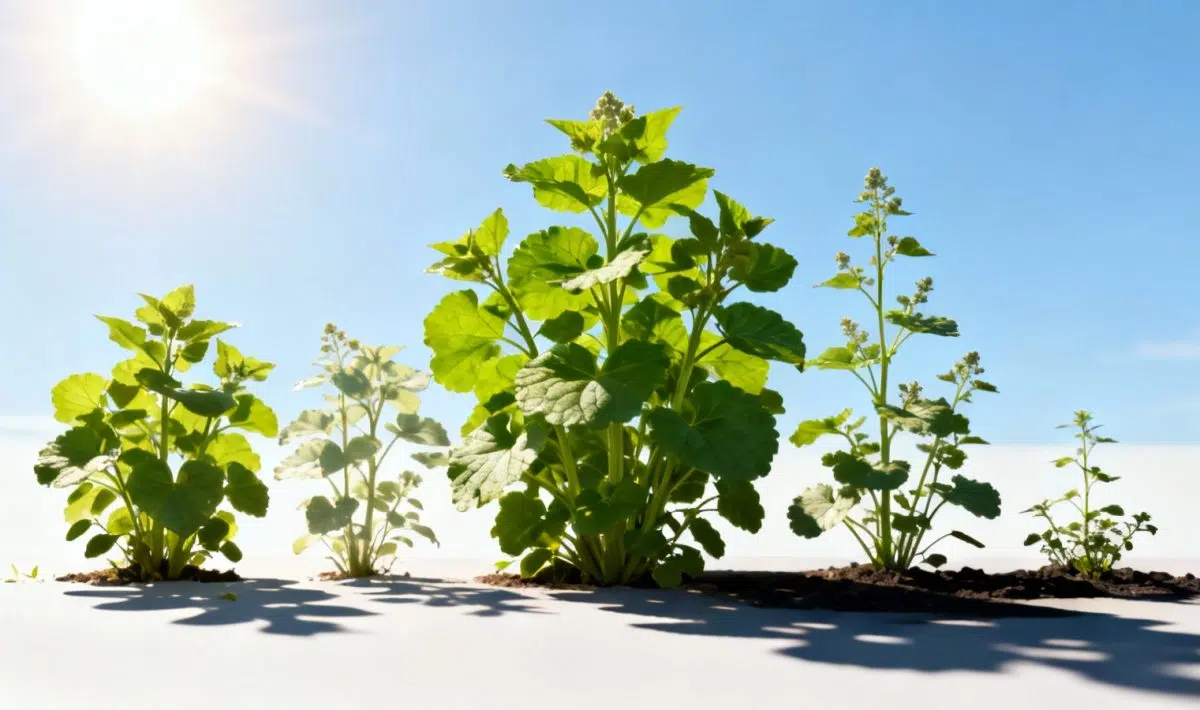
Understanding garlic mustard’s unique light requirements
When it comes to understanding how much sunlight does garlic mustard need, we’re dealing with one of nature’s most adaptable invasive species. Unlike many plants that demand full sun, garlic mustard (*Alliaria petiolata*) has earned its reputation as a formidable invader precisely because it thrives in conditions where most other non-native species fail miserably.
This European native has conquered North American forest understories not by demanding perfect conditions, but by being remarkably tolerant of shade. While many gardeners struggle to find species that perform well in low-light areas, garlic mustard makes itself at home in the dimmest corners of deciduous forests, creating dense populations that crowd out native wildflowers and young trees.
The plant’s ability to photosynthesize efficiently in limited light conditions sets it apart from typical garden mustard varieties. However, like most adaptable species, it still responds positively to increased light availability when conditions allow.
Shade tolerance: the secret weapon of invasive success
What makes garlic mustard particularly troublesome for land managers is its exceptional shade tolerance. This biennial plant can establish itself and complete its entire life cycle under forest canopies where light levels are dramatically reduced compared to open areas.
During its first year as a rosette, the plant develops a robust root system while photosynthesizing with whatever dappled sunlight filters through the canopy. The leaves are specially adapted to capture and utilize available light efficiently, allowing the plant to store energy for its second year of growth when it bolts, flowers, and produces seeds.
Research has shown that garlic mustard can survive and reproduce in light conditions as low as 10% of full sunlight. This remarkable adaptation means it can invade intact forest ecosystems without requiring soil disturbance or canopy gaps that many other invasive species depend on for establishment.
Comparing light needs with other shade-tolerant plants
Just as understanding sunlight requirements for Aphrodite’s phalaenopsis helps orchid enthusiasts create optimal growing conditions, recognizing garlic mustard’s light preferences helps explain its invasive success. Unlike delicate orchids that require carefully filtered light, garlic mustard tolerates a much broader range of conditions.
The plant shows remarkable phenotypic plasticity, meaning it can adjust its growth form and metabolic processes based on available light. In shadier locations, it develops broader, thinner leaves to maximize light capture. In brighter areas, the leaves become smaller and thicker to prevent water loss while still maintaining efficient photosynthesis.
Optimal conditions boost growth and reproduction
While garlic mustard survives admirably in shade, it truly thrives when given access to higher light levels. Studies have demonstrated that plants growing in areas with increased sunlight produce significantly more seeds, grow taller, and complete their life cycle more rapidly.
Forest edges, clearings, and disturbed areas where canopy gaps allow more sunlight to reach the ground often support the most vigorous garlic mustard populations. These locations provide the perfect combination of adequate moisture retention and enhanced light availability.
When natural disturbances like insect defoliation temporarily increase light penetration through forest canopies, existing garlic mustard populations respond with explosive growth. The plants can quickly take advantage of these brief windows of increased solar radiation to boost their photosynthetic output and seed production.
Light intensity and seed production
The relationship between light availability and reproductive success in garlic mustard is particularly striking. Plants growing in full sun conditions can produce thousands of seeds per individual, while those in deep shade might produce only a few hundred. However, even this reduced seed production is often sufficient to maintain and expand populations over time.
Much like how gardeners consider optimal light for Lady banks’s rose when planning their landscapes, understanding garlic mustard’s light preferences helps predict where it’s most likely to establish and spread. The species demonstrates that success doesn’t always require perfect conditions – sometimes adaptability trumps specialization.
Practical implications for management and control
Understanding garlic mustard’s light requirements has important implications for those dealing with this invasive species. Since the plant can establish in both sunny and shaded locations, control efforts must be comprehensive and cannot rely solely on habitat modification.
Traditional approaches like increasing canopy cover to shade out invasive species often prove ineffective against garlic mustard. The plant’s shade tolerance means it can persist even when forest management practices reduce light levels that would eliminate other problematic species.
However, the plant’s positive response to increased light means that forest disturbances, whether natural or human-caused, can rapidly accelerate garlic mustard spread. Land managers must be particularly vigilant about monitoring and controlling populations in areas where logging, storm damage, or other disturbances have increased light penetration.
Seasonal light patterns and timing of control
The timing of control efforts can be optimized by understanding how garlic mustard responds to seasonal changes in light availability. Early spring, before deciduous trees leaf out, represents a critical period when forest understory plants receive their highest light levels of the year.
During this window, garlic mustard rosettes are actively photosynthesizing and building energy reserves for their upcoming flowering phase. This makes early spring an ideal time for control efforts, as the plants are actively growing but haven’t yet reproduced. Much like how understanding light requirements for old man’s beard helps with proper vine management, timing interventions with garlic mustard’s growth cycle improves control success.
Comparing with other invasive species
Garlic mustard’s shade tolerance distinguishes it from many other common invasive plants that require full sun conditions. While species like purple loosestrife and Japanese knotweed typically establish in open, sunny wetlands and disturbed areas, garlic mustard can invade high-quality forest habitats with minimal human disturbance.
This difference in light requirements means that garlic mustard poses a unique threat to forest biodiversity. Native wildflowers that have evolved in forest understories suddenly face competition from an aggressive species that can match their shade tolerance while outcompeting them for resources.
The plant’s ability to thrive across such a broad range of light conditions also makes it particularly challenging to predict and prevent new infestations. Unlike sun-loving invasives that are typically confined to disturbed areas, garlic mustard can appear virtually anywhere within its suitable climate range.
Lessons from native shade-tolerant species
Just as gardeners might research sunlight needs for bottlebrush plants to ensure proper placement in their landscape, studying how native forest plants have adapted to low-light conditions provides insights into garlic mustard’s competitive advantages.
Many native woodland wildflowers have evolved specific strategies for life in the understory, such as early spring emergence before trees leaf out or specialized relationships with mycorrhizal fungi. Garlic mustard disrupts these carefully balanced systems by occupying similar ecological niches while lacking the co-evolutionary relationships that keep native species in check.
Future research and monitoring needs
Ongoing research continues to refine our understanding of how light availability influences garlic mustard populations. Climate change may alter forest light dynamics through changes in precipitation, storm frequency, and growing season length, potentially affecting where and how aggressively garlic mustard spreads.
Scientists are also investigating whether the plant’s shade tolerance varies among different populations or geographic regions. Some evidence suggests that garlic mustard populations in different areas may have adapted to local light conditions, potentially making some populations more aggressive invaders than others.
Understanding these nuances becomes increasingly important as land managers develop targeted strategies for different habitats and regions. Much like how specific care requirements vary among plant species – whether you’re considering apple tree sunlight requirements or Aloe vera light and care tips – effective garlic mustard management may require location-specific approaches.
Long-term monitoring of garlic mustard populations across different light gradients will help researchers predict how changing environmental conditions might influence the species’ future distribution and impact on native ecosystems.

Allan is a lifelong gardening enthusiast who still gets excited when the first seedlings pop up in spring. With a deep love for nature and a hands-in-the-soil approach, he shares practical tips, plant discoveries, and clever tricks picked up over years of digging, planting, and observing. Whether you’re a new gardener or have a shed full of tools, Allan writes like a neighbor who’s always happy to swap cuttings and stories over the fence.
You can find more about Allan’s work on Malt or connect with him on LinkedIn.


