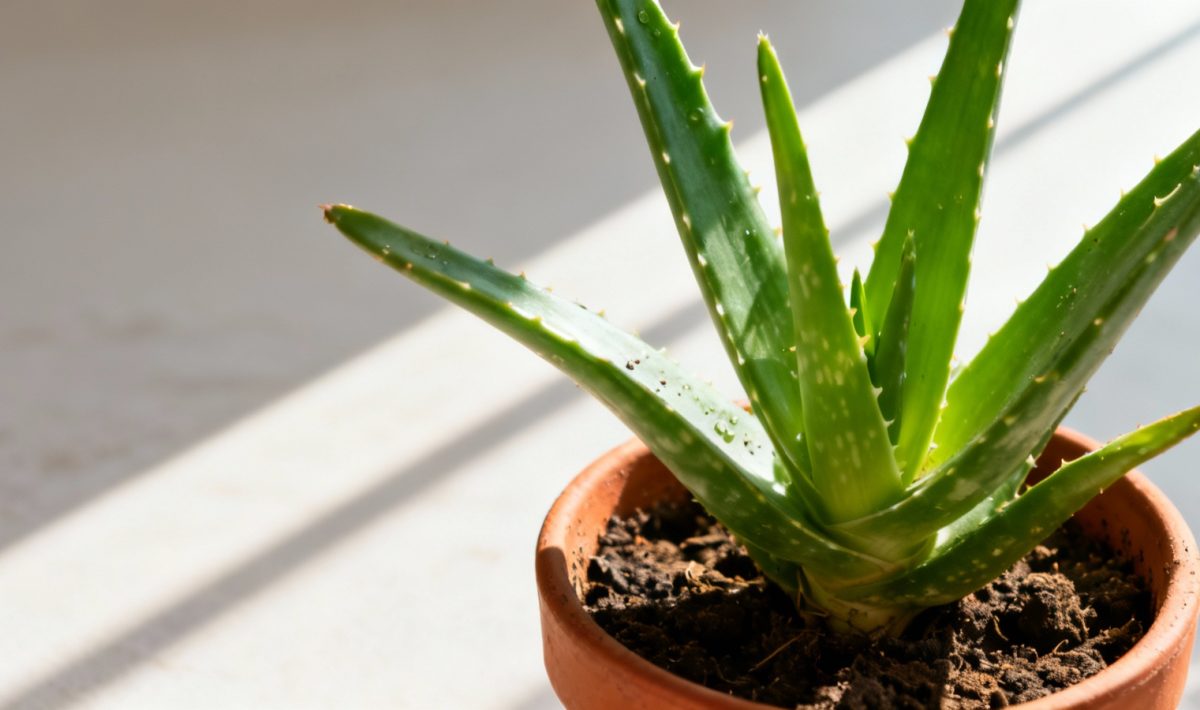
How much sunlight does Aloe vera need: essential care tips for healthy plants
Getting the lighting right for your Aloe vera plant can make all the difference between a thriving succulent and one that’s struggling to survive. This remarkable plant, originally from arid regions, has specific sunlight needs that vary depending on whether you’re growing it indoors or outdoors. Understanding how much sunlight does Aloe vera need will help you provide the best care for this beneficial plant.
Aloe vera, scientifically known as Aloe barbadensis miller, evolved in bright, sunny environments with well-draining soil. In its native habitat, this succulent receives abundant sunlight throughout the day. However, when we bring these plants into our homes, we need to recreate similar conditions without overwhelming them.
The key is finding that sweet spot between adequate light exposure and protection from intense rays that can cause burns on the leaves. Too little light will result in weak, stretched growth, while too much direct sunlight can scorch the thick, fleshy leaves that make this plant so valuable for its gel content.
Temperature also plays a crucial role alongside lighting. Your Aloe vera thrives best in temperatures between 60-75°F, making it an excellent houseplant that adapts well to indoor conditions when given proper light exposure.
Indoor lighting requirements for Aloe vera
When growing Aloe vera indoors, aim for 6 to 8 hours of bright, indirect light daily. A south-facing window provides excellent exposure, but you’ll want to filter the light slightly to prevent leaf burns. East or west-facing windows also work well, offering bright light without the intensity of midday sun.
Watch for signs that your plant isn’t getting enough light. The leaves may become pale green, stretch toward the light source, or develop a thin, weak appearance. Conversely, if you notice brown or reddish patches on the leaves, your plant might be getting too much direct sunlight.
For those dealing with darker homes or limited window space, artificial grow lights can supplement natural sunlight. LED grow lights work particularly well for succulents, providing the spectrum of light needed for healthy photosynthesis without generating excessive heat that could stress your plant.
Outdoor cultivation and sun exposure
If you’re planning to grow Aloe vera outdoors, full sun exposure works beautifully in warmer climates. The plant can handle direct sunlight for most of the day when it’s properly established and the temperatures remain above 50°F consistently.
However, gradual acclimatization is essential when moving indoor plants outside. Start with morning sun for a few hours, then gradually increase exposure over several weeks. This prevents shock and allows the plant to strengthen its natural defenses against intense sunlight.
In regions with extremely hot summers, providing some afternoon shade can prevent stress. While Aloe vera loves bright light, temperatures above 90°F combined with intense UV rays can cause the tips of leaves to brown, even on well-established outdoor plants.
Choosing the right pot and soil for optimal light absorption
Your choice of pot and soil significantly impacts how well your Aloe vera utilizes available sunlight. Terra cotta pots work exceptionally well because they allow excess moisture to evaporate quickly, preventing root rot that can occur when plants are stressed by improper lighting conditions.
Well-draining soil is absolutely crucial for Aloe vera health. A mixture of regular potting soil combined with coarse sand, perlite, or specialized cactus mix creates the ideal growing medium. This type of soil prevents water from sitting around the roots, which is particularly important when the plant is receiving bright light that increases its metabolic rate.
Proper drainage becomes even more critical when your plant receives adequate sunlight, as healthy Aloe vera plants will use water more efficiently and grow more vigorously. Just as you might explore detailed information about care tips for Aloe vera, understanding the relationship between soil, light, and water is fundamental to success.
Seasonal adjustments and winter care
As seasons change, you’ll need to adjust your Aloe vera’s light exposure accordingly. During winter months, natural daylight hours decrease, and the sun’s angle changes, potentially reducing the light your indoor plant receives.
Moving your plant closer to windows or supplementing with grow lights during winter helps maintain healthy growth. Many gardeners find that their Aloe vera enters a semi-dormant state during winter, requiring less water but still needing consistent light exposure to prevent etiolation.
Spring brings renewed growth, and this is an excellent time to gradually reintroduce your plant to stronger light if you plan to move it outdoors for the summer. The fresh gel production typically increases during active growing seasons when light conditions improve.
Recognizing and preventing light-related problems
Learning to read your plant’s signals helps you adjust lighting conditions before serious problems develop. Healthy Aloe vera leaves should be thick, upright, and display a vibrant green color with slight blue-green undertones.
When plants don’t receive adequate light, you’ll notice the leaves becoming thin and reaching toward light sources. This etiolation weakens the plant’s structure and reduces the beneficial gel content that makes Aloe vera so valuable for medicinal and cosmetic uses.
On the flip side, too much intense sunlight can cause burns that appear as brown, crispy patches on leaf surfaces. If you’re interested in learning more about identifying these issues, information about how to identify sunburned plants can be incredibly helpful for preventing permanent damage.
Creating the perfect growing environment
Success with Aloe vera involves creating a balanced environment where light, temperature, humidity, and soil work together harmoniously. While this plant is remarkably tolerant, providing optimal conditions results in faster growth and more potent gel production.
Consider the humidity levels in your growing area. Aloe vera prefers lower humidity, typically around 40-50%, which complements its need for bright, dry conditions. Good air circulation around the plant helps prevent fungal issues that can develop when plants are stressed by improper lighting.
If you’re interested in expanding your plant collection, you might enjoy learning about sunlight needs for bottlebrush plants, which have different but equally specific requirements.
Practical tips for beginner plant parents
Starting with Aloe vera is an excellent choice for new plant enthusiasts. This forgiving succulent teaches fundamental plant care principles while providing practical benefits through its versatile gel.
Begin by observing your plant daily during the first few weeks. Notice how the leaves respond to their current lighting conditions, and don’t be afraid to make small adjustments. Moving the pot a few feet closer to or farther from a window can make a significant difference.
Keep a simple care log noting when you water, any changes in lighting, and how the plant responds. This practice helps you develop intuition for plant care that extends beyond just Aloe vera. Many successful gardeners started with easy projects like starting your mini herb garden before expanding to more complex plants.
Long-term care and maintenance
Once you’ve established proper lighting for your Aloe vera, maintaining consistent conditions becomes the key to long-term success. Mature plants are more tolerant of slight variations in light exposure, but they still benefit from stable, appropriate conditions.
Regular maintenance includes removing dead or damaged leaves, checking for pests that might be attracted to stressed plants, and occasionally rotating the pot to ensure even light exposure on all sides. These simple practices keep your plant healthy and productive for years.
As your confidence grows, you might consider propagating your Aloe vera by removing the small offsets that develop around the base of mature plants. These baby plants, or “pups,” can be potted separately and given to friends, spreading the joy of successful plant care.
Understanding how much sunlight Aloe vera needs forms the foundation of successful cultivation. Whether you’re growing this remarkable plant for its medicinal properties, its air-purifying benefits, or simply as an attractive addition to your home, proper lighting ensures your Aloe vera will thrive and provide years of satisfaction. Remember that consistency in care, combined with attention to your plant’s signals, will reward you with a healthy, vigorous succulent that embodies the perfect balance of beauty and utility.
Allan is a lifelong gardening enthusiast who still gets excited when the first seedlings pop up in spring. With a deep love for nature and a hands-in-the-soil approach, he shares practical tips, plant discoveries, and clever tricks picked up over years of digging, planting, and observing. Whether you’re a new gardener or have a shed full of tools, Allan writes like a neighbor who’s always happy to swap cuttings and stories over the fence.
You can find more about Allan’s work on Malt or connect with him on LinkedIn.