
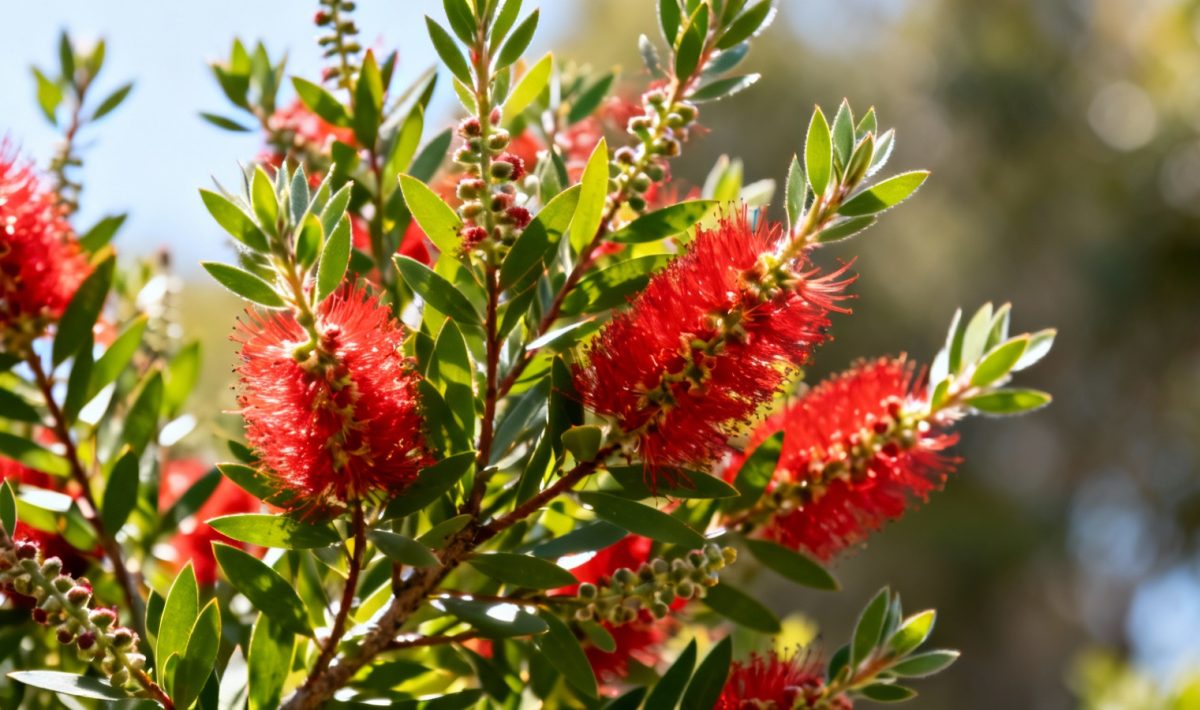
Today I’m excited to share everything you need to know about bottlebrush sunlight requirements. These stunning Australian natives have captured gardeners’ hearts worldwide with their vibrant, brush-like flowers. However, getting the light conditions just right is crucial for their success in your garden.
Understanding bottlebrush sunlight requirements
Bottlebrush plants (Callistemon) thrive in full sun conditions, requiring a minimum of 6-8 hours of direct sunlight daily. This abundant light exposure is essential for their photosynthesis process and supports their spectacular flowering display. Without adequate sunlight, these beautiful trees struggle to produce their characteristic colorful blooms.
The intensity of light directly impacts the plant’s overall health and vigor. Full sun exposure ensures rapid growth and abundant flowering, making your bottlebrush the star of your garden. In regions with extremely hot climates, some afternoon shade can be beneficial to protect the plant from scorching temperatures.
Full sun versus partial shade conditions
While bottlebrush plants prefer full sun, they can tolerate partial shade in certain circumstances. However, this compromise often results in reduced flowering and slower growth rates. Plants grown in partial shade typically produce fewer blooms and may develop a more open, less dense growth habit.
For optimal results, position your bottlebrush where it receives morning sun, which is particularly important for drying dew from leaves and preventing fungal issues. Just as you might check if your plants are sunburned during extreme weather, monitoring your bottlebrush’s light exposure helps ensure healthy development.
Seasonal light considerations
Different seasons bring varying light intensities and angles. During winter months, even plants in full sun locations may receive reduced light due to shorter days and lower sun angles. This natural reduction is perfectly normal and won’t harm established bottlebrush plants.
Summer provides the most intense light conditions, which bottlebrush plants absolutely love. However, in extremely hot regions, providing some protection during the hottest part of the day can prevent stress. Consider the same principles you would use when learning how to cool down a greenhouse without expensive gear for your outdoor plantings.
Caring for your bottlebrush plants
Watering and sun exposure balance
Proper watering becomes even more critical when your bottlebrush receives full sun exposure. The combination of intense sunlight and adequate moisture creates ideal growing conditions. Water deeply but less frequently to encourage deep root development.
During hot summer months, monitor soil moisture levels closely. The principles are similar to understanding how often should you water tomatoes in a heatwave – consistent moisture without waterlogging is key to success.
Established bottlebrush plants are quite drought-tolerant once their root systems develop fully. Young plants require more consistent watering during their first growing season, especially when planted in full sun locations.
Planting and transplanting considerations
When planting new bottlebrush specimens, choose your location carefully to ensure adequate sunlight throughout the day. Avoid areas that will be shaded by growing structures or maturing trees in the future.
If you need to relocate an existing plant, the techniques for how to repot without stressing your plant out apply to larger specimens as well. Timing your transplanting during cooler months helps reduce sun stress during the establishment period.
Where to buy quality bottlebrush seeds
Selecting reliable seed suppliers
When purchasing bottlebrush seeds online, customer reviews and seller ratings provide valuable insights into seed quality and reliability. Look for sellers with consistently positive feedback regarding germination rates and packaging quality.
Many buyers appreciate fast shipping and good communication from sellers. Seeds that arrived quickly and were well packaged often receive excellent ratings from satisfied customers. Free shipping offers can make purchasing more economical, especially when buying multiple varieties.
Evaluating seed quality and supplier reputation
Quality seeds typically arrive in proper packaging that protects them from moisture and damage during shipping. Experienced sellers understand the importance of proper storage and handling, which directly impacts germination success.
Customer feedback often mentions whether seeds germinated as described and if the resulting plants matched the seller’s description. Positive reviews frequently highlight good communication, fast delivery, and seeds that performed well in various growing conditions.
Consider starting small with a new supplier before placing larger orders. This approach allows you to evaluate seed quality and customer service without significant investment. Many gardeners find success by diversifying their seed sources, much like they might start your own herb garden quickly with multiple suppliers.
Understanding different bottlebrush varieties
Popular species like Callistemon citrinus and Callistemon viminalis each have specific characteristics and slightly different light requirements. Research individual varieties to ensure you select the right type for your garden conditions and climate.
Some varieties tolerate partial shade better than others, while certain types excel in extremely sunny locations. Reading detailed descriptions from reputable sellers helps you make informed decisions about which varieties will thrive in your specific garden environment.
With proper sunlight exposure and quality seeds from reliable suppliers, your bottlebrush plants will reward you with years of spectacular blooms and attractive evergreen foliage. Remember that consistent full sun exposure remains the key factor for achieving the best flowering performance from these remarkable Australian natives.

Allan is a lifelong gardening enthusiast who still gets excited when the first seedlings pop up in spring. With a deep love for nature and a hands-in-the-soil approach, he shares practical tips, plant discoveries, and clever tricks picked up over years of digging, planting, and observing. Whether you’re a new gardener or have a shed full of tools, Allan writes like a neighbor who’s always happy to swap cuttings and stories over the fence.
You can find more about Allan’s work on Malt or connect with him on LinkedIn.


