
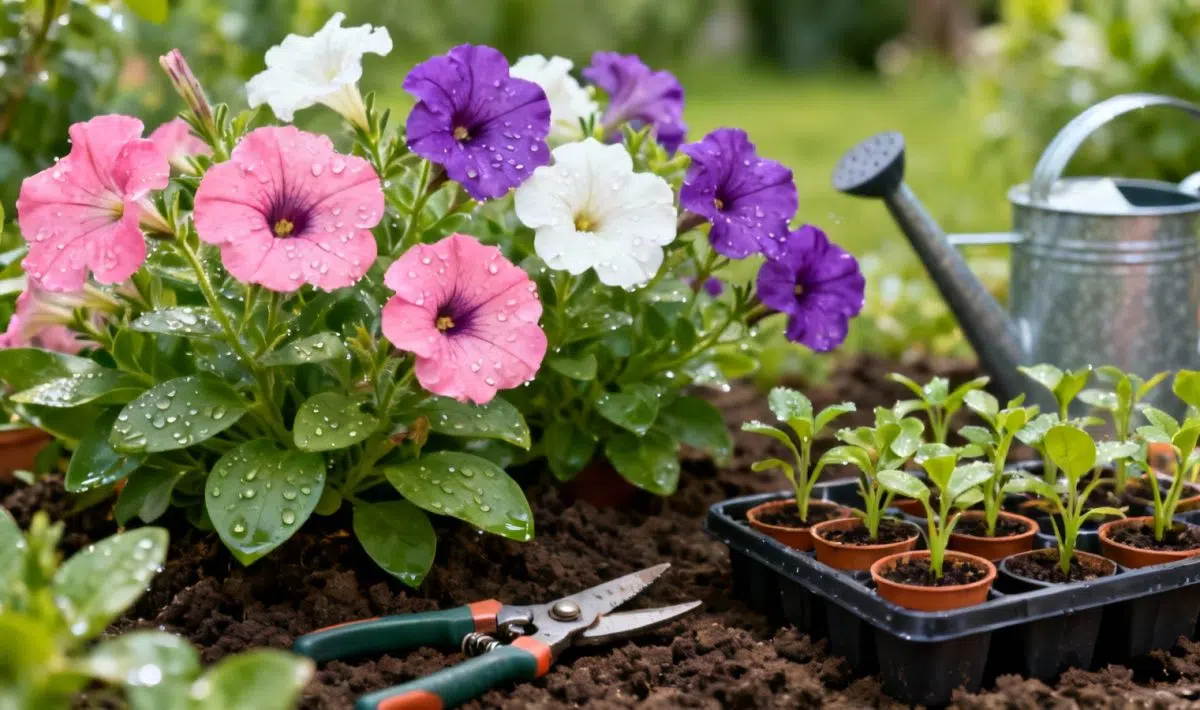
Garden petunias have become absolute favorites among flower enthusiasts, and honestly, it’s not hard to see why. These cheerful plants offer months of continuous blooms with minimal fuss, making them perfect for both beginners and experienced gardeners. Today, I’ll share everything you need to know about growing these delightful flowers successfully in your own space.
The Petunia atkinsiana brings vibrant color to gardens from spring through fall. Its compact growth habit and abundant flowering make it ideal for containers, hanging baskets, and garden beds alike. Whether you’re planning a colorful balcon display or filling gaps in your flower borders, these versatile plants deliver reliable results.
Understanding petunia characteristics
Garden petunias typically reach a hauteur of 15 to 40 centimeters, developing a semi-spreading to spreading growth pattern. Their oval, lance-shaped leaves provide an attractive backdrop for the star attraction – the fleurs themselves. The bloraison period extends from May through October, offering months of continuous color.
These plantes showcase an impressive gamme of couleurs including rose, rouge, blanc, violet, purple, pink, orange, and crème varieties. Some cultivars feature simple single fleurs, while others boast double blooms with ruffled petals. The variétés available today include compact forms perfect for pot culture and trailing types ideal for hanging displays.
The feuilles are typically medium green and slightly sticky to the touch. This characteristic helps distinguish garden petunias from their close relatives. When selecting variété options, consider both flower couleur and plant habit to match your specific garden needs.
Optimal growing conditions for garden petunias
Garden petunias thrive in full sun locations, requiring at least six hours of direct sunlight daily for optimal floraison. While they tolerate partial shade, reduced light often results in fewer fleurs and leggy croissance. In extremely hot climates, providing afternoon shade can prevent stress during peak summer heat.
Well-draining soil is absolutely crucial for healthy pétunia culture. These plantes cannot tolerate waterlogged conditions, which quickly leads to root rot. A slightly acidic to neutral soil pH between 6.0 and 7.0 works best. Adding organic matter improves both drainage and nutrient availability.
Temperature preferences lean toward warm conditions, making petunias excellent choices for printemps through fall displays. They’re frost-sensitive, so timing your plantation after the last expected frost ensures successful establishment. Much like the detailed care tips for Nerium oleander that require specific environmental conditions, petunias need consistent warmth for optimal performance.
Planting and establishment techniques
Start with quality plants or graines depending on your preference and timeline. When planting in pots or conteneurs, ensure adequate drainage holes and use high-quality potting mix. Space plants according to their mature size, typically 8 to 12 inches apart for most variétés.
Prepare your plantation site by incorporating organic matter into the soil. This improves drainage while providing nutrients for sustained croissance throughout the growing season. Water thoroughly after planting and maintain consistent moisture during the establishment period.
For balcon gardens or small spaces, choose compact variétés that won’t overwhelm containers. Trailing types work beautifully in hanging baskets, creating cascading displays of couleur. Consider combining different couleurs within the same container for dramatic impact.
Container growing success
Container culture offers excellent results with proper attention to watering and feeding. Use containers at least 6 inches deep with drainage holes. Fill with quality potting mix rather than garden soil, which becomes too heavy and doesn’t drain properly in pots.
Regular fertilizing becomes more important in containers since nutrients wash away with frequent watering. A balanced, water-soluble fertilizer applied weekly keeps plantes healthy and flowering abundantly. Similar to growing Philodendron ‘Birkin’ successfully, container plants need consistent care schedules.
Propagation methods for garden petunias
Two main propagation methods work well for garden petunias: growing from graines and taking cuttings from existing plantes. Each approach has advantages depending on your goals and timeline.
Seed propagation techniques
Starting from graines offers the widest variété selection and proves most economical for large plantings. Begin seeds indoors 10 to 12 weeks before your last expected frost date. Use seed-starting mix and barely cover the tiny seeds with soil.
Maintain temperatures between 70-75°F for optimal germination, which typically occurs within 7 to 14 days. Provide bright light once seedlings emerge, using grow lights if natural light is insufficient. Transplant seedlings to individual cells once they develop their first true leaves.
Gradually acclimate seedlings to outdoor conditions over 7 to 10 days before final transplanting. This hardening process prevents shock and ensures strong establishment in their permanent locations.
Cutting propagation approach
Taking cuttings allows you to reproduce exact variétés and often produces flowering plants more quickly than seeds. Select healthy, non-flowering shoots about 3 to 4 inches long from established plantes. Remove lower feuilles and dip cut ends in rooting hormone.
Insert cuttings into moist potting mix or perlite, maintaining humidity with plastic covers or misting systems. Keep soil consistently moist but not waterlogged. Roots typically develop within 2 to 3 weeks under warm conditions.
This method works particularly well for preserving special couleur combinations or exceptional performers from previous growing seasons. Much like the detailed techniques used in care information for Monstera obliqua, proper cutting care ensures successful propagation.
Ongoing care and maintenance
Regular watering maintains healthy croissance without encouraging fungal problems. Water at soil level rather than overhead to keep feuilles dry. Morning watering allows plants to dry before evening, reducing disease risks.
Deadheading spent fleurs encourages continued blooming throughout the season. Simply pinch or cut off faded blooms regularly, which redirects energy into new flower formation rather than seed production. This practice keeps plants looking tidy while extending the floraison period.
Monitor for common pests like aphids, whiteflies, and caterpillars. Early detection and treatment prevent serious infestations. Regular inspection of both feuilles and fleurs helps catch problems before they become severe.
Fertilizing for optimal performance
Garden petunias benefit from regular feeding throughout their growing season. Use a balanced fertilizer every 2 to 3 weeks, or incorporate slow-release granules at planting time for season-long nutrition. Container-grown plantes typically need more frequent fertilizing than those in garden beds.
Avoid over-fertilizing with nitrogen, which promotes excessive foliage at the expense of fleurs. A balanced approach supports both healthy croissance and abundant blooming. Just as guidelines for Southern magnolia care emphasize balanced nutrition, petunias thrive with consistent, appropriate feeding.
Seasonal considerations
Early printemps preparation sets the stage for successful pétunia growing. Prepare beds by adding organic matter and ensuring proper drainage. Start seeds indoors or purchase plants from reputable nurseries.
Summer care focuses on consistent watering and deadheading to maintain peak performance during hot weather. Provide afternoon shade in extremely hot climates to prevent stress. Monitor for pests and diseases, which become more problematic in warm, humid conditions.
Fall brings opportunities to collect seeds from favorite variétés for next année’s garden. Allow some fleurs to mature and develop seed pods, then harvest and store seeds properly for future use. This approach works similarly to the seasonal care needed when caring for Fuchsia magellanica plants.
Common challenges and solutions
Leggy growth often results from insufficient light or over-fertilizing with nitrogen. Pinching growing tips encourages branching and more compact growth. If plants become too stretched, cut them back by one-third to promote fresh, bushy croissance.
Poor flowering usually indicates inadequate sunlight, over-fertilizing, or inconsistent watering. Address these factors systematically to restore abundant blooming. Regular deadheading also plays a crucial role in maintaining continuous fleur formation.
Fungal diseases like botrytis can affect plantes in humid conditions or with poor air circulation. Improve spacing, avoid overhead watering, and remove affected plant material promptly. Prevention proves more effective than treatment for most fungal issues.
Design applications and companion plants
Garden petunias work beautifully in mixed plantings with other annuals and perennials. Their long blooming period provides consistent color while companion plantes add texture and seasonal interest. Consider pairing different couleurs of petunias for dynamic displays.
In container arrangements, combine upright and trailing variétés for dimension and visual appeal. Add foliage plants for contrast and structure. The compact nature of most variétés makes them excellent choices for small-space gardens and urban settings.
Mass plantings create stunning visual impact, particularly when using single couleurs or complementary combinations. The abondante flowering habit ensures solid color coverage throughout the growing season, much like successful cultivation techniques used in propagation advice for Capsicum annuum.
Garden petunias truly deserve their popularity among flower gardeners. Their reliable performance, extensive couleur range, and adaptability to various growing conditions make them invaluable additions to any garden. With proper care and attention to their basic needs, these charming plantes reward gardeners with months of continuous beauty and satisfaction.

Allan is a lifelong gardening enthusiast who still gets excited when the first seedlings pop up in spring. With a deep love for nature and a hands-in-the-soil approach, he shares practical tips, plant discoveries, and clever tricks picked up over years of digging, planting, and observing. Whether you’re a new gardener or have a shed full of tools, Allan writes like a neighbor who’s always happy to swap cuttings and stories over the fence.
You can find more about Allan’s work on Malt or connect with him on LinkedIn.


