
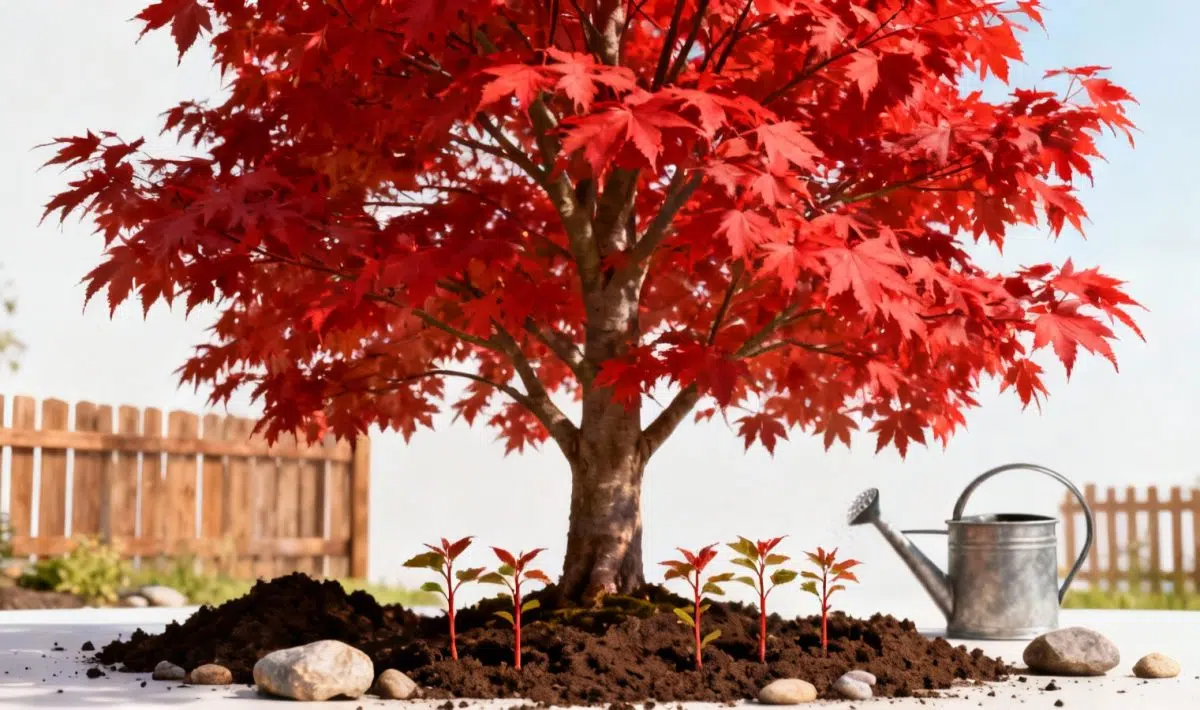
The red maple, scientifically known as Acer rubrum, stands as one of North America’s most spectacular native trees. This deciduous beauty transforms any garden with its brilliant autumn foliage and adaptable nature. Whether you’re a seasoned gardener or just starting your botanical journey, understanding this remarkable species opens up endless possibilities for creating stunning landscape displays.
Understanding the red maple characteristics
The Acer rubrum showcases distinctive features that set it apart from other maple species. This tree typically reaches heights of 40 to 60 feet at maturity, developing a rounded crown that provides excellent shade. The bark appears smooth and gray on young trees, gradually developing furrows and ridges as the tree ages.
During spring, small red flowers emerge before the leaves unfold, creating an early season spectacle. The characteristic three to five-lobed leaves display serrated edges and measure 2 to 4 inches across. However, it’s the autumn transformation that truly captivates observers, when the foliage turns brilliant shades of yellow, orange, and scarlet red.
The winged seeds, called samaras, develop in late spring and early summer. These helicopter-like structures facilitate natural propagation as they spin away from the parent tree. Understanding these natural cycles helps gardeners appreciate the tree’s seasonal beauty and plan complementary plantings accordingly.
Optimal growing conditions for red maples
Red maples demonstrate remarkable adaptability to various soil types and moisture conditions. They thrive in acidic to neutral soils with pH levels between 4.5 and 7.0. While they tolerate clay, loam, and sandy soils, consistent moisture produces the best growth results.
These hardy trees perform well in full sun to partial shade conditions. However, maximum autumn color intensity occurs when trees receive at least six hours of direct sunlight daily. The species shows excellent cold hardiness, surviving temperatures as low as -30°F in USDA zones 3 through 9.
Proper site selection considers the tree’s mature size and root system. Red maples develop extensive surface roots that can compete with nearby plants for nutrients and water. Providing adequate space prevents overcrowding and ensures healthy development throughout the tree’s lifespan.
Soil preparation and planting techniques
Successful red maple cultivation begins with proper soil preparation. Dig planting holes twice as wide as the root ball but no deeper than the container height. This approach encourages horizontal root growth while preventing the tree from settling too deeply.
Amend heavy clay soils with organic compost to improve drainage and nutrient availability. Sandy soils benefit from organic matter additions that enhance water retention. Avoid using fertilizers during initial planting, as they can damage tender root systems and inhibit natural establishment processes.
Plant red maples during spring or fall when temperatures remain moderate and rainfall provides natural irrigation. Position the tree so the root flare sits slightly above ground level, accounting for natural settling that occurs after planting.
Essential care and maintenance practices
Proper watering establishes the foundation for healthy red maple growth. Newly planted trees require deep, weekly watering sessions during their first growing season. Apply water slowly at the base, allowing moisture to penetrate deeply into the surrounding soil.
Mature red maples tolerate drought conditions but produce better foliage color with consistent moisture. During dry spells, provide supplemental irrigation equivalent to one inch of rainfall weekly. Mulching around the base helps retain soil moisture and regulates temperature fluctuations.
Annual fertilization supports vigorous growth and enhances autumn color displays. Apply balanced, slow-release fertilizer in early spring before new growth begins. Avoid high-nitrogen formulations that promote excessive leaf growth at the expense of root development and winter hardiness.
Pruning and structural maintenance
Strategic pruning maintains red maple health and enhances natural form. Remove dead, damaged, or crossing branches during late winter when the tree remains dormant. This timing minimizes stress and reduces the risk of disease transmission through open wounds.
Young trees benefit from structural pruning that establishes strong branch architecture. Select a central leader and remove competing vertical branches. Space lateral branches evenly around the trunk, maintaining balanced canopy development as the tree matures.
Avoid heavy pruning during spring when sap flow remains active. Red maples can lose significant amounts of sap through fresh cuts, potentially weakening the tree and creating entry points for pests and diseases.
Propagation methods and techniques
Red maple propagation offers several approaches, each with distinct advantages and challenges. Seed collection provides the most economical method but requires patience and proper timing. Collect fresh samaras in late spring when they turn brown but before natural dispersal occurs.
Successful seed germination requires cold stratification to break dormancy. Store collected seeds in slightly moist sand or peat moss at temperatures between 32-41°F for 90-120 days. This process mimics natural winter conditions and improves germination rates significantly.
Grafting techniques allow propagation of specific cultivars with desired characteristics. However, this method requires advanced skills and specialized equipment. Most home gardeners achieve better success with seed propagation or purchasing nursery-grown specimens from reputable suppliers.
Caring for young seedlings
Germinated red maple seedlings require careful attention during their vulnerable early stages. Provide bright, indirect light and maintain consistent soil moisture without waterlogging. Young plants benefit from protection against extreme temperature fluctuations and strong winds.
Transplant seedlings to larger containers when they develop their second set of true leaves. Use well-draining potting mix that retains moisture while preventing root rot. Similar care principles apply to other plant species, as demonstrated in our information on red clover care where proper seedling management proves equally crucial.
Gradual acclimation prepares young trees for outdoor conditions. Begin hardening off processes several weeks before final transplanting, gradually increasing exposure to outdoor temperature and light conditions.
Common challenges and solutions
Red maples face several potential problems that observant gardeners can address proactively. Chlorosis, characterized by yellowing leaves with green veins, typically indicates iron deficiency in alkaline soils. Lowering soil pH through sulfur applications or choosing appropriate fertilizers resolves this issue effectively.
Verticillium wilt poses a serious threat to red maples, causing branch dieback and potential tree death. This soil-borne fungal disease has no cure, making prevention through proper site selection and avoiding stressed conditions critically important. Just as propagation techniques vary among species, disease management approaches differ significantly, much like the specialized methods described in our guide to oleander propagation techniques.
Scale insects and aphids occasionally infest red maples, particularly during periods of environmental stress. Regular monitoring allows early detection and treatment with horticultural oils or insecticidal soaps before populations become established.
Seasonal maintenance considerations
Spring maintenance focuses on fertilization, mulch renewal, and structural pruning completion. Inspect trees for winter damage and address any broken or damaged branches promptly. This seasonal approach mirrors successful cultivation practices used with other ornamental trees, including those detailed in our tips on caring for Japanese maple.
Summer care emphasizes adequate watering during dry periods and monitoring for pest activity. Avoid unnecessary fertilization during hot weather, as it can stress trees and promote succulent growth susceptible to damage.
Fall preparation includes final watering before ground freezes and removal of fallen leaves that might harbor disease organisms. This attention to detail extends beyond outdoor trees to indoor plants, where similar observational skills benefit species like those discussed in our philodendron ‘Birkin’ care guide.
Landscape integration and design applications
Red maples serve multiple landscape functions beyond their ornamental value. Their moderate growth rate and predictable form make them excellent choices for residential properties where space considerations matter. The extensive root system provides erosion control on slopes while the dense canopy offers substantial shade.
Consider companion plantings that complement the red maple’s seasonal changes. Spring-flowering bulbs create early interest before leaf emergence, while shade-tolerant perennials thrive beneath the summer canopy. Autumn combinations with ornamental grasses and late-blooming perennials extend seasonal appeal.
Urban environments benefit from red maples’ pollution tolerance and adaptability to restricted root zones. However, avoid planting near sidewalks or foundations where surface roots might cause damage. Whether planning outdoor landscapes or managing indoor plant collections like those featured in our how to care for Monstera obliqua resource, proper spatial planning ensures long-term success.
The red maple’s remarkable combination of beauty, adaptability, and relatively straightforward care requirements makes it an outstanding choice for diverse garden situations. From its spectacular autumn display to its ecological benefits for wildlife, this native treasure continues earning appreciation from gardeners across its extensive range. With proper understanding of its needs and characteristics, anyone can successfully cultivate this magnificent tree and enjoy its seasonal transformations for decades to come.

Allan is a lifelong gardening enthusiast who still gets excited when the first seedlings pop up in spring. With a deep love for nature and a hands-in-the-soil approach, he shares practical tips, plant discoveries, and clever tricks picked up over years of digging, planting, and observing. Whether you’re a new gardener or have a shed full of tools, Allan writes like a neighbor who’s always happy to swap cuttings and stories over the fence.
You can find more about Allan’s work on Malt or connect with him on LinkedIn.


