
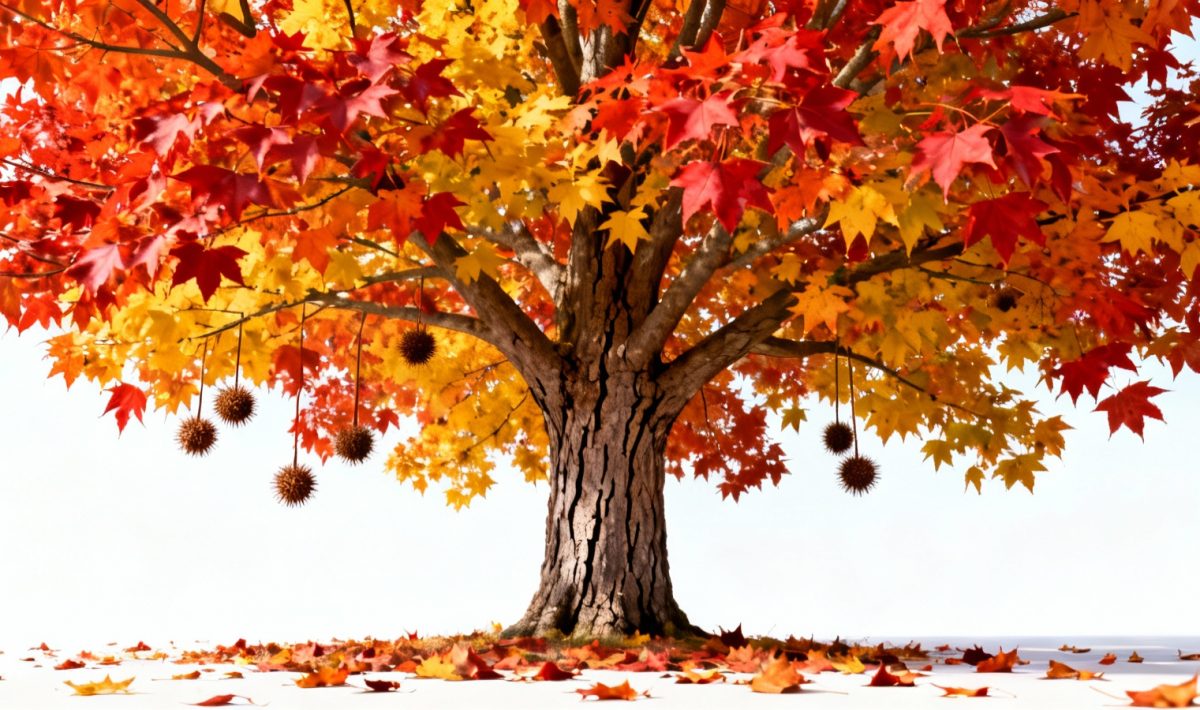
Understanding the magnificent sweetgum tree
The sweetgum, scientifically known as Liquidambar styraciflua, stands as one of North America’s most spectacular deciduous trees. This remarkable tree captures gardeners’ hearts with its distinctive star-shaped leaves and breathtaking autumn display. Native to the southeastern United States, the sweetgum has earned its reputation as an exceptional ornamental tree for landscapes worldwide.
What makes this tree truly special is its incredible seasonal transformation. During spring and summer, the glossy green foliage creates a lush canopy that provides excellent shade. However, it’s the autumn spectacle that truly sets the sweetgum apart from other trees in your garden.
Distinctive characteristics that make sweetgum special
The liquidambar styraciflua boasts several unique features that distinguish it from other species. Its leaves are palmate with five to seven pointed lobes, resembling a star or maple leaf shape. These leaves emerge bright green in spring, maintaining their vibrant color throughout the growing season.
The tree’s bark develops an interesting corky, ridged texture as it matures, adding winter interest to the landscape. Young branches often display distinctive corky ridges that give the tree additional character even during dormant periods.
One of the most recognizable characteristics is the spiky, round fruit balls that hang from branches. These distinctive seed pods, often called “gum balls” or “sweet gum balls,” persist through winter and can be both decorative and, admittedly, a maintenance consideration for some gardeners.
Optimal growing conditions for sweetgum success
Creating the right environment is crucial for your sweetgum’s health and development. These trees thrive in full sun to partial shade conditions, though full sun exposure produces the most spectacular autumn color displays. The quality of your soil plays a significant role in the tree’s overall performance.
Sweetgum trees prefer moist, well-draining soil with a slightly acidic to neutral pH. They adapt well to various soil types, including clay, loam, and sandy soils. However, they struggle in extremely dry conditions or waterlogged areas where drainage is poor.
When selecting your planting site, consider the tree’s mature height and width. A healthy specimen can reach 60-75 feet tall with a spread of 40-50 feet. This impressive size makes proper spacing essential for optimal growth and development.
Essential care practices for healthy growth
Proper care begins with consistent watering, especially during the establishment period. Young trees require regular moisture to develop strong root systems. Deep, infrequent watering encourages roots to grow deeper, creating more drought-resistant plants.
Fertilization isn’t typically necessary for established trees in good soil. However, young specimens benefit from a balanced, slow-release fertilizer applied in early spring. Just as care tips for growing apricot trees emphasize proper nutrition timing, sweetgums respond best to feeding during active growth periods.
Mulching around the base helps retain moisture and regulate soil temperature. Apply a 3-4 inch layer of organic mulch, keeping it away from the trunk to prevent pest and disease issues.
Pruning and maintenance requirements
Pruning sweetgum trees requires minimal intervention when properly planned from the start. Focus on developing a strong central leader and removing any crossing or damaged branches. The best time for major pruning is during late winter or early spring before bud break.
Young trees benefit from structural pruning to establish good branch architecture. Remove lower branches gradually as the tree matures to achieve your desired clearance height. Always use clean, sharp tools to make proper cuts that heal quickly.
Successful propagation methods
Growing sweetgum from seed offers an economical way to establish multiple trees. Collect fresh seeds from mature fruit balls in late autumn or winter. The seeds require stratification – a cold treatment that mimics natural winter conditions.
Place clean seeds in slightly moist peat moss or sand, then refrigerate for 30-90 days. After stratification, plant seeds in well-draining potting mix and maintain consistent moisture. Germination typically occurs within 2-4 weeks under proper conditions.
Professional growers often use cutting propagation for specific cultivars. This method ensures genetic consistency but requires more specialized knowledge and equipment than seed starting.
Common challenges and solutions
While generally hardy, sweetgum trees can face certain issues that gardeners should recognize. Chlorosis, indicated by yellowing leaves with green veins, often signals iron deficiency in alkaline soils. Soil amendments or iron supplements can address this nutritional imbalance.
The spiky seed balls, while characteristic, can become a maintenance concern in high-traffic areas. Several fruitless cultivars are available for gardeners who want the stunning foliage without the cleanup. Similar to how essential cucumber cultivation advice addresses specific variety selection, choosing the right sweetgum cultivar solves many potential problems.
Scale insects and webworms occasionally affect sweetgum trees. Regular inspection and early intervention prevent serious infestations. Horticultural oils and targeted treatments effectively manage most pest problems when applied correctly.
Popular varieties and cultivars
Several excellent cultivars offer different characteristics to suit various landscape needs. ‘Rotundiloba’ produces no fruit balls, making it ideal for formal landscapes or areas where seed pod cleanup is undesirable. This variety maintains the spectacular autumn color without the maintenance concerns.
‘Moraine’ demonstrates excellent cold tolerance and consistent autumn color performance. ‘Cherokee’ offers more compact growth, reaching only 50-60 feet at maturity, perfect for smaller properties or urban settings.
For gardeners seeking unique foliage, ‘Golden Treasure’ provides variegated leaves with yellow margins. Just as how to care for Philodendron Birkin showcases distinctive leaf patterns, this cultivar adds visual interest beyond typical green foliage.
Landscape applications and design uses
Sweetgum trees excel in various landscape applications due to their adaptability and seasonal interest. They work beautifully as specimen trees where their form and autumn color can be fully appreciated. Group plantings create stunning autumn displays that rival any natural forest setting.
These trees also function well in naturalized areas and wildlife gardens. The seeds provide food for birds and small mammals, while the tree’s structure offers nesting sites and shelter. The autumn leaf drop creates natural mulch and habitat for beneficial insects.
Urban applications benefit from the sweetgum’s tolerance to air pollution and compacted soils. However, consider fruit ball production when selecting locations near walkways or parking areas.
Maximizing autumn color display
The sweetgum’s autumn transformation represents its crowning glory, with leaves turning brilliant shades of yellow, orange, red, and purple. Several factors influence the intensity and duration of this color display, giving gardeners some control over the spectacle.
Full sun exposure produces the most vibrant colors, while trees in shade develop more muted tones. Consistent soil moisture through late summer helps maintain healthy foliage that colors well. Stress from drought or other factors can cause premature leaf drop before peak coloration.
Temperature patterns also affect autumn display timing. Cool nights and warm days create ideal conditions for anthocyanin production, the compounds responsible for red and purple hues. Much like tips for Monstera obliqua propagation emphasize environmental factors, sweetgum color development responds to specific conditions.
Long-term investment in your landscape
Choosing a sweetgum represents a long-term investment in your property’s beauty and value. These trees can live for decades, providing generations of enjoyment through their seasonal changes and majestic presence. Their relatively low maintenance requirements make them excellent choices for sustainable landscaping.
Consider the tree’s mature size when planning your landscape design. Proper placement ensures the sweetgum has room to develop its natural form without conflicts with structures or utilities. This forward-thinking approach prevents costly problems and maximizes the tree’s ornamental impact.
The sweetgum’s combination of stunning autumn color, interesting winter structure, and adaptable growing requirements makes it an outstanding addition to diverse garden styles. Whether you’re creating a naturalized woodland area or designing a formal landscape, this remarkable tree delivers four seasons of interest and beauty.

Allan is a lifelong gardening enthusiast who still gets excited when the first seedlings pop up in spring. With a deep love for nature and a hands-in-the-soil approach, he shares practical tips, plant discoveries, and clever tricks picked up over years of digging, planting, and observing. Whether you’re a new gardener or have a shed full of tools, Allan writes like a neighbor who’s always happy to swap cuttings and stories over the fence.
You can find more about Allan’s work on Malt or connect with him on LinkedIn.


