
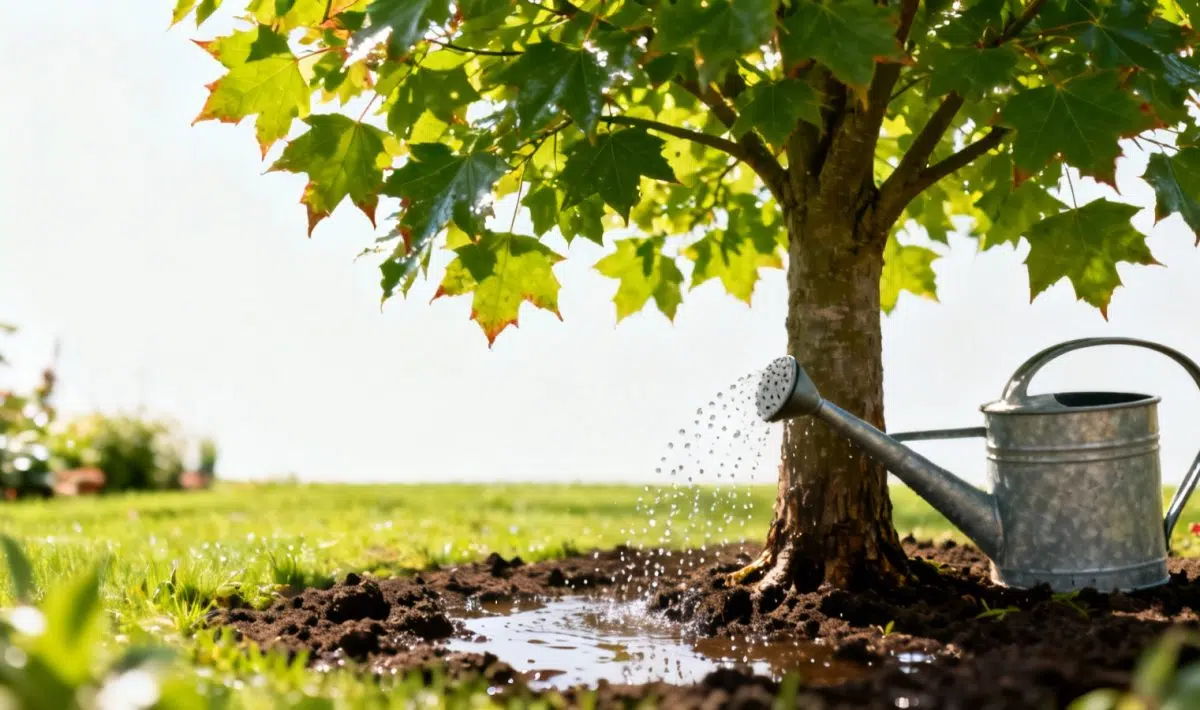
Understanding Your Sweetgum’s Natural Water Requirements
The sweetgum tree, known scientifically as Liquidambar styraciflua, has fascinating water needs that change dramatically as it matures. When you’re wondering how often should you water your sweetgum, the answer depends largely on whether you’re dealing with a young sapling or an established tree. These magnificent trees are surprisingly adaptable once they’ve found their footing in your garden.
In their natural habitat, sweetgums thrive in areas with consistent moisture but good drainage. They’re native to the southeastern United States, where they typically grow in bottomlands and areas with rich, slightly acidic soil. Understanding this background helps us create the ideal watering conditions for our garden specimens.
Watering Schedule for Young Sweetgum Trees
During the first two years after planting, your sweetgum needs consistent attention. Young trees require approximately 20 to 30 liters of water per week, delivered in one or two deep watering sessions rather than daily light sprinkling. This approach encourages the roots to grow deep and strong, creating a more resilient tree.
For newly planted sweetgums, plan to water once or twice weekly during the growing season. In hot summer months or during dry spells, you might need to increase this to every three or four days. The key is maintaining soil moisture without creating waterlogged conditions that can lead to root rot.
Just as you might follow specific how to properly water your arborvitae for evergreen care, sweetgums benefit from consistent, deep watering rather than frequent shallow applications. This creates stronger, more drought-resistant trees in the long run.
Mature Sweetgum Watering Practices
Once your sweetgum reaches maturity after about two to three years, its watering needs change significantly. Established trees develop extensive root systems that can tap into deeper soil moisture, making them remarkably drought-tolerant. At this stage, you’ll rarely need to water except during extended dry periods.
Mature sweetgums typically only need supplemental watering during prolonged droughts lasting more than three weeks without rain. When you do water, provide a thorough soaking that penetrates at least 12 inches deep around the tree’s drip line. This might mean running a soaker hose for several hours or using a deep-root watering tool.
Seasonal Adjustments for Optimal Growth
Spring watering should focus on supporting new growth as buds break and leaves emerge. This is when your sweetgum is most active and benefits from consistent soil moisture. Water deeply once weekly if natural rainfall is insufficient, ensuring the soil stays evenly moist but not soggy.
Summer brings the highest water demands, especially for younger trees. During hot spells, check soil moisture regularly by inserting your finger about three inches deep near the tree base. If it feels dry, it’s time to water. Mulching around the base helps retain moisture and reduces watering frequency.
Fall watering helps prepare your sweetgum for winter, especially important for younger specimens. Continue regular watering until the leaves drop, then gradually reduce frequency as the tree enters dormancy. Winter watering is usually unnecessary unless you experience unusually dry conditions.
Soil Conditions and Drainage Considerations
The type of soil in your garden dramatically affects watering frequency. Sweetgums prefer well-draining soil that retains some moisture but doesn’t become waterlogged. Clay soils hold water longer, meaning less frequent but deeper watering sessions work best. Sandy soils drain quickly and may require more frequent watering to maintain adequate moisture levels.
Poor drainage can be as problematic as insufficient water. If water pools around your sweetgum’s base after watering, you’re likely overwatering or dealing with drainage issues. Consider improving soil structure with compost or creating raised planting areas to ensure proper water flow.
The blend of organic matter in your soil also affects water retention. Rich, loamy soils with good organic content hold moisture better than poor soils, reducing your watering responsibilities. Adding compost or well-rotted manure around your sweetgum annually improves soil structure and water-holding capacity.
Practical Watering Techniques and Tools
The best watering technique for sweetgums involves slow, deep applications that thoroughly saturate the root zone. Soaker hoses work exceptionally well, allowing water to seep slowly into the soil over several hours. Position the hose in a circle around the tree, extending to the drip line where most feeder roots are located.
For larger, established sweetgums, consider using a deep-root watering tool that injects water directly into the soil at root level. This method is particularly effective during dry spells when surface watering might not penetrate deeply enough to reach the main root system.
Much like gardeners learn specific techniques for different plants, such as tips for watering your coriander plants for herbs, sweetgum care requires understanding the tree’s unique needs. Drip irrigation systems can also work well for sweetgums, providing consistent, controlled water delivery that reduces waste and ensures even distribution.
Mulching for Water Conservation
Applying a three to four-inch layer of organic mulch around your sweetgum significantly reduces watering needs. Good mulching materials include shredded bark, wood chips, or composted leaves. Keep mulch several inches away from the trunk to prevent moisture-related bark problems and pest issues.
Proper mulching can reduce water requirements by up to 50% by slowing evaporation and keeping soil temperatures more stable. This natural approach works similarly to how you might care for other garden plants, including understanding watering guidelines for healthy chives in herb gardens where moisture retention is equally important.
Signs of Proper and Improper Watering
Learning to read your sweetgum’s water needs helps you adjust your watering schedule appropriately. Properly watered sweetgums display vibrant green foliage, steady growth, and no signs of stress. The soil around the tree should feel moist but not soggy when you dig down a few inches.
Overwatering symptoms include yellowing leaves that drop prematurely, soft or mushy bark near the soil line, and fungal growth around the base. Underwatered sweetgums show wilting leaves, browning leaf edges, and stunted growth. During extreme drought, leaves may curl or drop early as the tree tries to conserve moisture.
Regular soil moisture checks help you maintain the right balance. Use a soil moisture meter or simply check manually by inserting a long screwdriver or similar tool into the ground. If it penetrates easily and comes up with moist soil clinging to it, moisture levels are probably adequate.
Environmental Factors Affecting Watering Needs
Wind exposure significantly impacts how often you’ll need to water your sweetgum. Trees in windy locations lose moisture more quickly through their leaves and may require more frequent watering, especially during their establishment period. Consider installing windbreaks for young trees in particularly exposed sites.
Urban environments often create unique challenges for tree watering. Heat islands effect, reflected heat from pavement, and limited root space can increase water stress. Urban sweetgums might need more attention than those planted in suburban or rural settings with more natural growing conditions.
Just as different crops have varying needs, like knowing watering needs for field pumpkins in vegetable gardening, sweetgums in different environments require adjusted care approaches. Proximity to buildings, other large trees, and hardscaping all influence how much supplemental water your tree might need.
Climate Considerations and Regional Variations
Your local climate plays a crucial role in determining watering frequency. In naturally humid regions, sweetgums may require little supplemental watering once established. However, in arid or semi-arid climates, even mature trees benefit from occasional deep watering during extended dry periods.
Temperature extremes also affect watering needs. During heat waves, even established sweetgums appreciate extra water to help cope with stress. Conversely, during cool, cloudy periods, you can often reduce watering frequency as evaporation rates decrease and the tree’s water demand diminishes.
Understanding your region’s typical rainfall patterns helps you develop an effective watering strategy. Keep track of natural precipitation and adjust your supplemental watering accordingly. Many weather apps and local extension services provide helpful rainfall data to guide your decisions.

Allan is a lifelong gardening enthusiast who still gets excited when the first seedlings pop up in spring. With a deep love for nature and a hands-in-the-soil approach, he shares practical tips, plant discoveries, and clever tricks picked up over years of digging, planting, and observing. Whether you’re a new gardener or have a shed full of tools, Allan writes like a neighbor who’s always happy to swap cuttings and stories over the fence.
You can find more about Allan’s work on Malt or connect with him on LinkedIn.


