How often should you water your arborvitae for healthy growth
Proper watering is absolutely crucial for healthy arborvitae trees, and getting the frequency right can make the difference between thriving evergreens and struggling plants. These beautiful conifers need consistent moisture, especially during their establishment period, but overwatering can be just as damaging as drought stress. Understanding how often should you water your arborvitae depends on several key factors that we’ll explore together.
Arborvitae trees have specific water needs that change throughout the season and as the tree matures. During the first year after planting, these evergreens require daily watering for the first week, followed by deep watering every few days. The goal is to establish a strong root system that can eventually support the tree through various weather conditions.
Mature arborvitae typically need about one inch of water per week, either from rainfall or irrigation. However, this amount can vary significantly based on soil type, temperature, and wind exposure. Sandy soils drain quickly and may require more frequent watering, while clay soils retain moisture longer and need less frequent applications.
The key is monitoring your soil moisture rather than following a rigid schedule. Stick your finger about two inches into the soil near the tree’s base – if it feels dry, it’s time to water. This simple test is more reliable than any predetermined watering calendar.
Seasonal watering strategies for optimal care
Spring marks the beginning of active growth for arborvitae, making it a critical time for proper hydration. As temperatures warm and new growth emerges, increase watering frequency to support the tree’s energy demands. This is also an excellent time to apply engrais specifically formulated for evergreen trees to boost healthy development.
Summer brings the highest water stress, particularly during hot, dry spells. During these periods, deep watering once or twice weekly is generally more beneficial than frequent shallow watering. Apply water slowly to ensure it penetrates deep into the root zone rather than running off the surface.
Fall watering remains important as trees prepare for winter dormancy. Continue regular watering until the ground begins to freeze, as evergreens lose moisture through their foliage even in cold weather. This preparation helps prevent winter desiccation, a common problem in many regions.
Winter watering is often overlooked but can be crucial during dry spells or unseasonably warm periods. If temperatures rise above freezing for several days and the soil isn’t frozen, a thorough watering can help maintain tree health through the cold season.
Effective watering methods and tools
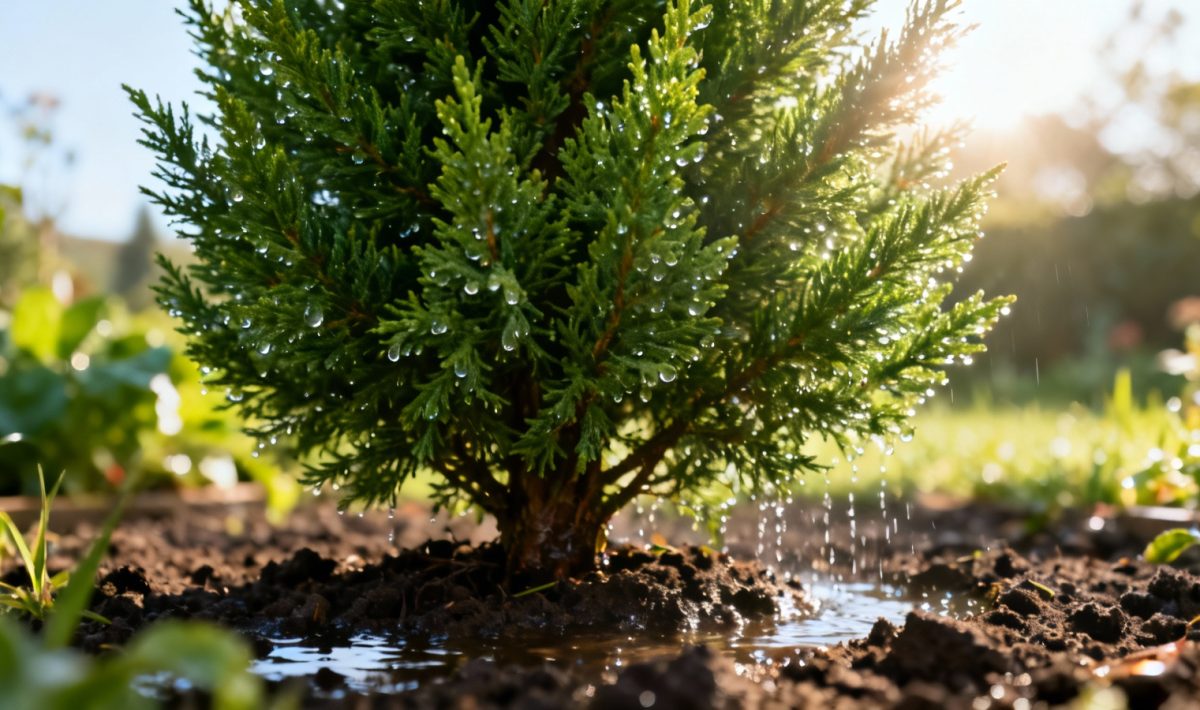
Manual watering with a garden hose allows for precise control and thorough soil saturation. Position the hose at the tree’s base and let water run slowly for 15-20 minutes, allowing it to soak deep into the root zone. This method works particularly well for newly planted trees that need extra attention.
Automatic irrigation systems can provide consistent moisture for established trees and larger landscaping projects. Drip irrigation or soaker hoses are excellent choices as they deliver water directly to the root zone without wasting water on foliage or surrounding areas.
Mulching around your arborvitae creates a protective barrier that retains soil moisture and reduces watering frequency. Apply a 2-3 inch layer of organic mulch like wood chips or shredded bark, keeping it several inches away from the tree trunk to prevent pest problems.
Signs your arborvitae needs attention
Recognizing stress signals helps you adjust your watering routine before problems become severe. Browning or yellowing foliage, particularly on interior branches, often indicates water stress. However, some seasonal browning is normal for these evergreens.
Drooping or wilted-looking branches suggest insufficient moisture, especially if accompanied by dry soil conditions. Conversely, consistently soggy soil around the tree base indicates overwatering, which can lead to root rot and other serious issues.
Similar attention to watering details applies to other garden plants, as you might discover when learning about watering coriander for fresh leaves or exploring techniques for different crops.
Long-term maintenance and lawn integration
As your arborvitae mature, their water requirements typically decrease while their root systems expand. Established trees can often thrive with less frequent but deeper watering sessions, especially when integrated thoughtfully into your overall lawn and landscaping design.
Consider the broader garden ecosystem when planning your watering schedule. Different plants have varying moisture needs, and understanding these relationships helps create efficient care routines. For instance, learning how to water chives effectively can inform your approach to other garden areas.
Professional landscaping forums and discussions among experienced members often provide valuable insights about regional watering practices. These communities share practical tips about tools, equipment, and seasonal adjustments that work in specific climate zones.
Fertilization and comprehensive tree health
Proper nutrition supports your arborvitae’s ability to utilize water efficiently. Apply a balanced evergreen fertilizer in early spring before new growth begins, following package recommendations for tree size and age. Well-fed trees generally show better drought tolerance and overall resilience.
Soil testing can reveal nutrient deficiencies or pH imbalances that affect water uptake. Most arborvitae prefer slightly acidic to neutral soil conditions, and addressing these factors improves the tree’s ability to access both water and nutrients effectively.
Overwatering symptoms include yellowing lower foliage, fungal growth around the tree base, and a generally unhealthy appearance despite adequate moisture. If you notice these signs, reduce watering frequency and improve soil drainage around the tree.
Underwatering typically manifests as brown, crispy foliage starting from branch tips and moving inward. During hot summer months, this stress can develop quickly, making regular monitoring essential for tree health.
Root problems often stem from inconsistent watering practices that create cycles of drought and saturation. Maintaining steady moisture levels helps prevent these issues and promotes healthy root development throughout the growing season.
Understanding diverse watering needs across your garden helps create comprehensive care routines, whether you’re tending to trees or learning about how to water common mallow for your flower beds.
Planning for sustainable arborvitae care
Creating a sustainable watering routine involves understanding your local climate patterns and adjusting practices accordingly. Track rainfall amounts and supplement with irrigation only when necessary, reducing water waste while maintaining tree health.
Consider installing rain gauges or using weather apps to monitor precipitation levels in your area. This information helps you make informed decisions about when additional watering is truly needed versus when natural rainfall provides adequate moisture.
Long-term success with arborvitae care comes from observation, patience, and willingness to adjust your approach based on tree response and changing conditions. These magnificent evergreens reward proper care with years of beauty and function in your landscape design.
Allan is a lifelong gardening enthusiast who still gets excited when the first seedlings pop up in spring. With a deep love for nature and a hands-in-the-soil approach, he shares practical tips, plant discoveries, and clever tricks picked up over years of digging, planting, and observing. Whether you’re a new gardener or have a shed full of tools, Allan writes like a neighbor who’s always happy to swap cuttings and stories over the fence.
You can find more about Allan’s work on Malt or connect with him on LinkedIn.