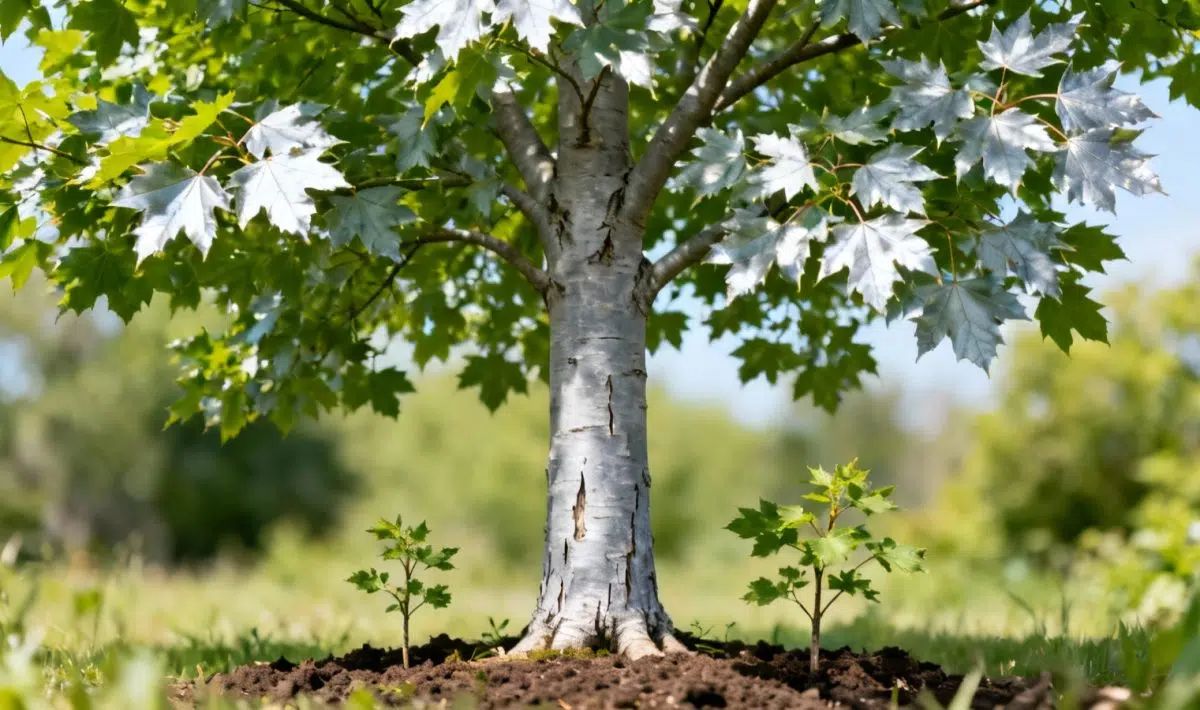
Silver maple – Acer saccharinum: care, characteristics, culture and propagation tips
The silver maple, scientifically known as Acer saccharinum, stands as one of North America’s most adaptable and fast-growing trees. This remarkable species has captured the attention of gardeners and landscapers alike with its distinctive silvery foliage and impressive stature. Understanding the proper care and characteristics of this maple variety can help you successfully cultivate this beautiful tree in your landscape.
The Acer saccharinum displays several distinctive features that set it apart from other maple species. Its leaves showcase a brilliant green color on top with a striking silver-white underside, creating a shimmering effect when moved by wind. During autumn, the foliage transforms into beautiful shades of yellow and orange, providing spectacular seasonal interest.
This fast-growing tree typically reaches heights of 60 to 100 feet at maturity, with a spread of 40 to 60 feet. The trunk can develop an impressive diameter over time, while the crown forms an attractive vase-like shape with slightly drooping branches. The root system spreads widely but remains relatively shallow, which influences its planting requirements.
Silver maples demonstrate exceptional cold tolerance, surviving temperatures as low as -20 to -35°F. This hardiness makes them suitable for cultivation in USDA zones 3 through 9, allowing gardeners across a broad geographic range to enjoy these magnificent trees.
Growth patterns and development
The growth rate of silver maple surpasses most other tree species, often adding 2 to 3 feet of height annually under optimal conditions. Young trees establish quickly, developing their characteristic branching pattern within the first few years. The rapid growth makes this species particularly attractive for those seeking quick shade or landscape impact.
During spring, small clusters of flowers appear before the leaves emerge, followed by winged fruits that mature and disperse in early summer. These seeds, known as samaras, can travel considerable distances on wind currents, contributing to the natural distribution of the species across North America.
Optimal growing conditions for silver maple
Silver maples thrive in full sun to partial shade, though they perform best with at least six hours of direct sunlight daily. They demonstrate remarkable adaptability to various soil types, from clay to sandy loam, as long as drainage remains adequate. However, they particularly excel in moist, fertile soils near water sources.
These trees show exceptional tolerance to wet conditions and can even survive periodic flooding, making them excellent choices for low-lying areas or near streams and ponds. The species naturally occurs in flood plains and bottomlands throughout eastern North America, from southern Canada down to the southeastern United States.
When selecting a planting location, consider the mature size of the tree and provide adequate space for both the canopy and root system. Keep plantings at least 30 feet from buildings or other structures to accommodate the eventual spread.
Soil preparation and planting techniques
Prepare the planting site by digging a hole twice as wide as the root ball but no deeper than the original soil line. Silver maples prefer slightly acidic to neutral soil with a pH between 6.0 and 7.5. Amend heavy clay soils with organic matter to improve drainage, while sandy soils benefit from compost additions to enhance water retention.
Plant container-grown trees in early spring or fall when temperatures are moderate and rainfall is typically more abundant. Bare-root specimens should be planted in early spring before bud break occurs. Water thoroughly after planting and apply a 2-3 inch layer of mulch around the base, keeping it several inches away from the trunk.
Essential care and maintenance practices
Young silver maples require consistent moisture during their establishment period, typically the first 2-3 years after planting. Provide deep, weekly watering during dry spells, ensuring the soil remains moist but not waterlogged. Mature trees generally tolerate drought conditions well once established.
Fertilization requirements remain minimal for most silver maples growing in average garden soils. A balanced, slow-release fertilizer applied in early spring can benefit young trees or those growing in poor soils. However, excessive fertilization can promote overly rapid growth, potentially weakening the wood structure.
Pruning should focus on removing dead, damaged, or crossing branches while maintaining the tree’s natural form. Winter dormancy provides the ideal time for major pruning work, though light trimming can occur throughout the growing season. Just as you might research care for painted-leaf begonia plants for indoor gardening, understanding proper pruning techniques ensures healthy tree development.
Propagation methods and techniques
Silver maples can be propagated through several methods, with seed collection being the most common approach for home gardeners. Collect fresh seeds immediately after they fall in late spring or early summer, as they lose viability quickly. Plant seeds immediately in moist soil, covering them lightly with about 1/4 inch of soil.
Germination typically occurs within 10-14 days under favorable conditions. Keep seedbeds consistently moist and provide partial shade during the first growing season. Young plants can be transplanted to permanent locations after one full growing season of development.
Softwood cuttings taken in early summer offer another propagation method, though success rates vary. Select healthy, current-year growth and treat with rooting hormone before placing in a well-draining potting medium.
Common challenges and solutions
Silver maples face several potential challenges that gardeners should understand. The brittle wood can break during ice storms or strong winds, particularly in older specimens. Regular pruning helps maintain structural integrity and reduces the risk of branch failure.
Shallow roots occasionally surface above ground level, potentially interfering with lawn mowing or causing trip hazards. This characteristic also makes silver maples somewhat competitive with nearby plants for water and nutrients. When planning companion plantings, consider species that tolerate root competition, much like how gardeners might research growing pontic rhododendron successfully for woodland gardens.
Aphids and scale insects occasionally affect silver maples, though serious infestations remain uncommon. Monitor trees regularly and address problems early with appropriate treatments if necessary.
Seasonal care considerations
Spring care involves inspecting for winter damage and applying fresh mulch around the base. This is also the ideal time for fertilization if needed. Summer maintenance focuses on adequate watering during dry periods and monitoring for pest issues.
Fall presents the perfect opportunity for major pruning work and cleanup of fallen leaves. Winter protection generally isn’t necessary for established trees, though young specimens may benefit from trunk wraps in extremely cold regions.
Landscape applications and design ideas
Silver maples serve multiple landscape functions due to their rapid growth and adaptable nature. They provide excellent shade trees for large properties, parks, and commercial landscapes. The silver-backed foliage creates attractive movement and sound when stirred by breezes.
These trees work particularly well in naturalized settings or as part of mixed woodland borders. Their tolerance for wet conditions makes them valuable for rain gardens or areas with periodic standing water. Consider pairing them with other moisture-loving plants or exploring companion options like researching tips for apricot tree care for creating diverse garden spaces.
For urban environments, silver maples can provide quick-establishing street trees or parking lot shade, though their brittle wood requires consideration in high-traffic areas.
Wildlife and ecological benefits
Silver maples support various wildlife species throughout the year. The early spring flowers provide nectar for bees and other pollinators, while the seeds feed numerous bird species and small mammals. The dense canopy offers nesting sites for birds and shade for ground-dwelling creatures.
The trees also contribute to soil stabilization along waterways due to their extensive root systems. This makes them valuable components in erosion control plantings and riparian restoration projects. When creating wildlife-friendly landscapes, gardeners might also consider cultivating oxeye daisy plants as complementary flowering species.
Regional considerations and climate adaptation
Silver maples demonstrate remarkable adaptability across diverse climatic conditions, though performance varies by region. In northern areas, they provide reliable cold tolerance and consistent growth. Southern gardeners appreciate their ability to tolerate heat and humidity while still providing autumn color.
Coastal regions benefit from the species’ tolerance to salt spray and wind exposure. However, extremely arid climates may challenge even established trees without supplemental irrigation. Understanding your local climate helps ensure successful cultivation and long-term tree health.
When planning large-scale plantings or working with challenging sites, consider how silver maples might complement other hardy species. Research approaches like growing oriental arborvitae effectively can provide insights for creating resilient, diverse landscapes.
The silver maple’s combination of rapid growth, adaptability, and attractive features makes it an excellent choice for many landscape applications. With proper care and understanding of its characteristics, this remarkable tree can provide decades of beauty and function in your outdoor space. Whether you’re seeking quick shade, wildlife habitat, or simply an attractive specimen tree, the silver maple offers reliable performance and enduring appeal.
Allan is a lifelong gardening enthusiast who still gets excited when the first seedlings pop up in spring. With a deep love for nature and a hands-in-the-soil approach, he shares practical tips, plant discoveries, and clever tricks picked up over years of digging, planting, and observing. Whether you’re a new gardener or have a shed full of tools, Allan writes like a neighbor who’s always happy to swap cuttings and stories over the fence.
You can find more about Allan’s work on Malt or connect with him on LinkedIn.