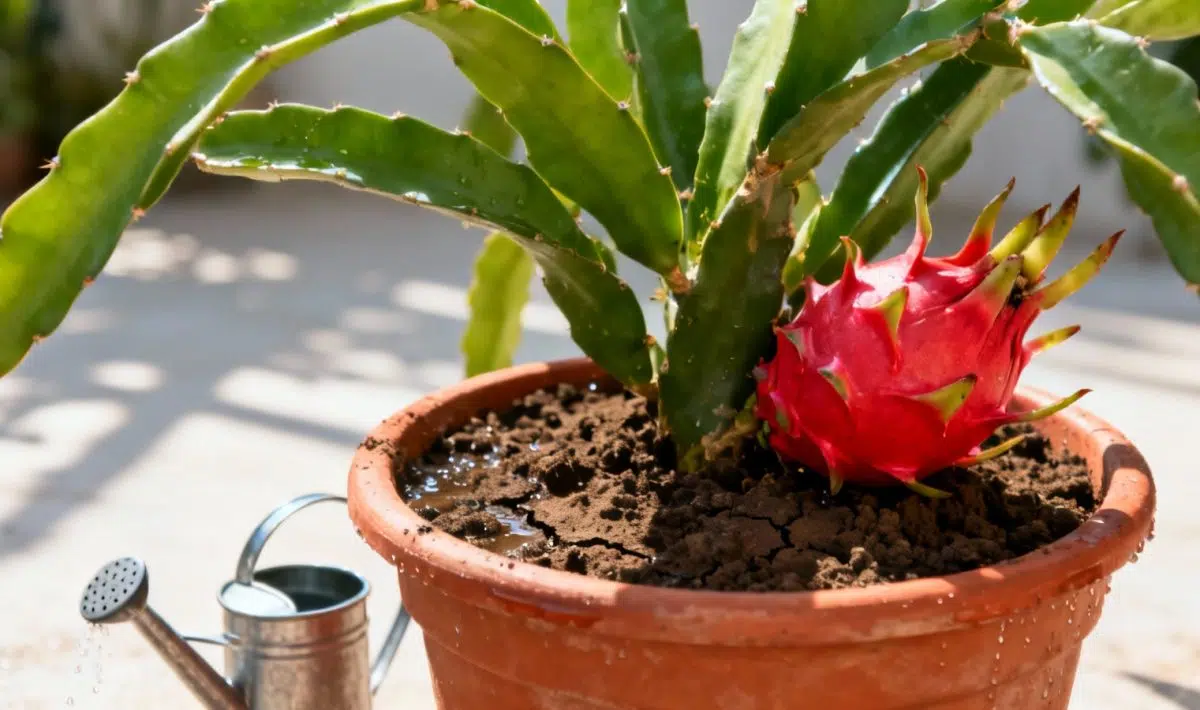
How often should you water your dragon fruit for healthy growth
Growing dragon fruit successfully starts with understanding its unique watering needs. This exotic cactus requires a delicate balance – enough water to thrive, but not so much that it develops root rot. How often should you water your dragon fruit? The answer depends on several key factors that every grower should master.
Understanding your dragon fruit’s water requirements
Dragon fruit plants are succulents that store water in their thick, fleshy stems. Unlike traditional houseplants, they prefer deep, infrequent watering rather than frequent light sprinklings. During the growing season, most dragon fruit plants need water approximately once every two weeks when the soil has dried out completely.
The key is checking soil moisture before each watering session. Stick your finger about two inches into the soil – if it feels dry, it’s time to water. However, if the soil still feels damp or soggy, wait a few more days. This simple test prevents both underwatering and the more dangerous overwatering.
Climate plays a crucial role in determining frequency. In hot, dry conditions, you might need to water weekly, while cooler or humid environments may require watering only every three weeks. Always let the plant and soil conditions guide your schedule rather than following a rigid timetable.
Seasonal watering adjustments for optimal growth
Your dragon fruit’s watering needs change dramatically throughout the year. During spring and summer growth periods, the plant actively develops new stems and prepares for flowering. This is when consistent moisture becomes most important for healthy development.
In winter, dragon fruit enters a dormant phase where growth slows significantly. Reduce watering to once every three to four weeks during this period. The plant uses much less water when it’s not actively growing, and excess moisture during dormancy often leads to fungal problems.
Temperature fluctuations also affect watering frequency. Just as you might follow specific watering tips for African lilies based on seasonal changes, dragon fruit requires similar seasonal awareness. Hot summer days increase evaporation rates, while cool winter conditions slow water uptake considerably.
Recognizing signs of proper hydration
Healthy dragon fruit plants display firm, plump stems with vibrant green coloration. The stems should feel solid to the touch, not soft or wrinkled. When properly hydrated, new growth appears regularly during the growing season, and the plant maintains an upright, sturdy appearance.
Overwatering symptoms include yellowing stems, soft or mushy areas, and a general decline in plant vigor. You might also notice an unpleasant smell from the soil, indicating root rot. These warning signs require immediate action – stop watering and improve drainage to save your plant.
Underwatered dragon fruit shows wrinkled, shriveled stems that feel soft when gently squeezed. The plant may also drop flower buds or developing fruit. While concerning, underwatering is typically easier to correct than overwatering damage.
Effective watering techniques and methods
When watering dragon fruit, always water deeply until excess drains from the bottom of the container or spreads beyond the root zone in garden plantings. This encourages deep root development and helps the plant withstand dry periods between waterings.
Morning watering works best, allowing the plant to absorb moisture throughout the day while preventing fungal issues that develop in cool, wet conditions. Avoid evening watering, especially in humid climates where moisture lingers on stems overnight.
Consider installing a drip irrigation system for consistent, controlled watering. This method delivers water directly to the root zone while keeping stems dry. Similar to proper care for mandarin oranges, dragon fruit benefits from targeted watering that reaches roots without creating surface wetness.
Soil drainage and container considerations
Excellent drainage is absolutely critical for dragon fruit success. Whether growing in containers or garden beds, the soil must drain quickly after watering. Standing water around dragon fruit roots leads to rot within days, making drainage even more important than watering frequency.
For container growing, use pots with multiple drainage holes and well-draining cactus soil mix. Add perlite or coarse sand to improve drainage further. The container should be large enough to hold soil that doesn’t dry out too quickly but drains completely within hours of watering.
Garden plantings benefit from raised beds or sloped areas where water moves away from roots naturally. Heavy clay soils need amendment with sand, perlite, or gravel to create suitable drainage conditions. Just as caring for greater periwinkle requires attention to soil conditions, dragon fruit demands proper drainage for long-term health.
Troubleshooting common watering problems
Many growers struggle with finding the right balance, especially when transitioning between seasons. If your plant seems stressed despite regular watering, evaluate your soil drainage first. Poor drainage causes more dragon fruit deaths than any other factor.
Newly planted dragon fruit requires special attention for the first few months. Water more frequently but with smaller amounts until the root system establishes. Watch for signs of transplant shock and adjust watering accordingly.
Weather changes can disrupt established watering routines. Unexpected rain, heat waves, or cold snaps all affect soil moisture levels. Stay flexible with your schedule and always check soil moisture before watering, regardless of your planned routine.
Advanced tips for healthy dragon fruit cultivation
During flowering and fruit development periods, maintain consistent moisture levels without overwatering. The plant needs steady hydration to support fruit formation, but excess water can cause flower drop or fruit cracking.
Consider the humidity levels in your growing area. High humidity reduces water loss through stems, meaning less frequent watering. Low humidity environments increase evaporation rates, requiring more attention to soil moisture. Following similar principles as guidelines for European beech watering helps maintain proper moisture balance.
Monitor your plant’s response to fertilizing, as nutrient applications often require additional water for proper uptake. However, avoid the temptation to water immediately after fertilizing unless the soil is genuinely dry.
Water quality and temperature considerations
Use room temperature water to avoid shocking the roots with extreme temperatures. Cold water can slow nutrient uptake and stress the plant, while hot water damages delicate root hairs.
Rainwater provides excellent hydration for dragon fruit, as it’s naturally soft and free from chemicals. If using tap water, let it sit overnight to allow chlorine to evaporate. Hard water with high mineral content can build up in soil over time, affecting plant health.
Like techniques for watering calla lilies effectively, dragon fruit responds well to consistent water quality. Avoid sudden changes in water source or temperature that might stress the plant unnecessarily.
Creating a sustainable watering routine
Develop a weekly check routine where you assess soil moisture, plant appearance, and weather conditions. This systematic approach prevents both forgotten waterings and unnecessary applications.
Keep simple records of watering dates and plant responses, especially during your first year of growing. This information helps you recognize patterns and adjust your approach for local conditions.
Remember that consistent care produces the best results. Much like tips for watering dog roses, dragon fruit thrives with attentive but not obsessive care. Trust the plant to communicate its needs through visual cues and soil moisture levels.
Successfully growing dragon fruit comes down to understanding its unique needs and responding appropriately. With proper attention to watering frequency, drainage, and seasonal adjustments, you’ll enjoy healthy plants that eventually reward you with delicious, exotic fruit. Start with conservative watering and increase frequency only when plant and soil conditions clearly indicate the need for more moisture.
Allan is a lifelong gardening enthusiast who still gets excited when the first seedlings pop up in spring. With a deep love for nature and a hands-in-the-soil approach, he shares practical tips, plant discoveries, and clever tricks picked up over years of digging, planting, and observing. Whether you’re a new gardener or have a shed full of tools, Allan writes like a neighbor who’s always happy to swap cuttings and stories over the fence.
You can find more about Allan’s work on Malt or connect with him on LinkedIn.