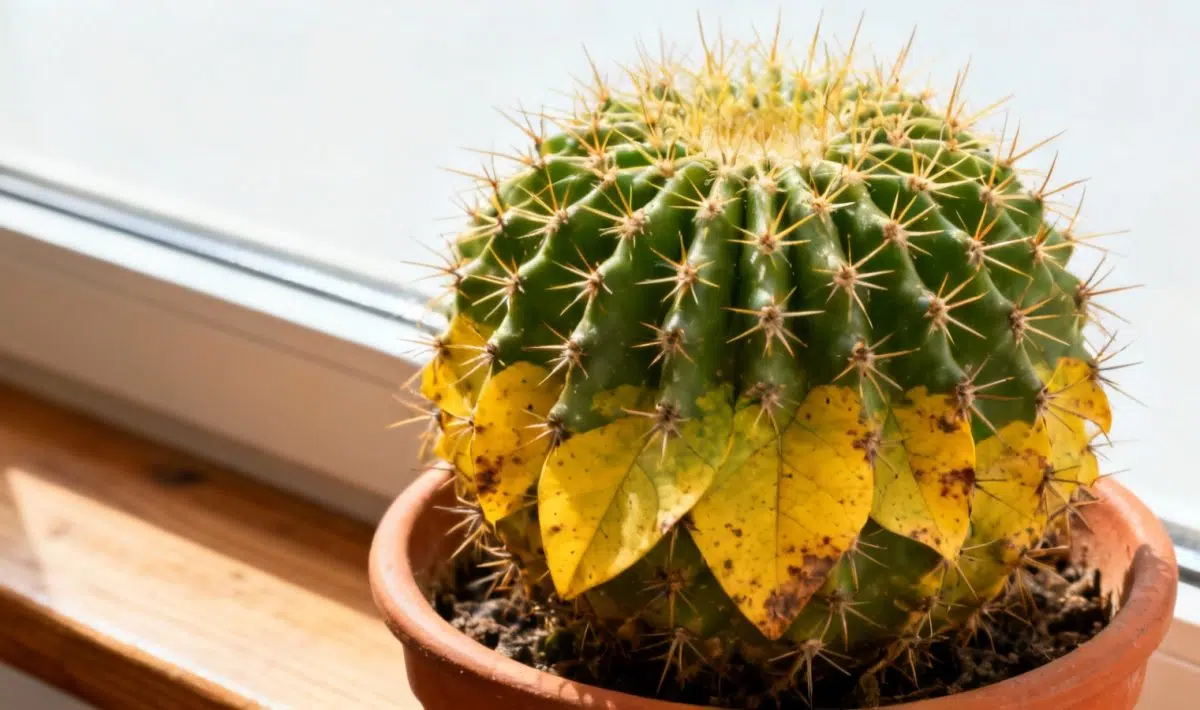
Why are my spiny pincushion cactus leaves turning yellow – causes and solutions
Nothing’s more frustrating than seeing your beloved spiny pincushion cactus developing yellow leaves when you’ve been trying your best to care for it. Don’t worry though – yellowing leaves are actually quite common and usually fixable once you understand what’s causing the problem.
Before diving into the causes of yellowing, let’s get familiar with what makes these little guys tick. Spiny pincushion cacti are compact, barrel-shaped plants covered in sharp spines that create that distinctive pincushion appearance. Despite their tough exterior, they’re surprisingly sensitive to their environment.
These cacti naturally grow in arid regions where water is scarce and sunlight is abundant. In their native habitat, they’ve adapted to store water in their fleshy stems and leaves, which is why overwatering can be such a disaster for them. Understanding this natural behavior is key to keeping your plant healthy.
✅ Quick Checklist
Is the soil too wet or too dry?
Is the plant getting 6+ hours of sunlight daily?
Have you fertilized in the last 2 months?
Are there visible pests under the leaves?
Does the pot have adequate drainage?
🔥 FREE
📱
Diagnose your plant in one click!
AI instant diagnosis • Personalized solutions • 50,000+ species
This is by far the most common culprit behind yellowing cactus leaves. When you give your pincushion cactus too much water, the roots can’t handle it and start to rot. Rotting roots can’t deliver nutrients properly to the rest of the plant, causing the leaves to turn yellow and eventually become mushy.
Signs of overwatering include not just yellow leaves, but also a soft, squishy feel to the plant and a musty smell from the soil. The soil might also stay wet for days after watering, which is a dead giveaway that you’re overdoing it with the water.
Underwatering stress
On the flip side, too little water can also cause yellowing, though it’s less common than overwatering. When severely dehydrated, cacti will start sacrificing their lower leaves to preserve water for the growing tips. These leaves turn yellow and dry up completely.
Similar to how reasons for yellow pomegranate leaves can indicate water stress, cactus yellowing often signals an imbalance in your watering routine.
Poor lighting conditions
Spiny pincushion cacti absolutely love bright light – we’re talking at least 6 hours of direct sunlight daily. When they don’t get enough light, they become weak and stressed, which can manifest as yellowing leaves starting from the bottom of the plant.
If your cactus is sitting in a dim corner or only getting filtered light through a window, it’s probably not getting what it needs. These plants are used to the intense desert sun, so indoor lighting can sometimes fall short.
Nutrient deficiencies
While cacti don’t need much fertilizer, they still require basic nutrients to stay healthy. A lack of nitrogen often shows up as yellowing leaves, particularly the older ones at the base. Magnesium deficiency can also cause yellowing that starts between the leaf veins.
Sudden changes in temperature can shock your pincushion cactus and cause yellowing. This often happens when you move the plant from one location to another, or during seasonal transitions when indoor heating or cooling systems kick in.
Cold drafts are particularly harmful – even though these cacti can handle some temperature variation, they really don’t like sudden cold snaps or being placed near air conditioning vents.
Poor drainage and soil issues
Regular potting soil is a no-go for cacti because it holds too much moisture. If your pincushion cactus is planted in heavy, water-retentive soil, it’s probably struggling with constantly wet roots, leading to yellowing and eventual rot.
The soil should drain completely within a few hours of watering. If it’s still soggy the next day, you’ve got a drainage problem that needs fixing.
✅ Quick Checklist
Is the soil too wet or too dry?
Is the plant getting 6+ hours of sunlight daily?
Have you fertilized in the last 2 months?
Are there visible pests under the leaves?
Does the pot have adequate drainage?
🔥 FREE
📱
Diagnose your plant in one click!
AI instant diagnosis • Personalized solutions • 50,000+ species
The golden rule for cactus care is “when in doubt, don’t water.” These plants would rather be slightly dry than too wet. During growing season (spring and summer), water only when the soil is completely dry, which might be every 10-14 days depending on your environment.
In winter, cut back watering to once a month or even less. The plant goes into a dormant phase and uses very little water during this time.
Improving soil and drainage
Switch to a proper cactus and succulent potting mix, or make your own by mixing regular potting soil with coarse sand, perlite, and small gravel. The mixture should drain quickly while still providing some structure for the roots.
Make sure your pot has drainage holes – this is non-negotiable. If you love a pot that doesn’t have holes, use it as a decorative outer pot and keep your cactus in a smaller pot with proper drainage inside.
Optimizing light conditions
Find the sunniest spot in your home for your pincushion cactus. A south-facing window is ideal, but east or west-facing windows can work too. If natural light is limited, consider using a grow light designed for succulents and cacti.
During summer, you can even move your cactus outside to a sunny location, just make sure to transition it gradually to prevent sunburn.
Gentle fertilizing
Feed your cactus with a diluted, low-nitrogen fertilizer designed for cacti and succulents. Do this only during the growing season, about once every 4-6 weeks. Too much fertilizer can actually cause more harm than good, so err on the side of less rather than more.
When to worry and when to wait
A few yellow leaves here and there, especially older ones at the base, can be normal as the plant grows and sheds older foliage. However, if you’re seeing rapid yellowing, multiple affected leaves, or any signs of mushiness, it’s time to take action quickly.
Sometimes the best thing you can do is simply stop doing whatever you’ve been doing and give the plant time to recover. Cacti are remarkably resilient and can bounce back from stress if given the right conditions and some patience.
Allan is a lifelong gardening enthusiast who still gets excited when the first seedlings pop up in spring. With a deep love for nature and a hands-in-the-soil approach, he shares practical tips, plant discoveries, and clever tricks picked up over years of digging, planting, and observing. Whether you’re a new gardener or have a shed full of tools, Allan writes like a neighbor who’s always happy to swap cuttings and stories over the fence.
You can find more about Allan’s work on Malt or connect with him on LinkedIn.