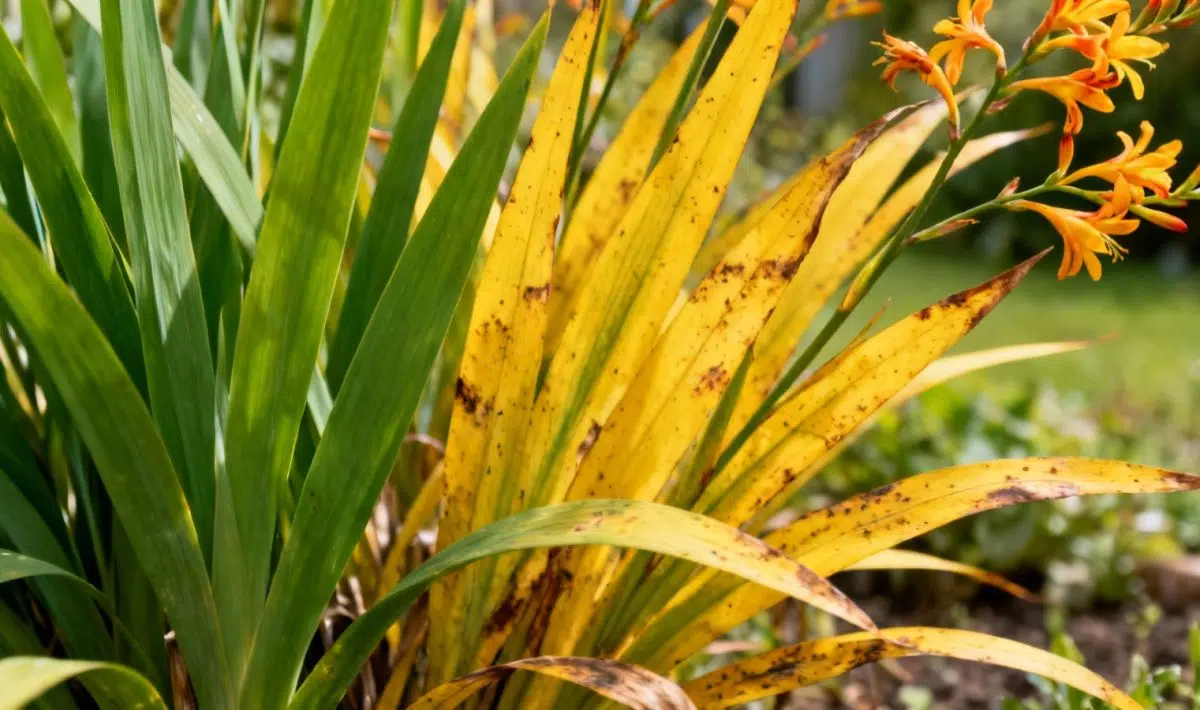
Why are my montbretia leaves turning yellow – crocosmia care solutions
Seeing your vibrant montbretia flowers suddenly developing yellow leaves can be concerning for any garden enthusiast. These beautiful summer blooms, also known as crocosmia, are generally hardy plants that thrive in many conditions. However, when their green foliage starts turning yellow, it’s often your plant’s way of signaling that something needs attention.
Understanding the root causes behind yellowing leaves is the first step toward restoring your montbretia’s health. From watering issues to nutrient deficiencies, several factors can contribute to this common problem. The good news is that most causes are easily treatable once you identify what’s affecting your plant.
Common environmental factors causing yellow leaves
Your montbretia’s environment plays a crucial role in maintaining healthy green foliage. Poor sun exposure is one of the most frequent culprits behind yellowing leaves. These Mediterranean natives require at least six hours of direct sunlight daily to photosynthesize properly and maintain their vibrant appearance.
When montbretias don’t receive adequate light, their leaves gradually lose chlorophyll and turn yellow from the bottom up. If your plant is in a shaded area, consider relocating it to a sunnier spot in your garden. Full sun exposure not only prevents yellowing but also encourages more abundant flower production during spring and summer seasons.
Soil quality is equally important for preventing yellow foliage. Montbretias prefer well-draining soil with good organic content. Heavy clay soils that retain too much water can cause root problems, leading to nutrient uptake issues and subsequent leaf yellowing. Adding compost or organic matter improves drainage and provides essential nutrients your plant needs.
✅ Quick Checklist
Is the soil too wet or too dry?
Is the plant getting 6+ hours of sunlight daily?
Have you fertilized in the last 2 months?
Are there visible pests under the leaves?
Does the pot have adequate drainage?
🔥 FREE
📱
Diagnose your plant in one click!
AI instant diagnosis • Personalized solutions • 50,000+ species
Improper watering is perhaps the most common reason why montbretia leaves turn yellow. Both over-watering and under-watering can stress your plant, but each presents different symptoms. Over-watered montbretias typically show yellowing that starts with the lower leaves and progresses upward, often accompanied by soft, mushy stems.
When you provide too much water, the soil becomes waterlogged and prevents proper oxygen circulation around the roots. This creates anaerobic conditions that can lead to root rot, preventing your plant from absorbing nutrients effectively. Check the soil moisture by inserting your finger two inches deep – it should feel slightly moist but never soggy.
Conversely, under-watered montbretias display yellowing that often starts with leaf edges becoming crispy and brown before the entire leaf turns yellow. During hot summer months, these plants may need watering twice weekly, especially if they’re growing in containers or sandy soils that drain quickly.
Establishing a proper watering schedule is essential for healthy growth. Water deeply but infrequently, allowing the top inch of soil to dry between waterings. This encourages deep root development and helps your montbretia become more drought-tolerant over time.
Identifying diseases and pest issues
Several diseases can cause montbretia leaves to yellow, with fungal infections being the most prevalent. Root rot, often caused by waterlogged conditions, creates yellowing that progresses rapidly throughout the plant. You might notice a musty smell around the base of affected plants, along with blackened or mushy roots when you examine them closely.
Leaf spot diseases also contribute to yellowing, typically starting as small brown or black spots on leaves before the entire leaf turns yellow and drops. These fungal issues are more common in humid conditions or when water sits on the foliage for extended periods. Improve air circulation around your plants and avoid overhead watering to prevent these problems.
Pest infestations can likewise cause leaf yellowing in montbretias. Similar to causes for yellowing bittersweet leaves, spider mites and aphids are common culprits that feed on plant sap, causing leaves to lose their green color gradually. Check the undersides of yellow leaves for tiny webs or small insects.
Thrips are another pest that can affect montbretias, creating silver or bronze streaking on leaves before they turn yellow. Regular inspection of your plants helps catch these issues early when they’re easier to treat with insecticidal soap or horticultural oil applications.
Nutrient deficiencies and soil health
Montbretias require specific nutrients to maintain their vibrant green foliage and produce stunning flowers. Nitrogen deficiency is a primary cause of yellowing leaves, typically starting with older leaves at the bottom of the plant. This happens because the plant mobilizes nitrogen from older leaves to support new growth when supplies are limited.
Iron deficiency presents differently, causing yellowing between leaf veins while the veins themselves remain green. This condition, called chlorosis, is often related to soil pH issues rather than actual iron absence. Montbretias prefer slightly acidic to neutral soil with a pH between 6.0 and 7.0 for optimal nutrient absorption.
Magnesium deficiency also causes yellowing, but it typically affects older leaves first and progresses inward from leaf margins. This nutrient is essential for chlorophyll production, so deficiencies quickly become visible as yellow or pale green foliage. A soil test can help determine which nutrients your garden may be lacking.
Regular fertilization during the growing season helps prevent nutrient-related yellowing. Use a balanced fertilizer in early spring when new growth appears, then switch to a phosphorus-rich formula to encourage flower production. Avoid over-fertilizing, which can cause salt buildup and actually worsen yellowing problems.
Proper care practices to prevent yellowing
Preventing yellow leaves starts with establishing good cultural practices for your montbretia. Plant them in well-draining soil amended with organic compost to improve both drainage and nutrient content. Space plants adequately to ensure good air circulation, which reduces disease pressure and promotes healthy growth.
Mulching around your montbretias helps maintain consistent soil moisture while suppressing weeds that compete for nutrients. Apply a two-inch layer of organic mulch, keeping it several inches away from the plant base to prevent moisture accumulation and potential rot issues.
Regular maintenance includes removing spent flowers to encourage continued blooming and prevent energy waste on seed production. Similarly, just as with fixing yellow leaves on angel’s wings, promptly removing yellowed or damaged leaves helps prevent disease spread and keeps your plants looking their best.
Consider the seasonal nature of montbretias when evaluating leaf yellowing. These plants naturally go dormant in winter, and some yellowing of foliage in late fall is completely normal as they prepare for their dormant period.
✅ Quick Checklist
Is the soil too wet or too dry?
Is the plant getting 6+ hours of sunlight daily?
Have you fertilized in the last 2 months?
Are there visible pests under the leaves?
Does the pot have adequate drainage?
🔥 FREE
📱
Diagnose your plant in one click!
AI instant diagnosis • Personalized solutions • 50,000+ species
Sometimes yellowing leaves indicate more serious problems that require professional intervention. If you’ve addressed watering, lighting, and nutrition issues but yellowing persists or worsens, consider consulting with a local extension office or plant specialist. They can perform soil tests and diagnose specific diseases that may be affecting your garden.
Rapid yellowing that affects entire plants within days suggests serious root problems or disease issues that need immediate attention. In these cases, you may need to remove affected plants to prevent spread to healthy specimens nearby. Professional guidance helps determine whether treatment is possible or if removal is necessary.
Remember that healthy montbretias are naturally resilient plants that can recover from most yellowing issues when proper care is restored. With patience and consistent attention to their basic needs – adequate sun, proper drainage, and balanced nutrition – your montbretia will likely return to producing the beautiful red, yellow, or white flowers that make them such beloved additions to gardens worldwide.
Allan is a lifelong gardening enthusiast who still gets excited when the first seedlings pop up in spring. With a deep love for nature and a hands-in-the-soil approach, he shares practical tips, plant discoveries, and clever tricks picked up over years of digging, planting, and observing. Whether you’re a new gardener or have a shed full of tools, Allan writes like a neighbor who’s always happy to swap cuttings and stories over the fence.
You can find more about Allan’s work on Malt or connect with him on LinkedIn.