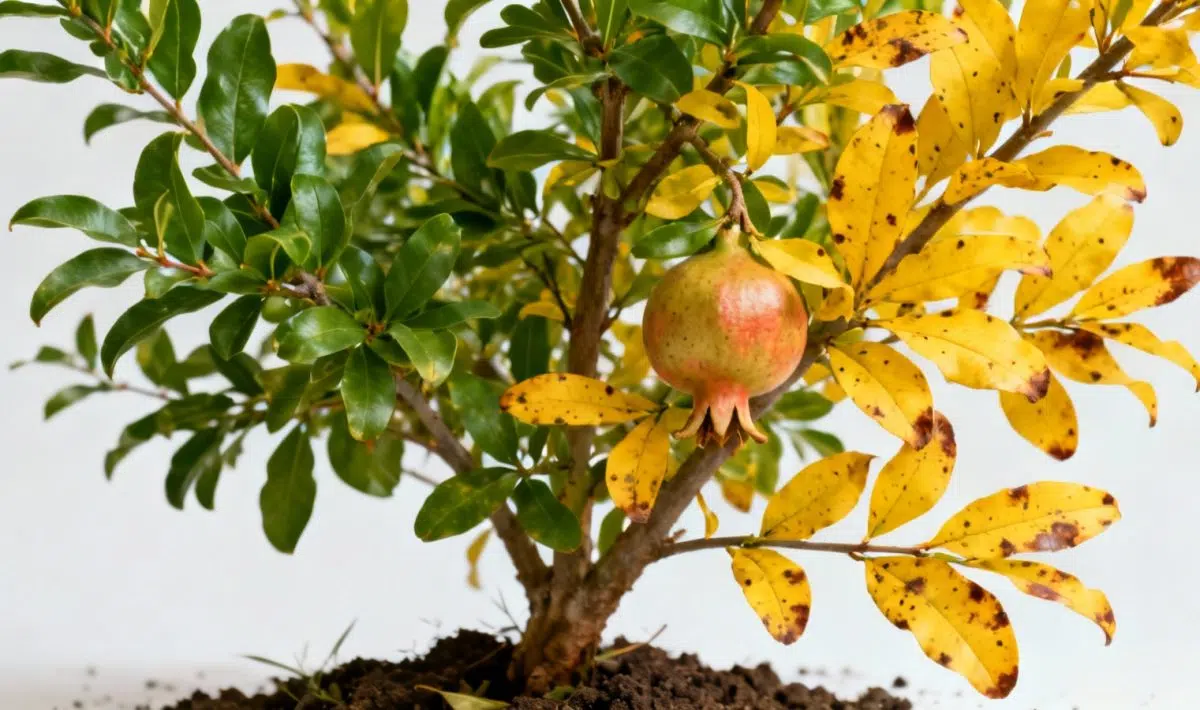
Why are my pomegranate leaves turning yellow – causes and solutions
Nothing’s more frustrating than watching your beautiful pomegranate tree develop yellow leaves when you’ve been caring for it with love. If you’re wondering why are my pomegranate leaves turning yellow, you’re not alone in this gardening puzzle. Yellow leaves on your pomegranate tree are actually your plant’s way of telling you something’s not quite right, and the good news is that most causes are totally fixable.
Understanding what your tree is trying to communicate through these color changes will help you get back to enjoying those gorgeous red fruits and lush green foliage. Let’s dive into the most common reasons behind this yellowing and discover some practical solutions that actually work.
Your pomegranate tree can develop yellow leaves for several reasons, and identifying the right cause is key to fixing the problem. The most frequent culprits are watering issues, nutrient deficiencies, and environmental stress factors that affect how your tree processes nutrients.
Overwatering is probably the number one reason pomegranate leaves turn yellow. When roots sit in soggy soil, they can’t absorb oxygen properly, which leads to root rot and yellowing foliage. You’ll often notice this starts with the lower leaves first, then works its way up the tree.
On the flip side, underwatering can also cause yellowing, though it usually comes with crispy, dry leaf edges. Your pomegranate tree needs consistent moisture, but not waterlogged conditions. The sweet spot is keeping the soil evenly moist but well-draining.
✅ Quick Checklist
Is the soil too wet or too dry?
Is the plant getting 6+ hours of sunlight daily?
Have you fertilized in the last 2 months?
Are there visible pests under the leaves?
Does the pot have adequate drainage?
🔥 FREE
📱
Diagnose your plant in one click!
AI instant diagnosis • Personalized solutions • 50,000+ species
When your pomegranate tree lacks essential nutrients, yellowing leaves are often the first sign. Nitrogen deficiency is particularly common and causes older leaves to turn yellow first, starting from the bottom of the tree and working upward.
Iron deficiency shows up differently – you’ll see yellow leaves with green veins, a condition called chlorosis. This usually happens when your soil pH is too high, preventing the tree from absorbing iron even if it’s present in the soil. Pomegranate trees prefer slightly acidic to neutral soil with a pH between 5.5 and 7.0.
Magnesium deficiency creates a distinctive pattern where leaves turn yellow between the veins while the veins themselves stay green. This nutrient helps with photosynthesis, so when it’s missing, your tree can’t process sunlight effectively.
Environmental stress factors
Your pomegranate tree is quite hardy, but sudden changes in temperature, light, or humidity can stress it enough to cause yellowing leaves. If you’ve recently moved your tree or there’s been an unusual weather pattern, this could be the culprit.
Too much direct sunlight during extremely hot periods can actually scorch leaves, causing them to turn yellow and then brown. However, not enough light is more commonly the problem, especially for indoor pomegranate trees that need at least six hours of bright light daily.
Seasonal changes naturally cause some leaf yellowing, particularly in fall when the tree prepares for dormancy. This is completely normal and not something to worry about, as long as the yellowing follows the natural seasonal pattern.
Disease and pest issues affecting leaf color
Sometimes yellowing leaves indicate that your pomegranate tree is fighting off diseases or pests. Fungal infections like anthracnose or bacterial blight can cause leaves to yellow and develop spots before they drop off entirely.
Aphids are tiny pests that love pomegranate trees and can cause yellowing by sucking the sap from leaves. You’ll often find them clustered on new growth or the undersides of leaves. They also produce a sticky substance called honeydew that can lead to sooty mold growth.
Root rot from overwatering creates perfect conditions for fungal diseases that attack the root system. When roots are damaged, they can’t transport nutrients properly, leading to yellowing leaves throughout the tree. Many gardeners face similar challenges with other plants, and you can find helpful information about solutions for yellowing montbretia leaves that apply similar principles.
Solutions for healthy pomegranate trees
The good news is that most causes of yellow pomegranate leaves are fixable with some adjustments to your care routine. Start by checking your watering habits – this is usually the easiest fix and often solves the problem within a few weeks.
For watering, stick your finger about two inches into the soil. If it feels dry at that depth, it’s time to water thoroughly until water drains from the bottom. In hot summer months, you might need to water every few days, while winter watering can be much less frequent.
Improving soil conditions
If nutrient deficiency is the issue, a balanced fertilizer with equal parts nitrogen, phosphorus, and potassium works well for pomegranate trees. Apply fertilizer during the growing season (spring through early fall) but avoid feeding during winter when the tree is dormant.
For iron deficiency, you can add iron sulfate to the soil or use a specialized iron chelate fertilizer. However, it’s often better to adjust soil pH first, which might solve the absorption problem naturally.
Adding organic compost or well-aged manure improves soil structure and provides slow-release nutrients. This helps create the ideal growing environment that prevents many common problems, including yellowing leaves.
Addressing pest and disease problems
For pest control, start with the gentlest methods first. A strong spray of water can dislodge many aphids, or you can use insecticidal soap for more stubborn infestations. Beneficial insects like ladybugs also help control aphid populations naturally.
If you suspect fungal diseases, improve air circulation around your tree by pruning any overcrowded branches. Avoid watering the leaves directly, and make sure your tree gets morning sunlight to help dry any moisture that does accumulate on the foliage.
For severe cases, you might need to remove affected leaves and treat with an appropriate fungicide, but many minor infections clear up once growing conditions improve. Just like other plants that experience similar issues, such as learning about addressing yellowing bittersweet leaves, the key is identifying and treating the underlying cause.
✅ Quick Checklist
Is the soil too wet or too dry?
Is the plant getting 6+ hours of sunlight daily?
Have you fertilized in the last 2 months?
Are there visible pests under the leaves?
Does the pot have adequate drainage?
🔥 FREE
📱
Diagnose your plant in one click!
AI instant diagnosis • Personalized solutions • 50,000+ species
Once you’ve solved the immediate yellowing problem, maintaining healthy practices will prevent it from happening again. Regular monitoring is key – check your tree weekly during the growing season and monthly during dormancy.
Establish a consistent watering schedule based on your climate and soil conditions. Deep, infrequent watering is generally better than frequent shallow watering, as it encourages deeper root growth.
Mulching around the base of your tree helps maintain soil moisture and temperature while preventing weeds that compete for nutrients. Use organic mulch like wood chips or shredded leaves, keeping it a few inches away from the trunk to prevent pest issues.
With the right care and attention, your pomegranate tree will bounce back from yellowing leaves and reward you with healthy green foliage and delicious fruit for years to come. Remember that plants are remarkably resilient, and most problems can be solved with patience and the right adjustments to your care routine.
Allan is a lifelong gardening enthusiast who still gets excited when the first seedlings pop up in spring. With a deep love for nature and a hands-in-the-soil approach, he shares practical tips, plant discoveries, and clever tricks picked up over years of digging, planting, and observing. Whether you’re a new gardener or have a shed full of tools, Allan writes like a neighbor who’s always happy to swap cuttings and stories over the fence.
You can find more about Allan’s work on Malt or connect with him on LinkedIn.