
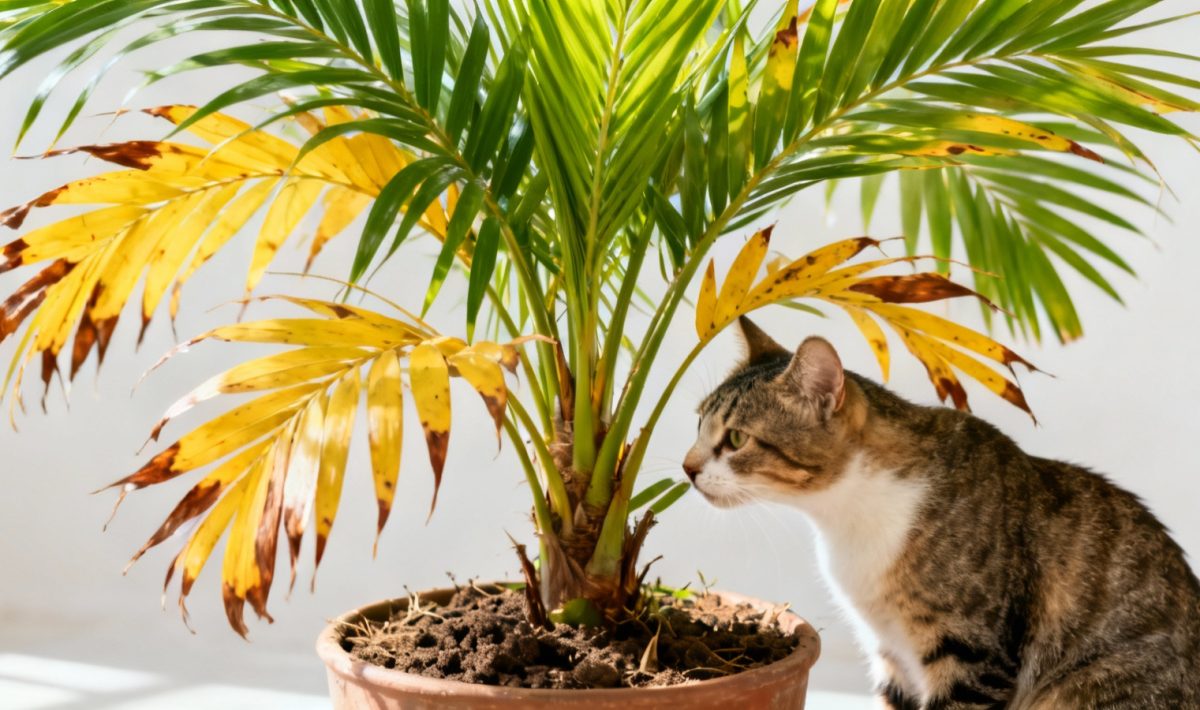
There’s nothing quite like the panic that sets in when you notice your beautiful cat palm’s leaves starting to turn yellow. This gorgeous plant has been such a perfect addition to your home – safe for your furry friends and adding that tropical touch you’ve been craving. But now you’re wondering what went wrong and how to fix it before things get worse.
The good news is that yellowing leaves on your cat palm are usually fixable with the right approach. Most of the time, it’s a care issue that can be resolved once you identify the root cause. Let’s dive into what might be happening with your plant and how to get those leaves back to their lush, green glory.
Common causes of yellowing cat palm leaves
When your cat palm starts showing yellow leaves, it’s essentially trying to tell you something about its living conditions. These plants are generally quite forgiving, but they do have specific needs that must be met for optimal health.
Watering issues are the main culprit
The most frequent reason for yellow leaves is improper watering – either too much or too little. Your cat palm prefers consistently moist soil, but not waterlogged conditions. When the soil stays too wet for extended periods, the roots can’t breathe properly and begin to rot.
On the flip side, if you let the soil dry out completely between waterings, your plant will start shedding its older leaves to conserve energy. You’ll notice the yellowing typically starts from the bottom of the plant and works its way up. Check your soil regularly by sticking your finger about an inch deep – it should feel slightly damp but not soggy.
✅ Quick Checklist
- Is the soil too wet or too dry?
- Is the plant getting 6+ hours of sunlight daily?
- Have you fertilized in the last 2 months?
- Are there visible pests under the leaves?
- Does the pot have adequate drainage?
Diagnose your plant in one click!
AI instant diagnosis • Personalized solutions • 50,000+ species
Light conditions matter more than you think
Your cat palm needs bright, indirect light to thrive. If it’s sitting in a dark corner or getting harsh direct sunlight, the leaves will start yellowing as a stress response. These plants naturally grow under the canopy of larger trees, so they’re adapted to filtered light conditions.
Place your palm near a window with sheer curtains or in a spot where it gets plenty of ambient light throughout the day. If you notice the yellowing is more pronounced on one side of the plant, it might be getting too much direct sun on that particular side.
Nutrient deficiencies show up as yellow leaves
Like all plants, your cat palm needs regular feeding to maintain its beautiful green foliage. If you haven’t fertilized in several months, the older leaves might start turning yellow as the plant redirects nutrients to new growth. This is particularly common with nitrogen deficiency.
During the growing season (spring and summer), feed your palm with a balanced liquid fertilizer diluted to half strength every 4-6 weeks. Just like with other houseplants that experience similar issues, identifying yellow leaves on honeysuckle can help you recognize patterns in plant stress responses.
Environmental factors affecting your cat palm
Beyond the basic care requirements, several environmental factors can contribute to yellowing leaves. Understanding these will help you create the perfect conditions for your plant.
Temperature and humidity levels
Cat palms prefer temperatures between 65-80°F and humidity levels around 40-50%. If your home is very dry, especially during winter when heating systems are running, the leaf tips might start browning and eventually turn yellow. Low humidity is particularly problematic for these tropical plants.
You can increase humidity by placing a humidifier nearby, grouping plants together, or setting your palm on a tray filled with pebbles and water. Just make sure the pot isn’t sitting directly in the water – you want the evaporation to create humidity without waterlogging the roots.
Root bound conditions
If your cat palm has been in the same pot for several years, it might be root bound. When roots don’t have enough space to grow, the plant can’t take up water and nutrients efficiently, leading to yellowing leaves. Check if roots are growing out of the drainage holes or circling around the inside of the pot.
Repotting every 2-3 years with fresh soil gives your palm room to grow and provides new nutrients. Choose a pot that’s only one size larger than the current one – going too big can actually cause water retention issues.
Solutions to restore your cat palm’s health
Now that you know what might be causing the problem, let’s talk about fixing it. The key is to address the underlying cause rather than just removing the yellow leaves.
Adjusting your watering routine
Start by establishing a consistent watering schedule based on your plant’s needs and your home’s conditions. Water when the top inch of soil feels dry, and make sure water drains freely from the bottom of the pot. If you’ve been overwatering, let the soil dry out more between waterings and check that your pot has adequate drainage holes.
For underwatered plants, gradually increase your watering frequency but avoid the temptation to flood the soil all at once. Similar to issues seen in other houseplants, understanding yellowing snake plant leaves can provide insights into how different plants respond to watering stress.
Optimizing light and location
Move your palm to a spot with bright, indirect light if it’s currently in a dark or overly sunny location. East or north-facing windows are often perfect, providing gentle morning light without harsh afternoon sun. If you don’t have ideal natural light, consider supplementing with a grow light positioned 12-18 inches above the plant.
Remember that plants need time to adjust to new locations, so don’t expect immediate changes. It might take several weeks for new, healthy growth to appear.
✅ Quick Checklist
- Is the soil too wet or too dry?
- Is the plant getting 6+ hours of sunlight daily?
- Have you fertilized in the last 2 months?
- Are there visible pests under the leaves?
- Does the pot have adequate drainage?
Diagnose your plant in one click!
AI instant diagnosis • Personalized solutions • 50,000+ species
When to remove yellow leaves
Once a leaf has turned completely yellow, it won’t recover. You can safely remove these leaves with clean scissors or pruning shears, cutting as close to the base as possible. This helps the plant focus its energy on healthy growth rather than trying to maintain damaged leaves.
However, if a leaf is only partially yellow, you might want to wait a bit to see if improved care helps it recover. Sometimes leaves that are just starting to yellow can bounce back with proper attention.
Prevention tips for healthy cat palm care
The best approach to dealing with yellow leaves is preventing them in the first place. Here are some practical tips to keep your cat palm thriving:
- Check soil moisture weekly by inserting your finger into the soil
- Rotate your plant quarterly to ensure even light exposure
- Wipe leaves monthly with a damp cloth to remove dust and improve photosynthesis
- Monitor for pests like spider mites, which can stress the plant
- Use filtered or distilled water if your tap water is heavily chlorinated
With consistent care and attention to your cat palm’s needs, you should see new healthy growth within a few weeks. Remember that some leaf yellowing is normal as plants age and shed older foliage – it’s only concerning when it happens rapidly or affects multiple leaves at once.
Your cat palm is a resilient and beautiful plant that will reward your care with lush, green fronds for years to come. By addressing the underlying causes of yellowing leaves and maintaining proper care routines, you’ll have a thriving tropical centerpiece that both you and your cats can enjoy safely.

Allan is a lifelong gardening enthusiast who still gets excited when the first seedlings pop up in spring. With a deep love for nature and a hands-in-the-soil approach, he shares practical tips, plant discoveries, and clever tricks picked up over years of digging, planting, and observing. Whether you’re a new gardener or have a shed full of tools, Allan writes like a neighbor who’s always happy to swap cuttings and stories over the fence.
You can find more about Allan’s work on Malt or connect with him on LinkedIn.


