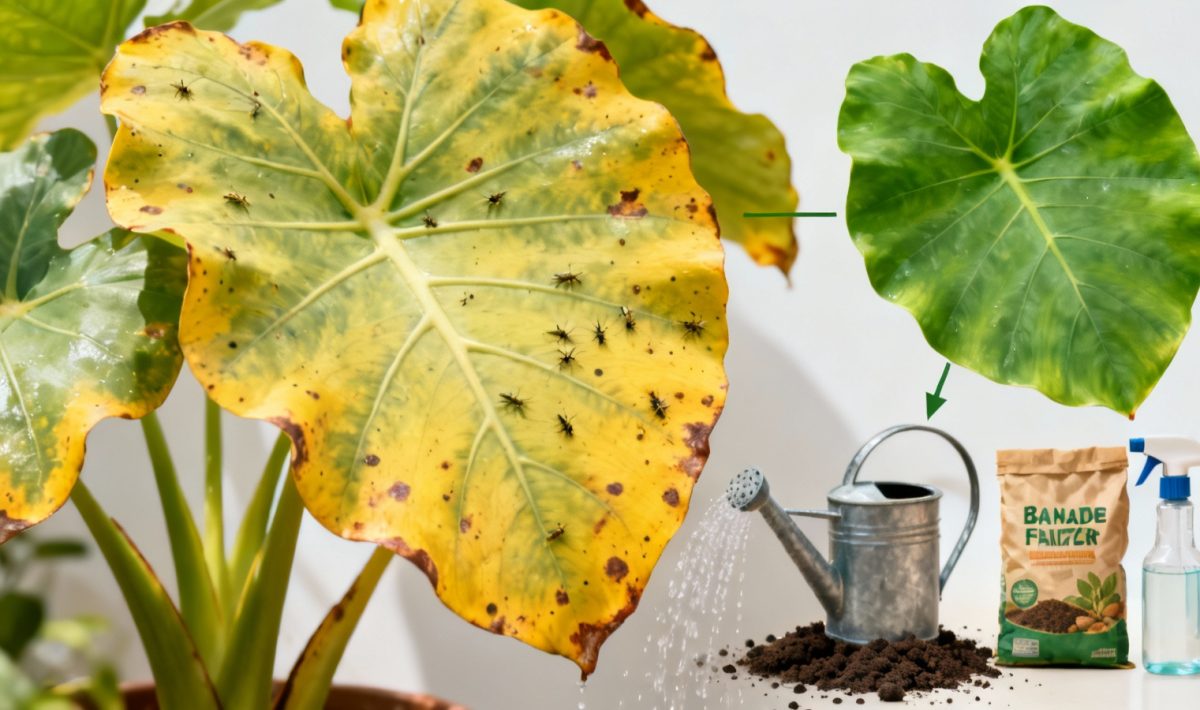
Why are my elephant ear leaves turning yellow? Common causes and solutions
Nothing’s more frustrating than watching your gorgeous elephant ear plant suddenly develop yellow leaves. One day everything looks perfect, and the next you’re staring at disappointing patches of yellow creeping across those magnificent leaves you fell in love with.
The good news? Yellow leaves on elephant ear plants are usually fixable once you identify what’s going wrong. These tropical beauties are actually quite forgiving when you understand their needs and adjust accordingly.
Water problems top the list when elephant ear leaves start turning yellow. These plants can be surprisingly picky about their moisture levels, and getting it wrong shows up fast in their foliage.
When too little water causes yellowing
Elephant ears love consistent moisture, and when they don’t get enough, the older leaves are the first casualties. You’ll notice the yellowing starts from the bottom and works its way up the plant. The leaves might also feel crispy around the edges before turning completely yellow.
Check your soil about two inches down with your finger. If it feels dry, your plant is likely thirsty. During growing season, these plants can drink quite a bit, especially if they’re in bright light or warm conditions.
✅ Quick Checklist
Is the soil too wet or too dry?
Is the plant getting 6+ hours of sunlight daily?
Have you fertilized in the last 2 months?
Are there visible pests under the leaves?
Does the pot have adequate drainage?
🔥 FREE
📱
Diagnose your plant in one click!
AI instant diagnosis • Personalized solutions • 50,000+ species
On the flip side, too much water can be even more damaging than too little. When elephant ears sit in soggy soil, their roots can’t breathe properly and start to rot. This shows up as yellowing leaves that feel soft and mushy rather than crispy.
Root rot from overwatering often comes with a musty smell from the soil and leaves that turn yellow from the stem outward. If you suspect this is happening, check the drainage in your pot and consider repotting with fresh, well-draining soil.
Nutrient deficiencies that cause yellowing
Elephant ears are heavy feeders during their growing season, and when they don’t get enough nutrients, yellow leaves are often the first sign of trouble.
Nitrogen shortage shows up in older leaves
When your plant lacks nitrogen, the older leaves at the bottom turn yellow while the new growth stays green. This happens because the plant moves nitrogen from older leaves to support new growth. It’s actually pretty smart, but not great for the overall appearance of your plant.
A good balanced fertilizer every few weeks during growing season usually fixes this issue. Look for something with equal parts nitrogen, phosphorus, and potassium, or slightly higher nitrogen content.
Other essential nutrients your plant needs
Iron deficiency causes yellow leaves with green veins, creating a distinctive pattern that’s easy to spot. Magnesium shortage typically shows up as yellowing between the leaf veins on older leaves first.
If standard fertilizer doesn’t help, try an iron supplement or Epsom salt dissolved in water for magnesium. Sometimes the issue isn’t lack of nutrients in the soil, but pH problems preventing the plant from absorbing what’s available.
Environmental factors affecting leaf color
Your elephant ear’s surroundings play a huge role in keeping those leaves vibrant green. Temperature, humidity, and light all impact how healthy your plant looks.
Light conditions and their impact
Too much direct sunlight can actually cause elephant ear leaves to turn yellow and develop brown spots. These plants prefer bright, indirect light rather than harsh afternoon sun. If your plant sits in a south-facing window, try moving it back a few feet or adding a sheer curtain.
Conversely, too little light can cause pale, yellowing leaves that look weak and stretched. Find that sweet spot with plenty of bright light but protection from intense rays.
Temperature stress shows in the leaves
Elephant ears don’t handle cold well at all. Temperatures below 65°F can trigger yellowing leaves, and anything approaching freezing will cause serious damage. If you’re growing yours outdoors, be ready to bring it inside when temperatures drop.
Similarly, hot, dry air from heating vents or air conditioners can stress the plant and cause leaf yellowing. Try to maintain steady temperatures and good humidity around your plant.
Pest and disease issues to watch for
Sometimes yellow leaves signal that unwanted visitors have moved in on your elephant ear plant. Regular inspection helps catch problems early.
Common pests that cause leaf yellowing
Spider mites, aphids, and scale insects all love elephant ears and can cause yellowing leaves as they feed on plant juices. Look for tiny moving dots, sticky honeydew residue, or small bumps on stems and leaf undersides.
Thrips create silvery streaks on leaves before they turn yellow, while mealybugs appear as white, cottony masses in leaf joints. Many plant issues share similar symptoms, just like how causes of yellowing honeysuckle leaves can include both pests and environmental stress.
Fungal problems affecting foliage
Overwatering often leads to fungal issues that cause yellow spots on leaves, eventually spreading to cover entire leaves. Good air circulation and proper watering help prevent these problems.
If you notice yellow patches with brown centers or fuzzy growth on leaves, remove affected foliage immediately and improve growing conditions to prevent spread.
Practical solutions for healthier leaves
Once you’ve identified what’s causing the yellowing, fixing the problem usually involves adjusting your care routine and being patient while the plant recovers.
Adjusting your watering routine
Water your elephant ear when the top inch of soil feels dry, but don’t let it completely dry out. Water thoroughly until it drains from the bottom, then empty any standing water from saucers within an hour.
During winter, reduce watering frequency since the plant’s growth slows down and it needs less moisture. Many tropical plants experience similar seasonal changes, and understanding these patterns helps with other plants too, such as learning about reasons for pomegranate leaves yellowing during different seasons.
✅ Quick Checklist
Is the soil too wet or too dry?
Is the plant getting 6+ hours of sunlight daily?
Have you fertilized in the last 2 months?
Are there visible pests under the leaves?
Does the pot have adequate drainage?
🔥 FREE
📱
Diagnose your plant in one click!
AI instant diagnosis • Personalized solutions • 50,000+ species
Feed your elephant ear every 2-4 weeks during spring and summer with a balanced liquid fertilizer diluted to half strength. Stop fertilizing in fall and winter when growth naturally slows.
If you suspect nutrient deficiency, try a fertilizer with micronutrients included, or supplement with specific nutrients like iron or magnesium as needed. Always water before fertilizing to prevent root burn.
Creating better growing conditions
Increase humidity around your elephant ear by grouping it with other plants, using a humidity tray, or running a humidifier nearby. These tropical plants appreciate humidity levels around 50-60%.
Ensure good air circulation without cold drafts, and maintain steady temperatures between 65-80°F. Remove any yellow leaves promptly to prevent pest attraction and disease spread, and clean the remaining leaves regularly with a damp cloth.
Remember that some yellowing is normal as plants age and shed older leaves. Focus on preventing new yellow leaves while maintaining overall plant health, and your elephant ear should reward you with gorgeous, vibrant foliage throughout its growing season.
Allan is a lifelong gardening enthusiast who still gets excited when the first seedlings pop up in spring. With a deep love for nature and a hands-in-the-soil approach, he shares practical tips, plant discoveries, and clever tricks picked up over years of digging, planting, and observing. Whether you’re a new gardener or have a shed full of tools, Allan writes like a neighbor who’s always happy to swap cuttings and stories over the fence.
You can find more about Allan’s work on Malt or connect with him on LinkedIn.