
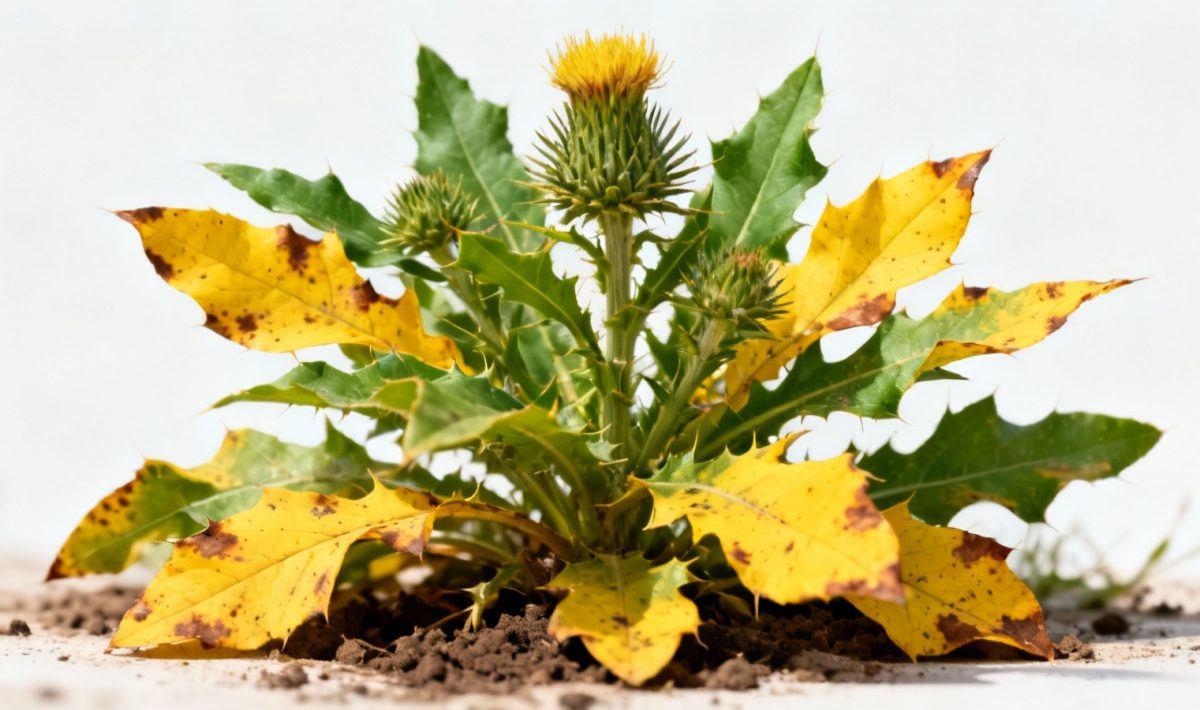
When you notice that your bull thistle leaves are turning yellow, it can be quite concerning. This hardy plant, known for its robust nature, shouldn’t display yellow foliage when healthy. Understanding the underlying causes will help you take the right action to restore your plant’s vibrant green appearance.
Understanding bull thistle and its natural characteristics
Bull thistle (Cirsium vulgare) is a biennial plant that belongs to the sunflower family. This resilient species typically produces healthy green foliage throughout its growing cycle. The plant develops a rosette of leaves in its first year, then produces tall flowering stems in the second year with characteristic spiny leaves and purple flower heads.
When bull thistle leaves maintain their natural green color, they indicate optimal plant health. However, when these leaves begin to yellow, it signals that something in the plant’s environment or care routine needs attention. The yellowing can start from the bottom leaves and work its way up, or it may appear scattered throughout the plant.
✅ Quick Checklist
- Is the soil too wet or too dry?
- Is the plant getting 6+ hours of sunlight daily?
- Have you fertilized in the last 2 months?
- Are there visible pests under the leaves?
- Does the pot have adequate drainage?
Diagnose your plant in one click!
AI instant diagnosis • Personalized solutions • 50,000+ species
Common causes of yellowing bull thistle leaves
Water stress and drainage issues
One of the primary reasons for yellow leaves on bull thistle is improper watering. Both overwatering and underwatering can cause this problem. When soil remains waterlogged for extended periods, the roots cannot access oxygen, leading to root rot and subsequent leaf yellowing.
Conversely, drought stress also causes leaves to turn yellow as the plant struggles to maintain adequate hydration. Bull thistle prefers well-draining soil that retains some moisture but never becomes soggy. Check the soil moisture regularly by inserting your finger about two inches deep into the soil.
Nutrient deficiencies
Yellowing leaves often indicate nutrient deficiencies, particularly nitrogen deficiency. When bull thistle lacks sufficient nitrogen, the older leaves turn yellow first as the plant redirects nutrients to newer growth. This natural process becomes problematic when it occurs too rapidly or affects too many leaves simultaneously.
Other nutrient deficiencies that can cause yellowing include iron deficiency (which typically causes yellowing between leaf veins while veins remain green) and magnesium deficiency (which often starts with yellowing at leaf margins). Similar yellowing patterns can occur in other plants, such as the reasons for yellow Japanese honeysuckle leaves , which often stem from comparable nutrient issues.
Environmental stress factors
Temperature fluctuations, inadequate sunlight, or sudden changes in growing conditions can stress bull thistle plants and cause leaf yellowing. While bull thistle is generally hardy, extreme temperature swings or prolonged periods of insufficient light can weaken the plant’s overall health.
Additionally, transplant shock can cause temporary yellowing when you move the plant to a new location. This stress response typically resolves itself within a few weeks if the new growing conditions are suitable.
Fungal infections
Various fungal diseases can cause bull thistle leaves to turn yellow. Root rot, caused by soil-borne fungi, affects the plant’s ability to uptake water and nutrients, resulting in yellowing foliage. Leaf spot diseases may also cause yellowing around infected areas before the spots become more pronounced.
These fungal issues often develop in humid conditions or when plants experience poor air circulation. Preventing fungal problems requires maintaining proper spacing between plants and ensuring good drainage around the root zone.
Insect pests and their impact
Several insect pests can cause bull thistle leaves to yellow by feeding on plant juices or damaging root systems. Aphids, spider mites, and other sucking insects weaken the plant by extracting nutrients directly from the leaves and stems.
Root-feeding insects like grubs can also indirectly cause leaf yellowing by damaging the root system. This type of damage reduces the plant’s ability to absorb water and nutrients from the soil, similar to how causes of yellowing snake plant leaves can result from root-related issues.
Solutions and prevention strategies
Improving watering practices
Establish a consistent watering schedule that allows soil to dry slightly between waterings. Water deeply but less frequently to encourage strong root development. During hot summer months, bull thistle may require more frequent watering, while cooler periods need less.
Ensure your planting area has adequate drainage by amending heavy clay soils with compost or coarse sand. If growing in containers, use pots with drainage holes and avoid letting them sit in standing water.
Addressing nutrient deficiencies
Apply a balanced fertilizer during the growing season to prevent nutrient deficiencies. For nitrogen deficiency, use a fertilizer higher in nitrogen content during spring and early summer. For iron deficiency, consider applying iron chelate or adjusting soil pH to improve iron availability.
Organic options like compost or well-aged manure provide slow-release nutrients while improving soil structure. Apply these amendments in early spring before active growth begins.
✅ Quick Checklist
- Is the soil too wet or too dry?
- Is the plant getting 6+ hours of sunlight daily?
- Have you fertilized in the last 2 months?
- Are there visible pests under the leaves?
- Does the pot have adequate drainage?
Diagnose your plant in one click!
AI instant diagnosis • Personalized solutions • 50,000+ species
Managing diseases and pests
For fungal problems, improve air circulation around plants and avoid overhead watering that keeps foliage wet. Remove affected leaves promptly and dispose of them away from healthy plants. Apply fungicidal treatments when necessary, following label instructions carefully.
Control insect pests through regular monitoring and early intervention. Use insecticidal soap or neem oil for soft-bodied insects like aphids. For more persistent pest problems, consider introducing beneficial insects or using targeted organic pesticides.
Long-term care for healthy bull thistle
Maintaining healthy bull thistle requires consistent attention to growing conditions and preventive care. Provide full sun exposure for at least six hours daily, as insufficient light can contribute to weak growth and yellowing leaves. Choose planting locations with good air circulation to reduce disease pressure.
Regular soil testing helps identify potential nutrient imbalances before they cause visible problems. Test soil pH annually, as bull thistle prefers slightly alkaline conditions between 6.5 and 7.5. Adjust pH as needed using lime to raise it or sulfur to lower it.
Monitor your plants regularly for early signs of stress, disease, or pest problems. Early detection allows for more effective treatment and prevents minor issues from becoming major problems that affect plant health and appearance.

Allan is a lifelong gardening enthusiast who still gets excited when the first seedlings pop up in spring. With a deep love for nature and a hands-in-the-soil approach, he shares practical tips, plant discoveries, and clever tricks picked up over years of digging, planting, and observing. Whether you’re a new gardener or have a shed full of tools, Allan writes like a neighbor who’s always happy to swap cuttings and stories over the fence.
You can find more about Allan’s work on Malt or connect with him on LinkedIn.


