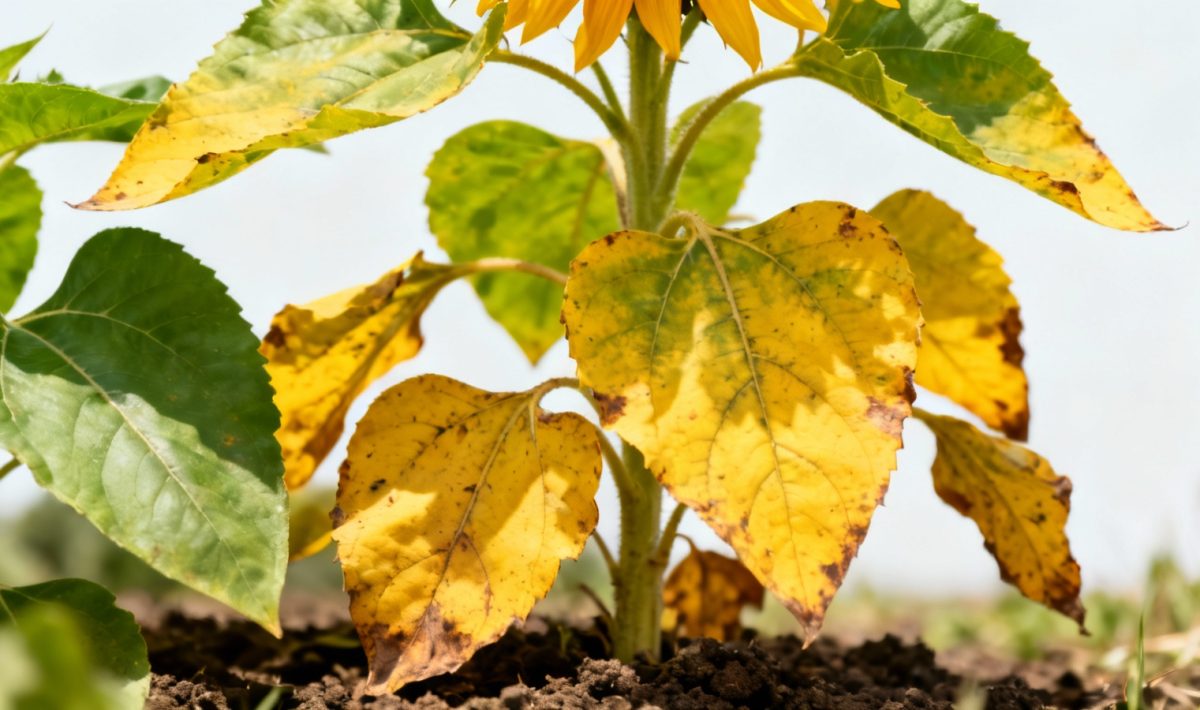
Why are my common sunflower leaves turning yellow – causes and solutions
Nothing breaks a gardener’s heart quite like seeing their beautiful sunflower leaves turning yellow when they should be vibrant green. However, don’t panic just yet! Yellow leaves on your sunflower plants are actually quite common and usually fixable once you understand what’s causing the problem.
Most yellowing issues stem from environmental factors that you can control. Whether it’s too much water, not enough nutrients, or pest problems, your sunflower is simply trying to tell you something important about its growing conditions.
Water management is absolutely crucial for healthy sunflower plants. These magnificent flowers need consistent moisture, but they’re surprisingly sensitive to both drought and overwatering. Getting the balance right makes all the difference between thriving green leaves and disappointing yellow ones.
When soil becomes too dry, your sunflower will start conserving water by shutting down less essential functions. The first sign you’ll notice is yellowing leaves, particularly starting from the bottom of the plant. The leaves may also feel crispy or brittle to the touch, and the soil will pull away from the edges of containers.
On the flip side, overwatering creates equally serious problems. Waterlogged roots can’t absorb oxygen properly, leading to root rot and yellowing leaves. You might notice the leaves turning yellow but feeling soft and mushy rather than dry. The soil will smell sour or musty, and you may see fungal growth on the surface.
✅ Quick Checklist
Is the soil too wet or too dry?
Is the plant getting 6+ hours of sunlight daily?
Have you fertilized in the last 2 months?
Are there visible pests under the leaves?
Does the pot have adequate drainage?
🔥 FREE
📱
Diagnose your plant in one click!
AI instant diagnosis • Personalized solutions • 50,000+ species
Good drainage is essential for preventing water-related problems. If you’re growing sunflowers in containers, make sure there are plenty of drainage holes in the bottom. For garden beds, consider adding compost or perlite to heavy clay soils that tend to hold water.
Soil quality and nutrition requirements
Your sunflower’s soil quality directly impacts leaf health and overall plant vigor. These annual plants are heavy feeders that require nutrient-rich soil to produce their spectacular flowers and maintain healthy green foliage throughout the growing season.
The three main nutrients your sunflowers need are nitrogen, phosphorus, and potassium. Nitrogen deficiency is particularly common and shows up as yellowing leaves that start from the bottom of the plant and work their way up. The stems may also appear thin and weak compared to well-fed plants.
Soil pH plays a crucial role in nutrient availability. Sunflowers prefer slightly acidic to neutral soil with a pH between 6.0 and 7.5. When the pH is too high or too low, your plant can’t absorb nutrients properly, even if they’re present in the soil. This often manifests as yellowing leaves despite adequate fertilization.
To improve your soil quality, start by testing both pH and nutrient levels. You can use inexpensive test kits from garden centers or send samples to your local extension office for detailed analysis. Based on the results, you can add appropriate amendments like compost, sulfur, or lime to optimize growing conditions.
Common diseases and pest issues
Several diseases can cause yellowing leaves on sunflower plants, with fungal infections being the most problematic. Downy mildew, rust, and verticillium wilt are particularly common during humid summer weather when conditions favor fungal growth.
Downy mildew appears as yellow patches on leaves that gradually turn brown and die. You might also notice a fuzzy, grayish growth on the undersides of affected leaves, especially during cool, moist mornings. This disease spreads rapidly in crowded plantings with poor air circulation.
Various pests can also stress your sunflower enough to cause yellowing leaves. Aphids are probably the most common culprits – these tiny insects cluster on stems and leaves, sucking plant juices and weakening the entire plant. You’ll often find them on the undersides of leaves or around flower buds.
Interestingly, similar yellowing patterns can occur in other plants as well. For example, understanding causes of yellowing bean leaves can help you recognize common plant stress signals across different species in your garden.
Spider mites become problematic during hot, dry weather. These microscopic pests cause stippling and yellowing of leaves, and you might notice fine webbing on heavily infested plants. They’re particularly troublesome when plants are already stressed from drought or poor nutrition.
Nutritional deficiencies and solutions
Proper nutrition is essential for maintaining healthy green leaves throughout the growing season. Sunflowers are fast-growing annual plants that quickly deplete soil nutrients, especially in container plantings where root space is limited.
Nitrogen deficiency is the most common nutritional cause of yellowing leaves. This essential nutrient supports leaf development and photosynthesis, so when it’s lacking, older leaves turn yellow first as the plant redirects available nitrogen to newer growth. The yellowing typically starts at the bottom of the plant and progresses upward.
Magnesium deficiency creates a distinctive pattern where leaves turn yellow between the veins while the veins themselves remain green. This condition, called chlorosis, often occurs in acidic soils or when plants receive too much potassium, which can block magnesium uptake.
Iron deficiency causes similar symptoms to magnesium deficiency but typically affects newer leaves first rather than older ones. This problem is most common in alkaline soils where iron becomes unavailable to plant roots, even when present in adequate quantities.
✅ Quick Checklist
Is the soil too wet or too dry?
Is the plant getting 6+ hours of sunlight daily?
Have you fertilized in the last 2 months?
Are there visible pests under the leaves?
Does the pot have adequate drainage?
🔥 FREE
📱
Diagnose your plant in one click!
AI instant diagnosis • Personalized solutions • 50,000+ species
For quick results, use a balanced liquid fertilizer every two weeks during the active growing season. A fertilizer with equal amounts of nitrogen, phosphorus, and potassium works well for most sunflowers. However, be careful not to over-fertilize, as this can cause other problems like excessive foliage growth at the expense of flower development.
Prevention and long-term care strategies
Preventing yellow leaves is much easier than treating the problem after it occurs. Start with proper site selection – sunflowers need at least six hours of direct sunlight daily and well-draining soil to thrive. Plant them in areas with good air circulation to reduce disease pressure.
Consistent care throughout the growing season makes a huge difference. Water deeply but less frequently to encourage strong root development, and mulch around plants to conserve moisture and suppress weeds. A two-inch layer of organic mulch like shredded leaves or grass clippings works perfectly.
Many gardeners notice similar issues with other plants in their gardens. Understanding reasons for yellow hornbeam leaves can provide valuable insights into general plant health management across different species.
Monitor your plants regularly for early signs of problems. Catching issues like pest infestations or nutrient deficiencies early makes treatment much more effective. Remove yellowing leaves promptly to prevent disease spread and redirect the plant’s energy toward healthy growth.
Finally, practice crop rotation if you’re growing sunflowers annually in the same garden beds. These plants can deplete specific soil nutrients, and rotating with other crops helps maintain soil health naturally. Consider following sunflowers with nitrogen-fixing legumes like beans or peas to replenish soil fertility for next year’s planting.
Allan is a lifelong gardening enthusiast who still gets excited when the first seedlings pop up in spring. With a deep love for nature and a hands-in-the-soil approach, he shares practical tips, plant discoveries, and clever tricks picked up over years of digging, planting, and observing. Whether you’re a new gardener or have a shed full of tools, Allan writes like a neighbor who’s always happy to swap cuttings and stories over the fence.
You can find more about Allan’s work on Malt or connect with him on LinkedIn.