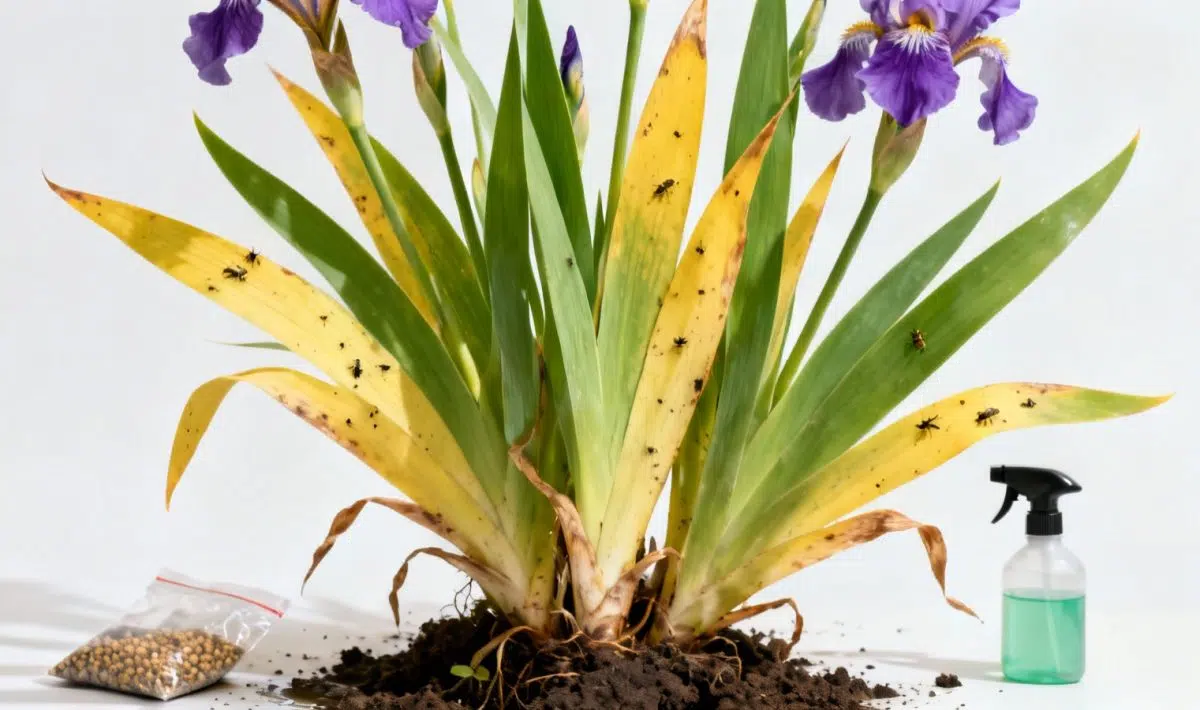
Why are my bearded iris leaves turning yellow – common causes and solutions
Nothing is more frustrating than watching your beautiful bearded iris leaves suddenly turn yellow when they should be displaying their vibrant green foliage. This common garden problem can stem from several causes, but the good news is that most yellowing issues are completely fixable with the right approach.
Understanding why your iris leaves are changing color is the first step toward restoring their health. From watering problems to soil conditions, various factors can affect these resilient plants that are beloved in gardens worldwide.
Understanding the main causes of yellowing iris leaves
Bearded iris plants are generally hardy, but they can develop yellow leaves for several specific reasons. The most common culprits include improper watering, poor soil drainage, and seasonal changes that affect the plant’s natural cycle.
Overwatering is often the primary cause of yellowing in iris plants. These Mediterranean-adapted flowers prefer well-drained soil and can suffer from root rot when their feet stay too wet for extended periods. Conversely, severe drought stress can also cause leaves to yellow and wither as the plant tries to conserve water.
✅ Quick Checklist
Is the soil too wet or too dry?
Is the plant getting 6+ hours of sunlight daily?
Have you fertilized in the last 2 months?
Are there visible pests under the leaves?
Does the pot have adequate drainage?
🔥 FREE
📱
Diagnose your plant in one click!
AI instant diagnosis • Personalized solutions • 50,000+ species
Natural aging is another factor that many gardeners overlook. Older iris leaves naturally yellow and die back as part of the plant’s normal lifecycle, especially in late summer. This process allows the plant to redirect energy into developing strong rhizomes for next year’s growth.
Soil conditions and drainage problems
The foundation of healthy iris plants lies in proper soil conditions. Bearded iris require well-drained soil with good air circulation around their rhizomes. Heavy clay soils that retain water can quickly lead to yellowing leaves and eventual plant decline.
Poor drainage creates anaerobic conditions that promote bacterial soft rot, a serious condition that can kill iris plants. You can identify drainage issues by checking if water pools around your iris plants after heavy rain or watering. The soil should feel moist but never soggy or waterlogged.
For optimal growth, iris plants thrive in slightly alkaline soil with a pH between 6.8 and 7.0. Acidic soils can prevent proper nutrient uptake, leading to yellowing leaves even when plants receive adequate water and fertilizer. Testing your garden soil annually helps maintain the ideal conditions for these beautiful flowers.
Improving soil drainage for iris health
If your garden has heavy soil, consider these improvements:
Add coarse sand or perlite to improve drainage
Create raised beds or mounded planting areas
Incorporate organic compost to improve soil structure
Plant iris on slopes where water naturally drains away
Other plants with similar drainage needs include allium, crocus, and muscari, which can make excellent companion plants in well-drained garden areas. These spring bulbs complement iris bloom times and share similar growing requirements.
Nutrient deficiencies and fertilization issues
Yellowing leaves can signal that your iris plants are experiencing nutrient deficiencies. Nitrogen deficiency typically causes older leaves to yellow first, starting from the tips and working downward. Iron deficiency, common in alkaline soils, causes younger leaves to develop yellow areas while veins remain green.
Over-fertilization can be just as problematic as nutrient deficiency. Too much nitrogen encourages excessive leaf growth at the expense of flower production, while also making plants more susceptible to diseases. Iris plants prefer moderate feeding with a balanced fertilizer applied in early spring.
For Mediterranean gardens, where many iris varieties originated, the natural soil conditions often provide adequate nutrition without heavy fertilization. However, container-grown iris may need more frequent feeding since nutrients leach from pots more quickly than garden soil.
Environmental conditions play a crucial role in iris health. These plants need full sun exposure for at least six hours daily to maintain strong growth and prevent yellowing. Insufficient light causes plants to become leggy and weak, with pale yellow-green foliage that lacks vigor.
Temperature extremes can also stress iris plants and cause leaf yellowing. Late spring frosts can damage new growth, while prolonged hot weather without adequate water creates drought stress. In regions with very hot summers, providing afternoon shade can help prevent heat-related yellowing.
Wind exposure is another factor that many gardeners don’t consider. Strong winds can desiccate leaves and create additional water stress, especially for newly planted iris. Creating windbreaks with other plants like pittosporum or ornithogalum can provide protection while maintaining good air circulation.
Seasonal changes and natural leaf cycles
Understanding the natural growth cycle of iris plants helps distinguish between problematic yellowing and normal seasonal changes. In late summer and early fall, it’s completely normal for older outer leaves to yellow and die back as the plant prepares for dormancy.
During this natural process, you should remove yellowed leaves by cutting them at the base rather than pulling them off. This prevents damage to the rhizome and reduces hiding places for pests that might overwinter in dead plant material.
Spring emergence can also involve some yellowing of older leaves as new growth begins. This is particularly common when plants are emerging from winter dormancy and redirecting energy into fresh foliage and flower development.
✅ Quick Checklist
Is the soil too wet or too dry?
Is the plant getting 6+ hours of sunlight daily?
Have you fertilized in the last 2 months?
Are there visible pests under the leaves?
Does the pot have adequate drainage?
🔥 FREE
📱
Diagnose your plant in one click!
AI instant diagnosis • Personalized solutions • 50,000+ species
Several pests and diseases can cause iris leaves to turn yellow. Iris borer is one of the most serious threats, with larvae that tunnel through leaves and rhizomes, causing significant yellowing and eventual plant death if left untreated.
Bacterial soft rot typically affects plants that have been damaged by pests or poor growing conditions. This disease causes rapid yellowing and collapse of leaves, often accompanied by a foul smell from the rotting rhizome. Prevention through good cultural practices is more effective than treatment once infection occurs.
Fungal diseases like leaf spot can also cause yellowing, particularly in humid conditions with poor air circulation. These issues are similar to those affecting other garden plants, such as the causes of yellowing pomegranate leaves, where environmental stress and improper care contribute to foliar problems.
Prevention and treatment solutions
Preventing yellowing is always easier than treating it after problems develop. Start with proper plant placement in full sun with well-drained soil. Water deeply but infrequently, allowing soil to dry between waterings to prevent root rot.
Regular garden maintenance helps identify problems early. Remove yellowed leaves promptly and maintain good air circulation around plants. Divide overcrowded iris clumps every three to four years to maintain vigorous growth and prevent disease buildup.
For gardens that struggle with consistently damp conditions, consider planting iris in raised beds or containers with quality potting mix that drains well. This approach works particularly well for herb gardens where similar drainage issues might affect other plants like issues with yellow peppermint leaves.
Long-term iris care strategies
Successful iris cultivation involves understanding these plants’ Mediterranean origins and providing similar growing conditions. This means dry summers, good drainage year-round, and moderate fertility levels that don’t encourage excessive soft growth.
Companion planting with other bulbs and perennials that share similar needs creates a stable garden ecosystem. Plants like agapanthus, narcissus, and various allium species work well alongside iris, creating beautiful combinations while maintaining optimal growing conditions for all.
Remember that healthy iris plants are naturally resistant to most problems that cause yellowing. By focusing on proper site selection, appropriate watering practices, and regular maintenance, you can enjoy these magnificent flowers for many years with minimal intervention.
Allan is a lifelong gardening enthusiast who still gets excited when the first seedlings pop up in spring. With a deep love for nature and a hands-in-the-soil approach, he shares practical tips, plant discoveries, and clever tricks picked up over years of digging, planting, and observing. Whether you’re a new gardener or have a shed full of tools, Allan writes like a neighbor who’s always happy to swap cuttings and stories over the fence.
You can find more about Allan’s work on Malt or connect with him on LinkedIn.